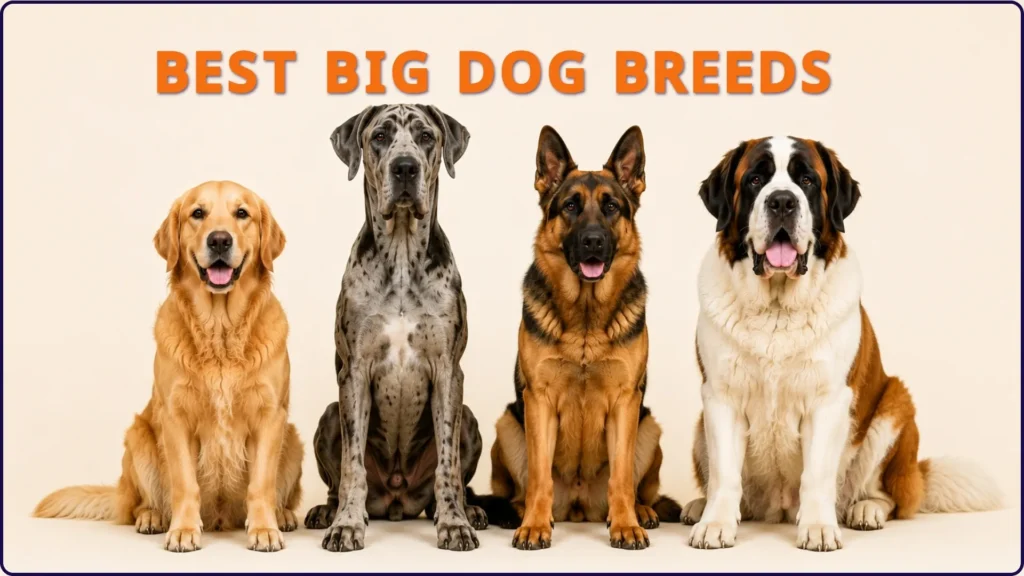

Complete Dogs Breeds Guide
A fluffy puppy can steal your heart in seconds. Living with that dog for the next 10 to 15 years is a completely different story.
Many people choose a dog because they love the way it looks. A few months later, they discover their adorable puppy needs hours of exercise, constant grooming, or specialized training. The problem isn’t the dog. The problem is choosing a breed without understanding what daily life with that breed actually involves.
As pet care professionals, trainers, and veterinary experts often observe, successful dog ownership starts long before a puppy enters the home. It begins with understanding breed characteristics, energy levels, health considerations, and lifestyle compatibility. When those factors match, the relationship becomes rewarding for both owner and dog.
This complete dogs breeds guide explains how dog breeds developed, what makes each breed unique, how major breed groups differ, and how to find a dog that genuinely fits your family, home, and daily routine.
Key takeaways
- Dog breeds were developed for specific purposes such as herding, hunting, guarding, and companionship, which still influence their behavior today.
- Choosing a dog based on lifestyle compatibility is far more important than choosing a breed based on appearance alone.
- Small dog breeds often live longer than large breeds, but every breed has unique care requirements and health considerations.
- Understanding breed groups helps predict a dog’s energy level, trainability, temperament, and exercise needs.
- Family-friendly breeds such as Golden Retrievers and Labrador Retrievers are popular because of their friendly and adaptable personalities.
- Intelligent breeds like Border Collies, German Shepherds, and Poodles require significant mental stimulation in addition to physical exercise.
- Apartment living does not limit dog ownership. Many breeds can thrive in smaller homes when their exercise and enrichment needs are met.
- Grooming requirements vary widely between breeds, ranging from minimal coat maintenance to regular professional grooming.
- Responsible breeding, proper nutrition, preventive veterinary care, training, and socialization all contribute to a dog’s long-term health and well-being.
- The best dog breed is the one that matches your activity level, living environment, budget, and commitment to lifelong care.
What are dog breeds?
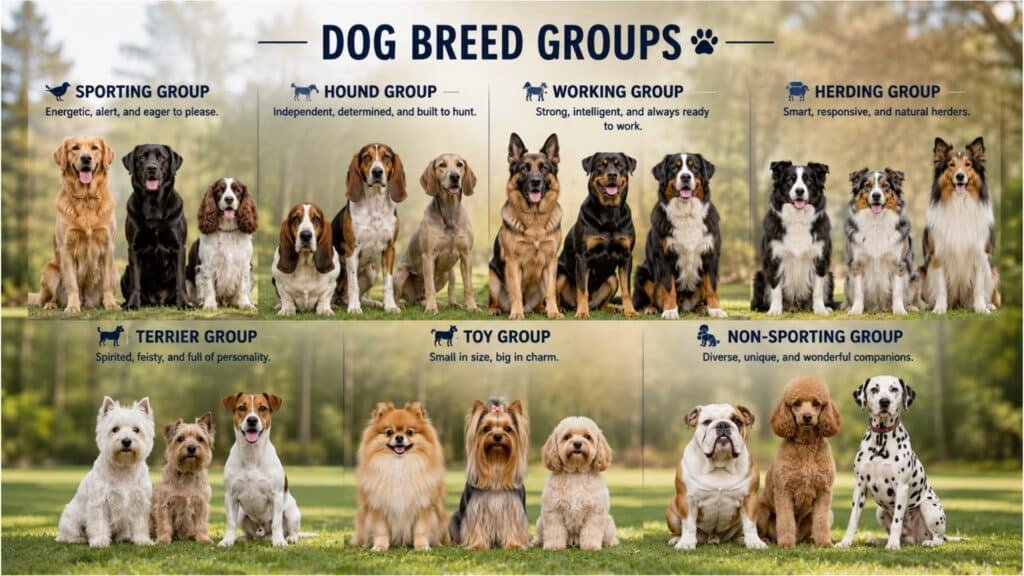
Dog breeds are groups of dogs that share predictable physical traits, behavioral tendencies, and characteristics developed through selective breeding over many generations. These traits help create consistency within a breed, although every individual dog still has its own personality.
Humans have selectively bred dogs for thousands of years to perform specific tasks. Some dogs were developed to herd livestock. Others assisted hunters, guarded property, pulled sleds, or simply provided companionship. Over time, these specialized roles shaped the breeds we recognize today.
Breed characteristics don’t guarantee behavior, but they often provide useful clues about what owners can expect. A Border Collie is more likely to display herding instincts than a Bulldog. A Beagle is more likely to follow scents than a Greyhound. Understanding these tendencies helps owners make informed decisions before bringing a dog home.
How many dog breeds exist today?
There is no single worldwide number because different kennel clubs maintain different breed registries. The exact count varies depending on the organization recognizing the breeds.
The Fédération Cynologique Internationale recognizes more than 350 breeds worldwide. The American Kennel Club currently recognizes more than 200 breeds. New breeds occasionally gain official recognition after meeting strict standards related to population size, breeding consistency, and documented history.
This remarkable diversity explains why dogs can vary so dramatically in appearance. A tiny Chihuahua and a towering Great Dane belong to the same species, yet their size, behavior, and care requirements differ significantly.
Why do dog breeds matter?
Choosing a dog breed is about much more than appearance. Breed characteristics influence exercise needs, trainability, grooming requirements, health concerns, and overall compatibility with different lifestyles.
For example, a high-energy working breed may thrive in an active household that enjoys hiking, running, and outdoor adventures. The same dog could become frustrated in a home where physical and mental stimulation are limited.
That frustration often appears as destructive chewing, excessive barking, or behavioral challenges.
Understanding breed traits helps owners set realistic expectations. It also reduces the likelihood of disappointment and improves the chances of building a long-lasting relationship with a healthy, happy companion.
How did dog breeds develop?
Dogs are believed to have descended from ancient wolves that gradually formed relationships with humans. Archaeological evidence suggests that dogs were among the first animals domesticated by people.
As human societies evolved, dogs took on different jobs. Farmers needed herding dogs. Hunters needed tracking dogs. Communities needed guard dogs. People selected dogs that excelled at specific tasks and bred them together to strengthen those traits in future generations.
Over hundreds and sometimes thousands of years, these breeding practices produced distinct groups of dogs with recognizable physical and behavioral characteristics.
Modern breeds reflect many of those historical roles even when they no longer perform the jobs they were originally bred to do.
What are the major dog breed groups?
Most kennel clubs organize dog breeds into groups based on their original purpose. Understanding these groups provides one of the quickest ways to understand a breed’s likely behavior, activity level, and temperament.
While individual personalities vary, breed groups offer useful insight into the instincts that many dogs retain today.
Sporting dogs
Sporting breeds were developed to assist hunters in locating, flushing, and retrieving game birds. These dogs typically enjoy working closely with humans and often possess high levels of intelligence and trainability.
Many sporting breeds are energetic and require regular exercise to stay physically and mentally healthy. They generally enjoy outdoor activities and tend to thrive in active households.
Popular sporting breeds include:
- Golden Retriever
- Labrador Retriever
- English Springer Spaniel
- Cocker Spaniel
- German Shorthaired Pointer
Families often appreciate sporting breeds because they combine friendliness, intelligence, and adaptability. Their eagerness to learn makes them popular choices for obedience training and canine sports.
Hound dogs
Hound breeds were developed to track prey using either scent or sight. Many of these dogs possess remarkable sensory abilities that continue to impress researchers and working dog professionals today.
Scent hounds such as Bloodhounds and Beagles rely heavily on their sense of smell. Sight hounds such as Greyhounds and Whippets depend more on speed and visual tracking abilities. These differences influence how they interact with the world around them.
Popular hound breeds include:
- Beagle
- Bloodhound
- Basset Hound
- Greyhound
- Dachshund
Owners should understand that many hounds possess strong instincts to follow scents or chase moving objects. Reliable recall training can be more challenging with some hound breeds than with breeds specifically developed for close cooperation with humans.
Working dogs
Working dogs were bred to perform physically demanding tasks that required intelligence, strength, endurance, and confidence. Historically, these dogs protected property, pulled carts, guarded livestock, and assisted people in challenging environments.
Many working breeds remain highly capable and motivated. They often develop strong bonds with their families and can excel in service work, protection training, search and rescue operations, and various canine sports.
Popular working breeds include:
- Rottweiler
- Doberman Pinscher
- Boxer
- Great Dane
- Siberian Husky
These breeds generally perform best when they receive consistent training, structured routines, and regular opportunities to use both their minds and bodies. Without adequate stimulation, some working breeds may become bored and develop unwanted behaviors.
Herding dogs
Herding breeds were developed to control and move livestock across farms and ranches. Many of these dogs rank among the most intelligent breeds in the world and display exceptional problem-solving abilities.
Even in modern homes, herding dogs often retain instincts that influence their behavior. They may attempt to herd children, other pets, or moving objects. While these behaviors can be managed through training, understanding the breed’s history helps owners recognize why they occur.
Popular herding breeds include:
- Border Collie
- German Shepherd
- Australian Shepherd
- Pembroke Welsh Corgi
- Belgian Malinois
These dogs typically require significant mental stimulation. Puzzle toys, advanced obedience training, agility sports, and structured activities help satisfy their need for engagement and purpose.
Terrier dogs
Terriers were originally developed to hunt rodents and other small animals. Their determination, confidence, and persistence made them effective working dogs in farms, homes, and rural communities.
Many terriers remain energetic and independent today. They often possess strong personalities despite their relatively small size. Consistent training and early socialization help channel their enthusiasm into positive behaviors.
Popular terrier breeds include:
- Jack Russell Terrier
- Bull Terrier
- Scottish Terrier
- Airedale Terrier
- West Highland White Terrier
Terriers often appeal to owners who enjoy active, spirited dogs with plenty of character. Their intelligence can make training rewarding, although some terriers prefer doing things on their own terms.
Toy dogs
Toy breeds were developed primarily for companionship. Their small size makes them popular among apartment residents, seniors, and individuals seeking a portable companion animal.
Many people assume toy breeds are easy to care for simply because they are small. In reality, these dogs still require training, socialization, veterinary care, and daily interaction. Some toy breeds possess surprisingly bold personalities and substantial confidence.
Popular toy breeds include:
- Pomeranian
- Chihuahua
- Maltese
- Papillon
- Pekingese
Toy breeds often form close relationships with their owners and can become deeply devoted family companions when properly cared for and socialized.
Non-sporting dogs
The non-sporting group includes a diverse collection of breeds that do not fit neatly into the other categories. As a result, personality traits, energy levels, and care requirements vary considerably across the group.
Some non-sporting breeds are highly active, while others prefer a more relaxed lifestyle. This variety makes individual breed research especially important.
Popular non-sporting breeds include:
- Bulldog
- Dalmatian
- Chow Chow
- Bichon Frise
- Boston Terrier
Because the group contains such diverse breeds, owners should focus on the characteristics of individual breeds rather than relying solely on the group classification itself.
Small dog breeds: Tiny size, huge personalities
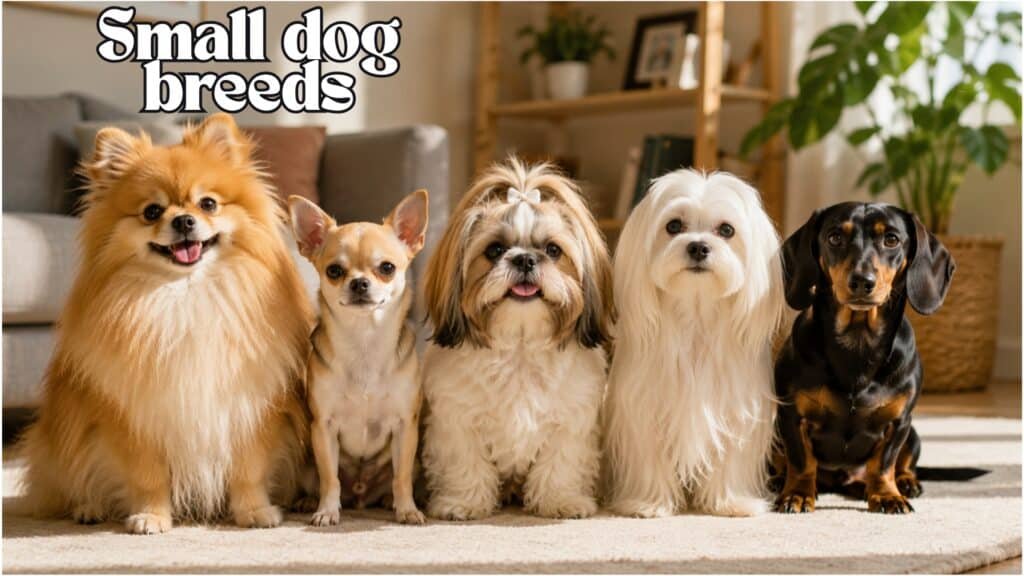
Small dog breeds continue to dominate popularity rankings across many countries. Their compact size makes them appealing for apartment living, smaller homes, and families looking for a companion that is easier to transport and manage. However, small dogs are far from low-effort pets.
Many small breeds were developed as companions, but they still require training, exercise, and mental stimulation. Owners sometimes overlook these needs because a small dog can be physically controlled more easily than a large one.
Unfortunately, this often leads to behavioral problems that could have been prevented through consistent training.
Small breeds also tend to live longer than many larger breeds. While exceptions exist, it is not unusual for healthy small dogs to live 12 to 16 years or longer. This longevity makes choosing the right breed an especially important decision.
Popular small dog breeds
Several small breeds consistently attract dog lovers because of their appearance, personality, and adaptability.
Pomeranian
The Pomeranian is known for its fluffy coat, alert expression, and confident attitude. Despite weighing only a few pounds, many Pomeranians behave as though they are much larger dogs. They thrive on attention and often become deeply attached to their families.
Shih Tzu
The Shih Tzu was originally bred as a companion dog and remains one of the most affectionate breeds available today. These dogs generally enjoy spending time with people and adapt well to indoor living. Regular grooming is necessary to maintain their long, luxurious coats.
Chihuahua
The Chihuahua is among the smallest dog breeds in the world. What it lacks in size, it often makes up for in confidence and loyalty. Proper socialization is particularly important because some Chihuahuas can become overly protective of their owners.
Dachshund
Originally developed to hunt badgers, the Dachshund combines a unique appearance with a surprisingly brave personality. Their elongated bodies require careful handling to reduce the risk of spinal injuries later in life.
Are small dog breeds good for first-time owners?
Many small breeds can be excellent choices for first-time dog owners, but success depends on selecting a breed that matches the owner’s lifestyle and expectations. A calm Shih Tzu may fit one household perfectly, while an energetic Jack Russell Terrier could overwhelm a less active family.
First-time owners should focus on temperament, exercise requirements, grooming needs, and trainability rather than choosing based solely on appearance. A breed that fits your daily routine usually leads to a happier experience for both you and your dog.
Medium dog breeds: The perfect middle ground
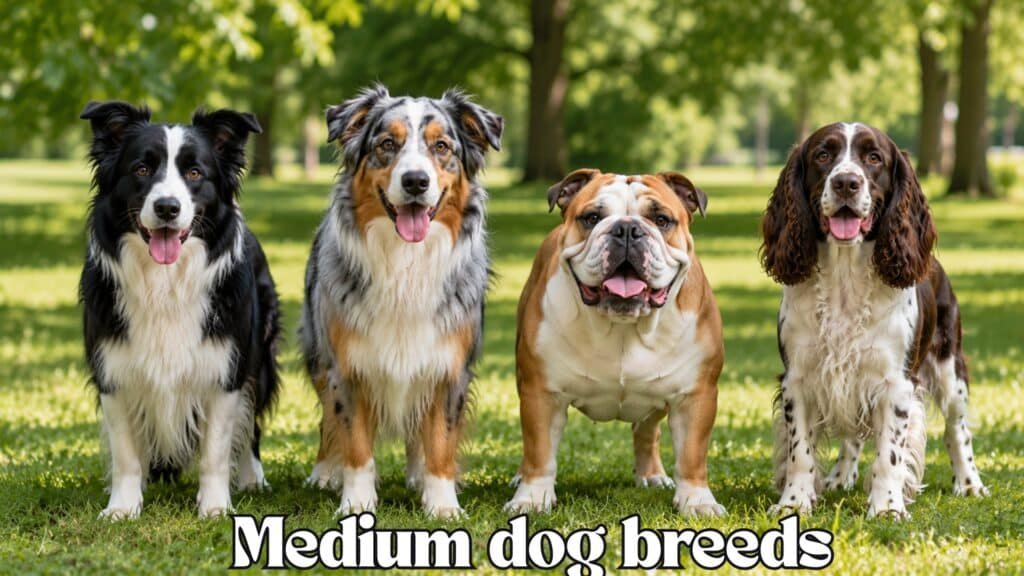
Medium-sized breeds often provide an appealing balance between the portability of small dogs and the versatility of larger breeds. Many families find that medium dogs fit comfortably into their homes while remaining active enough for outdoor adventures and family activities.
This category includes some of the most adaptable dogs in the world. Many medium breeds perform well in suburban homes, active households, and environments where owners can provide both exercise and companionship.
Medium-sized dogs frequently strike a practical balance regarding food costs, exercise requirements, and living space needs. For many families, this size range offers flexibility without some of the challenges associated with giant breeds.
Popular medium dog breeds
Border Collie
The Border Collie is widely regarded as one of the most intelligent dog breeds in the world. These dogs learn quickly and excel in obedience, agility, and advanced canine sports. Their intelligence comes with responsibility, as they require significant mental stimulation to remain happy.
Australian Shepherd
Australian Shepherds are energetic, loyal, and highly trainable. They often thrive in active households where they can participate in outdoor activities, training exercises, and structured routines.
Bulldog
Bulldogs present a very different personality profile. They are generally calm, affectionate, and less demanding in terms of exercise. Their relaxed nature makes them appealing to families seeking a lower-energy companion.
English Springer Spaniel
Springer Spaniels combine athletic ability with a friendly temperament. Their eagerness to work alongside people makes them excellent companions for active owners.
Why do families love medium-sized dogs?
Medium-sized dogs often fit comfortably into everyday family life. They are typically sturdy enough to participate in outdoor activities while remaining manageable in most living situations.
Many medium breeds develop strong bonds with children and enjoy participating in family routines. Their versatility explains why they remain one of the most popular size categories among dog owners around the world.
Large dog breeds: Gentle giants with remarkable loyalty
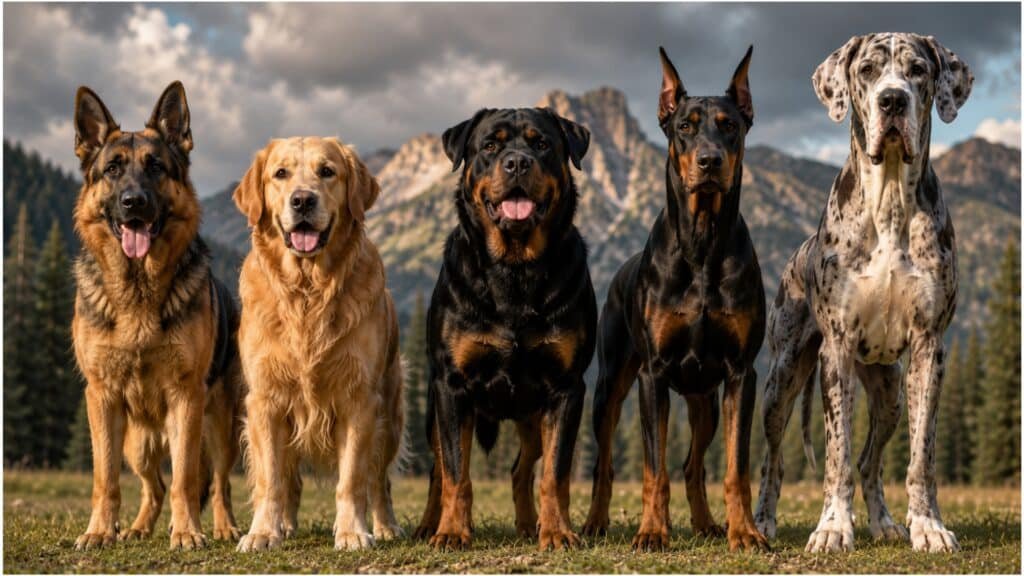
Large dog breeds often create a powerful first impression. Their size can appear intimidating, yet many of these dogs are known for gentle temperaments and deep devotion to their families.
Owning a large dog requires careful planning. Food expenses, veterinary costs, housing requirements, and exercise needs generally increase as dog size increases. Prospective owners should understand these commitments before bringing a large breed into their home.
Despite these additional responsibilities, large breeds often reward owners with extraordinary loyalty and companionship. Many become trusted family members who form strong emotional bonds with the people around them.
Popular large dog breeds
German Shepherd
German Shepherds are known for intelligence, loyalty, and versatility. They frequently serve as police dogs, military dogs, service animals, and family companions. Proper socialization and training help them develop into confident, well-adjusted adults.
Golden Retriever
Golden Retrievers consistently rank among the world’s most beloved dog breeds. Their friendly temperament, patience, and eagerness to please make them excellent companions for families, seniors, and first-time dog owners.
Rottweiler
Rottweilers are confident and protective dogs with strong family bonds. Responsible ownership, early socialization, and structured training are essential for helping them develop balanced temperaments.
Doberman Pinscher
Dobermans combine elegance, intelligence, and athleticism. These dogs often excel in obedience training and form close relationships with their owners. They perform best when provided with clear leadership and consistent guidance.
Are large dogs harder to care for?
Large breeds require more resources, but that does not automatically make them harder to own. The key difference lies in preparation. Owners must budget for higher food consumption, larger equipment, and potentially increased veterinary expenses.
Exercise requirements also vary widely among large breeds. Some large dogs enjoy vigorous daily activity, while others are surprisingly calm indoors. Researching the specific breed remains far more important than focusing solely on size.
Most popular dog breeds in the world
Some breeds consistently rank among the most popular year after year. Their popularity usually reflects a combination of temperament, trainability, adaptability, and compatibility with modern lifestyles.
Popularity can provide useful information, but it should never be the primary reason for choosing a dog. A breed that works perfectly for one family may be completely unsuitable for another.
Labrador Retriever
The Labrador Retriever remains one of the most popular dog breeds worldwide. Labs are known for their friendly nature, intelligence, and willingness to work alongside people. They frequently serve as guide dogs, therapy dogs, search-and-rescue dogs, and beloved family pets. Read our The Complete Labrador Retriever Guide: Price, Temperament, Care, Training & Health for more information about the Labrador Retriever.
Golden Retriever
Golden Retrievers continue attracting dog owners because of their gentle personalities and strong desire to please. Their combination of intelligence and sociability makes them one of the most versatile breeds available.
German Shepherd
German Shepherds maintain global popularity due to their intelligence, loyalty, and adaptability. They excel in working roles while also becoming devoted family companions when properly trained.
French Bulldog
French Bulldogs have experienced significant growth in popularity over the past decade. Their compact size, affectionate nature, and relatively moderate exercise requirements appeal to many urban dog owners.
Poodle
Poodles combine intelligence, athleticism, and a low-shedding coat. Available in Toy, Miniature, and Standard sizes, they offer flexibility for many different households.
Best family dog breeds
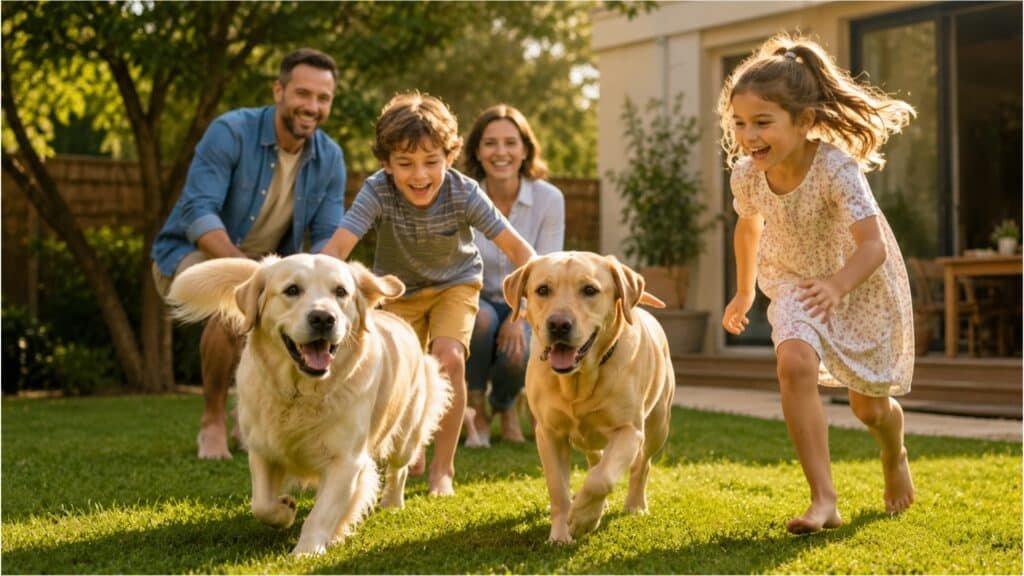
Families often search for breeds known for friendliness, patience, and adaptability. While individual temperament always matters, certain breeds consistently demonstrate qualities that make them excellent household companions.
The best family dog is not necessarily the most popular breed. It is the breed whose energy level, personality, and care requirements match the family’s daily lifestyle.
Golden Retriever
Golden Retrievers are frequently considered one of the best family breeds because of their gentle nature and eagerness to interact with people. They typically enjoy participating in family activities and often develop strong bonds with children.
Labrador Retriever
Labradors combine friendliness, intelligence, and enthusiasm. Their adaptable nature allows them to thrive in many different household environments when provided with adequate exercise and training.
Beagle
Beagles are affectionate, curious, and generally sociable. Families often appreciate their playful nature and manageable size. Their scent-driven instincts, however, require supervision during outdoor activities.
Cavalier King Charles Spaniel
This breed is known for its affectionate personality and strong desire for companionship. Cavaliers often adapt well to various living situations and generally enjoy spending time with family members.
Boxer
Boxers are energetic, loyal, and playful. Their enthusiasm makes them particularly popular among active families looking for a dog that enjoys physical activity and interaction.
Choosing a family dog requires careful consideration of more than temperament alone. Exercise requirements, grooming commitments, health concerns, available space, and daily schedules all influence whether a breed will thrive within a particular household. Read our 👉 Best Family Dog Breeds Guide for more information.
Best apartment dog breeds
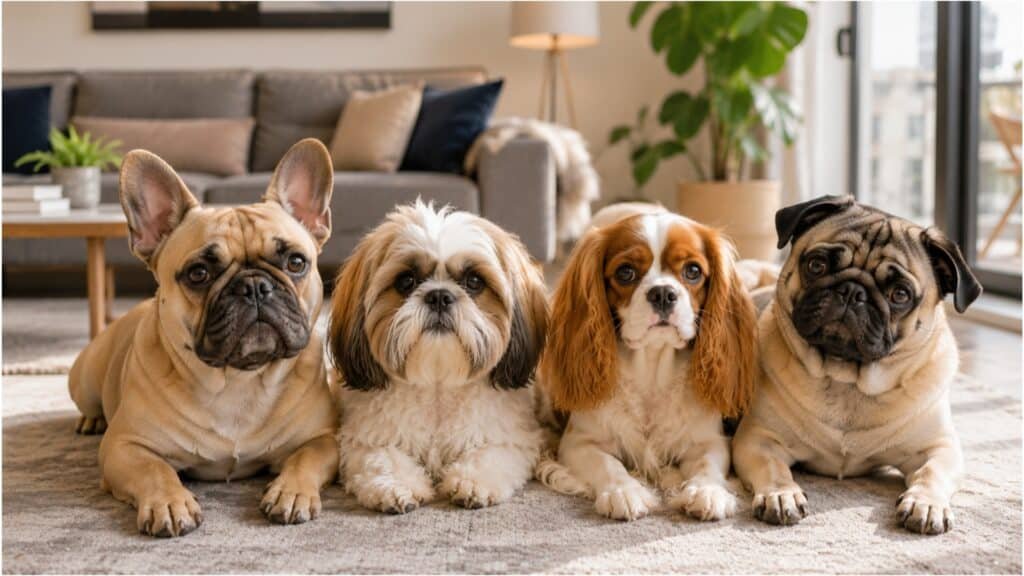
Living in an apartment doesn’t mean you can’t enjoy life with a dog. What matters most is matching a breed’s energy level, temperament, and exercise requirements with your living situation. Many apartment owners mistakenly focus only on size, but behavior often matters far more than physical dimensions.
A calm, well-trained medium-sized dog may adapt better to apartment life than a highly energetic small breed. Daily walks, mental stimulation, and consistent routines play a major role in helping dogs thrive in smaller living spaces.
French Bulldog
French Bulldogs have become one of the most popular apartment dogs for good reason. Their moderate energy levels and affectionate personalities make them suitable for urban environments. Most enjoy short walks and indoor companionship rather than demanding hours of physical activity.
Their compact size also makes them easier to accommodate in smaller homes. However, owners should understand that French Bulldogs can be prone to breathing issues due to their facial structure, particularly during hot weather.
Shih Tzu
The Shih Tzu was originally bred to be a companion dog. This history remains evident today in their affectionate nature and ability to adapt comfortably to indoor living.
Regular grooming is necessary, but their exercise needs are generally moderate. Many apartment owners appreciate their friendly personality and manageable activity requirements.
Cavalier King Charles Spaniel
Cavalier King Charles Spaniels combine affection, adaptability, and moderate exercise needs. They typically enjoy spending time with people and often adjust well to different living environments.
Their gentle temperament also makes them popular among families, seniors, and first-time dog owners seeking a companion-oriented breed.
Pug
Pugs are known for their playful personalities and strong attachment to their families. They generally enjoy moderate exercise and often prefer spending time close to their owners.
Their flat facial structure requires special attention during hot weather, but many apartment residents appreciate their adaptability and friendly nature.
Best guard dog breeds
Some dog breeds possess natural protective instincts that make them effective watchdogs and guardians. Responsible ownership is essential because protective behavior must be balanced with proper socialization and training.
A good guard dog should be confident, stable, and capable of distinguishing normal situations from genuine threats. Fearful or poorly socialized dogs rarely make reliable protectors.
German Shepherd
German Shepherds are among the most respected protection breeds in the world. Their intelligence, trainability, and loyalty contribute to their success in military, police, and security roles.
Within families, German Shepherds often form strong bonds and remain highly attentive to their surroundings. Early socialization helps ensure they remain confident and well-adjusted.
Rottweiler
Rottweilers were originally developed to protect livestock and property. Today, they continue to display confidence, courage, and strong loyalty toward their families.
Responsible ownership includes structured training, socialization, and clear leadership. When raised properly, Rottweilers often become calm and dependable companions.
Doberman Pinscher
Dobermans combine athleticism, intelligence, and alertness. Their ability to learn quickly and respond effectively to training has made them popular working dogs for decades.
Many Dobermans develop deep loyalty toward their owners and maintain a strong desire to remain close to family members.
Bullmastiff
Bullmastiffs possess an imposing appearance, yet many are known for calm and affectionate personalities within their households. Their natural guarding instincts often make them effective protectors without excessive aggression.
Their size requires owners to prioritize obedience training from an early age. A well-trained Bullmastiff can become both a loving family companion and a capable guardian.
Smartest dog breeds
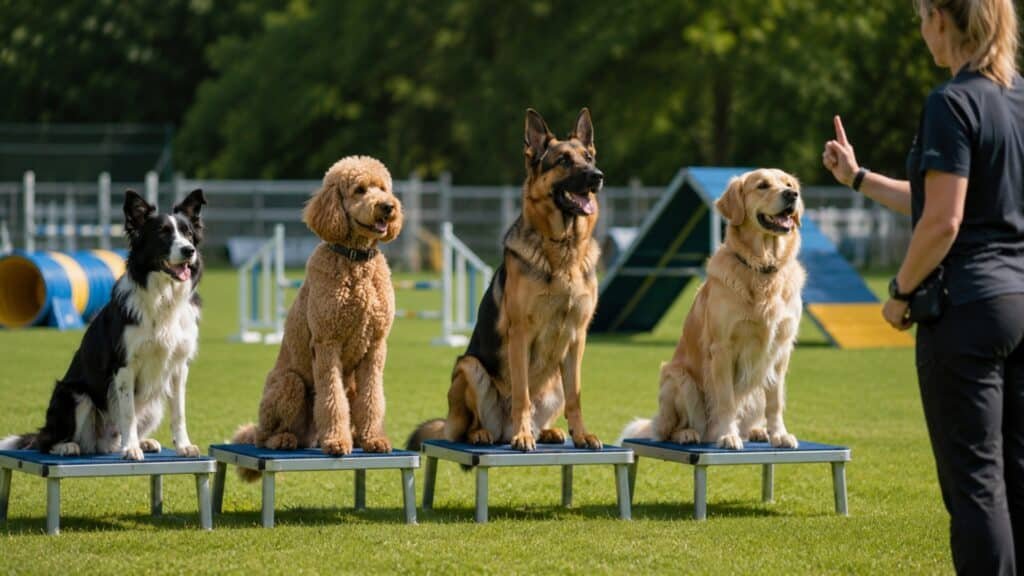
Canine intelligence extends far beyond obedience commands. Intelligence includes problem-solving ability, adaptability, memory, communication skills, and the capacity to learn new tasks.
Researchers studying canine cognition have identified several breeds that consistently demonstrate exceptional learning ability and trainability.
Border Collie
Border Collies frequently rank among the most intelligent dog breeds in the world. Their ability to understand commands, solve problems, and learn complex tasks is remarkable.
This intelligence comes with responsibility. Border Collies require substantial mental engagement to remain satisfied and well-behaved.
Poodle
Poodles are often underestimated because of their elegant appearance. In reality, they are highly intelligent working dogs capable of excelling in obedience, agility, and advanced training activities.
Available in Toy, Miniature, and Standard sizes, Poodles offer flexibility for a wide range of households.
German Shepherd
German Shepherds combine intelligence with strong work ethic and loyalty. Their ability to learn quickly contributes to their success in service work, law enforcement, and search-and-rescue operations.
Many owners appreciate their willingness to learn and their desire to work alongside people.
Golden Retriever
Golden Retrievers consistently perform well in training programs because of their intelligence and eagerness to please. These qualities make them effective therapy dogs, assistance dogs, and family companions.
Their trainability contributes significantly to their long-standing popularity around the world.
Dog temperament comparison
Temperament is one of the most important factors when selecting a breed. A dog’s personality influences daily interactions, training experiences, and long-term compatibility with household members.
Although individual differences always exist, breed tendencies provide useful guidance for prospective owners.
| Breed | Family Friendly | Energy Level | Trainability | Protective Nature |
| Labrador Retriever | Excellent | High | Excellent | Moderate |
| Golden Retriever | Excellent | High | Excellent | Low |
| German Shepherd | Very Good | High | Excellent | High |
| Beagle | Very Good | Moderate | Moderate | Low |
| Pomeranian | Good | Moderate | Moderate | Moderate |
| Rottweiler | Good | Moderate | High | High |
| Border Collie | Good | Very High | Excellent | Moderate |
| Shih Tzu | Very Good | Low | Moderate | Low |
While comparison charts are useful, owners should always remember that socialization, training, environment, and genetics influence behavior throughout a dog’s life.
Dog breed size comparison
Size affects nearly every aspect of dog ownership, including housing requirements, exercise needs, travel arrangements, and monthly expenses.
Understanding typical size categories helps narrow breed choices and establish realistic expectations.
| Size Category | Weight Range |
| Toy Breeds | Under 12 pounds |
| Small Breeds | 12 to 25 pounds |
| Medium Breeds | 25 to 60 pounds |
| Large Breeds | 60 to 100 pounds |
| Giant Breeds | Over 100 pounds |
Some breeds may fall near category boundaries, but these ranges provide a useful general reference for prospective owners.
Dog lifespan comparison
One of the most surprising facts about dogs is the relationship between size and lifespan. Smaller breeds often live significantly longer than larger breeds.
Researchers continue studying the biological reasons behind this pattern, but the trend remains consistent across many breeds.
| Breed | Average Lifespan |
| Chihuahua | 14 to 17 years |
| Shih Tzu | 10 to 16 years |
| Pomeranian | 12 to 16 years |
| Beagle | 10 to 15 years |
| Labrador Retriever | 10 to 12 years |
| Golden Retriever | 10 to 12 years |
| German Shepherd | 9 to 13 years |
| Rottweiler | 8 to 10 years |
| Great Dane | 7 to 10 years |
Individual lifespan varies based on genetics, nutrition, healthcare, exercise, and overall lifestyle.
Grooming requirements by breed category

Grooming needs vary dramatically among dog breeds. Some dogs require weekly brushing, while others need professional grooming every few weeks to maintain coat health.
Understanding grooming requirements before selecting a breed helps owners avoid unexpected time and financial commitments.
Low-maintenance grooming breeds
Breeds such as Beagles, Boxers, and Dobermans generally have short coats that require relatively simple maintenance. Regular brushing and routine hygiene care are usually sufficient.
These breeds often appeal to owners seeking a cleaner and less time-consuming grooming routine.
Moderate-maintenance grooming breeds
Labrador Retrievers, Golden Retrievers, and German Shepherds require more frequent brushing because they shed throughout the year. Seasonal shedding periods often increase grooming demands.
Routine coat maintenance helps reduce loose hair and supports healthy skin.
High-maintenance grooming breeds
Shih Tzus, Poodles, Maltese, and Afghan Hounds typically require extensive grooming. Professional grooming appointments may become a regular part of ownership.
Potential owners should account for these ongoing expenses before choosing a breed with demanding coat care requirements.
Health considerations by breed category
Every dog breed has strengths and vulnerabilities. Understanding common health concerns allows owners to make informed decisions and work proactively with veterinarians.
Responsible breeders often perform health testing designed to reduce inherited conditions within breeding programs.
Large breed health considerations
Large and giant breeds may face increased risk of joint-related conditions such as hip dysplasia and elbow dysplasia. Some giant breeds are also susceptible to gastric dilatation-volvulus, commonly known as bloat.
Regular veterinary care and appropriate nutrition play important roles in managing these risks.
Brachycephalic breed health considerations
Breeds with shortened facial structures, including French Bulldogs, Pugs, and Bulldogs, may experience breathing difficulties. Hot weather and excessive exercise can sometimes worsen these issues.
Prospective owners should understand these considerations before selecting a brachycephalic breed.
Long-bodied breed health considerations
Dachshunds and certain other breeds may face increased risk of spinal problems because of their body structure. Proper weight management and careful handling can help support long-term spinal health.
Breed-related health concerns should never discourage responsible ownership. Instead, they should encourage informed decision-making and proactive veterinary care.
How to choose the right dog breed
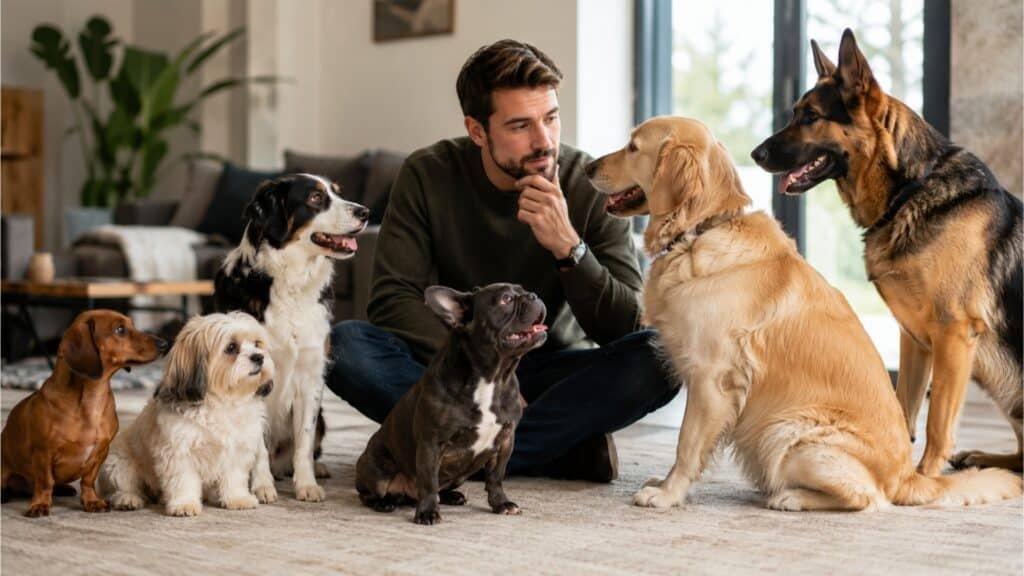
Choosing the right dog breed starts with understanding your lifestyle. A breed that fits naturally into your daily routine will usually be easier to train, easier to manage, and more enjoyable to live with over the long term.
Many people focus on appearance first and lifestyle second. Experienced trainers and veterinarians often see the consequences of this approach. Dogs that do not receive the exercise, mental stimulation, or social interaction they need can develop behavioral issues regardless of how attractive the breed may be.
Before selecting a breed, ask yourself a few honest questions. How much time can you dedicate to exercise each day? How much grooming are you willing to handle? Do you live in an apartment or a house with a yard? Are there children or other pets in the home?
The answers will help narrow your options considerably.
Consider your activity level
An active owner may thrive with a Border Collie, Australian Shepherd, Labrador Retriever, or German Shepherd. These breeds often enjoy challenging activities and regular exercise.
A less active household may find greater success with breeds that have moderate exercise needs. Bulldogs, Shih Tzus, and Cavalier King Charles Spaniels often adapt more comfortably to slower-paced lifestyles.
Matching activity levels helps prevent frustration for both owner and dog.
Consider grooming commitments
Some breeds require only occasional brushing, while others demand ongoing coat maintenance and professional grooming appointments.
If you prefer a low-maintenance routine, short-coated breeds may be more suitable. Owners who enjoy grooming and coat care may appreciate breeds with longer or continuously growing coats.
Understanding these requirements before adoption prevents unpleasant surprises later.
Consider your living space
Space influences breed suitability, although it should never be viewed as the only factor.
Many small breeds adapt well to apartment living. Some larger breeds can also thrive in apartments if their exercise needs are consistently met. Highly energetic breeds often need significant daily activity regardless of where they live.
Exercise opportunities matter more than square footage alone.
Consider long-term costs
Food, grooming, training, insurance, equipment, and veterinary care all contribute to the lifetime cost of dog ownership.
Larger breeds generally cost more to feed and care for than smaller breeds. Certain breeds may also require more specialized healthcare throughout their lives.
Planning ahead helps ensure you can provide proper care for the entire lifespan of your dog.
Dog breeds myth vs reality
Many dog breed myths continue circulating online and through word of mouth. Some contain partial truths, while others can lead prospective owners toward poor decisions.
The following table addresses several common misconceptions from the perspective of pet care professionals and canine behavior specialists.
| Myth | Reality |
| Small dogs don’t need training | Every dog benefits from training, regardless of size. |
| Large dogs are automatically aggressive | Temperament depends on genetics, socialization, training, and environment. |
| Mixed-breed dogs are always healthier | Health varies by individual genetics and breeding history. |
| Smart dogs are always easier to own | Highly intelligent dogs often require more mental stimulation and structured activities. |
| Purebred dogs all behave the same way | Individual personalities vary within every breed. |
| Apartment owners can only have small dogs | Many medium and large breeds adapt well to apartment living when exercised properly. |
| Guard breeds are naturally dangerous | Properly trained and socialized guard breeds are often stable and dependable companions. |
| Older dogs cannot learn new skills | Dogs of all ages can learn through positive reinforcement training. |
| A tired dog is always a well-behaved dog | Mental stimulation is just as important as physical exercise. |
| Popular breeds are always the best choice | The best breed is the one that matches your lifestyle and expectations. |
Expert facts every dog owner should know
- Scientific research and observations from canine professionals have revealed many fascinating facts about dogs and dog breeds.
- Dogs possess an extraordinary sense of smell. According to research referenced by the National Geographic Society, a dog’s sense of smell can be thousands of times more sensitive than a human’s. This ability explains why dogs are used in detection work around the world.
- The American Kennel Club recognizes more than 200 breeds, while international organizations recognize hundreds more. Breed diversity continues to grow as new breeds gain official recognition.
- Border Collies consistently rank among the most intelligent dog breeds studied by canine cognition researchers. Their learning ability and problem-solving skills are widely respected by trainers and behavior specialists.
- Greyhounds are among the fastest dog breeds in the world and can reach speeds exceeding 40 miles per hour during short sprints.
- Dogs communicate through body language far more than vocalization. Ear position, tail movement, posture, and facial expression all provide important information about emotional state.
- The Basenji is often called the “barkless dog” because it produces a unique vocalization rather than a traditional bark.
- Smaller dog breeds generally live longer than giant breeds. This pattern has been documented across numerous scientific studies and breed populations.
- Dogs can understand human gestures surprisingly well. Research suggests many dogs can follow pointing gestures more effectively than several other domesticated species.
- Selective breeding has produced one of the most physically diverse species on Earth. The size difference between a Chihuahua and a Great Dane is extraordinary considering both belong to the same species.
- Regular preventive veterinary care often contributes significantly to improved health outcomes and longer lifespans across all breeds.
Final thoughts
The world of dog breeds is incredibly diverse. From tiny companion dogs to powerful working breeds, every breed brings its own strengths, challenges, and unique personality traits.
The best dog breed is rarely the most popular one. It is the breed that fits naturally into your lifestyle, activity level, living environment, and long-term expectations. Taking time to research before bringing a dog home often leads to a happier relationship and a more successful ownership experience.
When breed characteristics, owner expectations, and daily routines work together, dogs become much more than pets. They become trusted companions, loyal family members, and an important part of everyday life for many years to come.
FAQ’s – The Complete Dogs Breeds Guide
1. What is the best dog breed for first-time owners?
A. Labrador Retrievers, Golden Retrievers, Cavalier King Charles Spaniels, and Poodles are often recommended for first-time owners because they tend to be trainable, social, and adaptable. Individual lifestyle compatibility remains the most important factor.
2. Which dog breed is the smartest?
A. Border Collies are frequently ranked among the smartest dog breeds. Poodles, German Shepherds, Golden Retrievers, and Dobermans also demonstrate exceptional intelligence and trainability.
3. What dog breed lives the longest?
A. Many small breeds enjoy longer lifespans than larger breeds. Chihuahuas, Toy Poodles, and Dachshunds often live well into their teens when provided with proper care.
4. Which dog breed is best for families?
A. Golden Retrievers, Labrador Retrievers, Beagles, and Cavalier King Charles Spaniels consistently rank among the most family-friendly breeds. Temperament, training, and socialization remain important regardless of breed.
5. Are mixed-breed dogs better than purebred dogs?
A. Neither is automatically better. Both purebred and mixed-breed dogs can become healthy, loving companions. Responsible breeding, proper care, and veterinary attention play major roles in overall health and well-being.
6. How much exercise does a dog need?
A. Exercise requirements vary widely among breeds. Some dogs require several hours of activity each day, while others remain satisfied with moderate walks and indoor play sessions.
7. Which dog breed sheds the least?
A. Poodles, Maltese, Portuguese Water Dogs, and several other breeds are known for low-shedding coats. No breed is completely shed-free, but some produce significantly less loose hair than others.
8. Can large dogs live in apartments?
A. Yes. Many large breeds adapt successfully to apartment living when their physical and mental exercise needs are met consistently.
Disclaimer: This guide is intended for educational purposes and should not replace professional veterinary advice. Every dog is an individual, and breed tendencies do not guarantee specific behaviors or health outcomes. Always consult a licensed veterinarian, qualified trainer, or canine behavior professional when making decisions regarding your dog’s health, behavior, nutrition, or care.

Hi, I’m Jak, the founder of BowBowMeow.com and a passionate pet parent who shares life with both a dog and a cat. I created this website to help fellow pet owners find reliable, easy-to-understand information about pet care, nutrition, behavior, grooming, training, and breed-specific topics.
Drawing from both extensive research and hands-on experience as a pet owner, I aim to provide practical, trustworthy content that helps dogs and cats live happier, healthier lives.
Disclaimer: I am not a veterinarian or certified animal professional. The information shared on BowBowMeow.com is for educational purposes only and should not replace professional veterinary advice, diagnosis, or treatment.