

You already know you want a small dog, the kind that fits on your lap, travels with you, and doesn’t need a backyard the size of a football field. But with over 50 recognized small breeds, each with wildly different energy levels, grooming demands, and personalities, picking the wrong one can mean years of frustration for both you and your pet.
In this guide, you’ll discover the best small dog breeds organized by lifestyle match, a practical decision framework for narrowing your options, and everything you need to bring your perfect small dog home with confidence.
Key Takeaways
- Small dog breeds are generally defined as dogs weighing 22 pounds or less at full maturity, a standard used by major kennel clubs including the AKC and UKC.
- Choosing the right small breed requires matching the dog’s energy level, grooming demands, and social nature to your specific lifestyle, living space, and daily routine.
- Small dogs typically live longer than large breeds, with many small breeds averaging 12–16 years, making breed selection a meaningful long-term commitment.
- Common small dog health issues – including dental disease, patellar luxation, and tracheal sensitivity, are largely manageable with consistent vet care and preventive dental hygiene.
- Hypoallergenic small breeds such as the Maltese, Bichon Frise, and Miniature Schnauzer shed minimally and suit allergy-sensitive households well.
- Breed-specific rescues are a viable and rewarding path to finding small dogs of virtually any breed, often at a fraction of the cost of buying from a breeder.
- A breed’s reputation (e.g., “Chihuahuas are aggressive”) rarely tells the full story, individual temperament is shaped as much by socialization, training, and environment as by genetics.
What Qualifies as a Small Dog Breed? (Size, Weight, and Official Classifications)
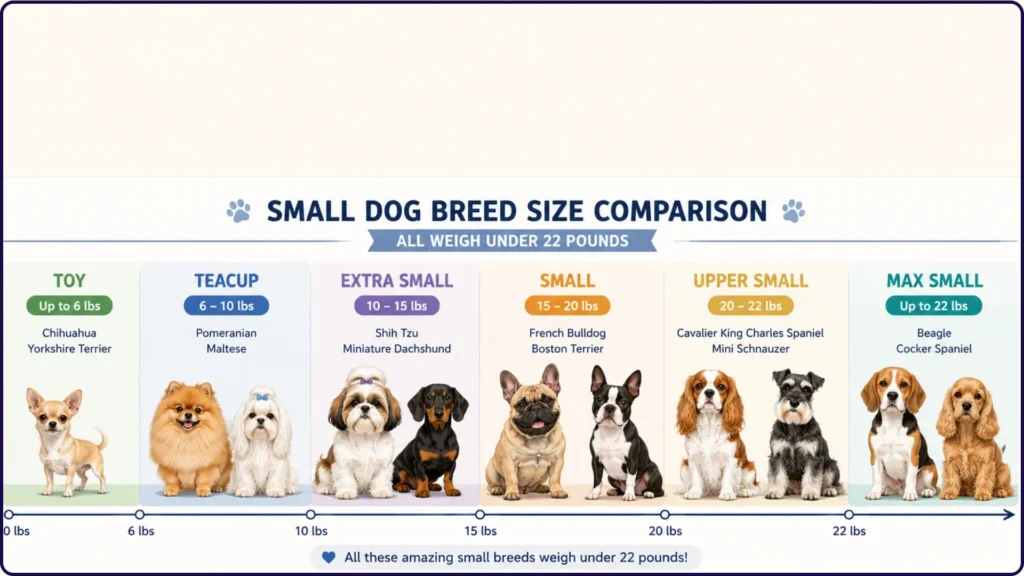
Small dog breeds are generally defined as dogs weighing 22 pounds or less at full maturity, a classification used by major kennel clubs including the American Kennel Club (AKC) and the United Kennel Club (UKC). Height-wise, most small breeds stand under 16 inches at the shoulder. This weight ceiling distinguishes “small” dogs from medium breeds, which typically range from 23 to 55 pounds.
It’s worth understanding the difference between small, toy, and miniature designations, because they’re not interchangeable. Toy breeds are a specific AKC group encompassing some of the smallest dogs, including Chihuahuas, Pomeranians, and Toy Poodles.
Miniature is a size qualifier applied within certain breeds (like the Miniature Schnauzer or Miniature Dachshund) to distinguish them from their standard counterparts. Not every small dog is a toy breed, and not every toy breed is the tiniest dog in the room.
Small breeds have surged in popularity over the last two decades for practical reasons. Urban living has made compact dogs a logical choice for apartment dwellers, and their lower food consumption translates directly into lower monthly costs.
According to AKC registration data, the French Bulldog held the title of America’s most popular dog for several consecutive years driven largely by its adaptability to city living, before recently being overtaken by the Frenchie’s equally compact cousin, the French Bulldog remaining a top-five fixture.
Read Also: Complete Dogs Breeds Guide: Types, Traits, Sizes & Care
Why Small Dog Breeds Are a Smart Choice for Many Owners
Small dogs offer real, tangible advantages for the right owner, and understanding those advantages helps you go into ownership with clear, calibrated expectations. First, their size makes them genuinely apartment-friendly.
A Yorkshire Terrier doesn’t need a yard to thrive; a 20-minute walk and a play session indoors can meet their daily needs. Second, small dogs are far more travel-compatible than large breeds. Most airlines allow dogs under 20 pounds to fly in the cabin, and road trips are infinitely easier when your dog fits comfortably in a carrier on the back seat.
Moreover, small dogs tend to live significantly longer than large breeds. Many small dog breeds average a lifespan of 12 to 16 years, compared to 8 to 12 years for large and giant breeds.
Source: American Kennel Club, 2023. That’s not a minor footnote; it means your small dog will be your companion through multiple chapters of your life.
At the same time, it’s worth addressing some persistent myths. The reputation that “small dogs are yappy” or “they’re not real dogs” is largely a product of poor training, not breed temperament. A well-socialized Chihuahua can be as calm and confident as any Labrador.
Small dog syndrome, the pushy, anxious, reactive behavior you sometimes see in petite pups, is almost always a training issue, not a breed characteristic.
Top Small Dog Breeds Organized by Lifestyle Match
Instead of listing breeds alphabetically (every other article does that), let’s match breeds to the life you actually live.

Best Small Dog Breeds for Apartment Living
Apartment living rewards dogs that are adaptable, relatively quiet, and comfortable in smaller spaces.
French Bulldog (18–28 lbs | 11–13 inches): The French Bulldog has ranked among the most popular small-to-medium dog breeds in the United States for several consecutive years, driven by its adaptability to apartment living, low exercise requirements, and affectionate temperament.
Source: AKC Registration Statistics, 2023. Frenchies are low-energy, don’t bark excessively, and bond deeply with their owners. Health watch-out: brachycephalic (flat-faced) anatomy means they can struggle in extreme heat.
Cavalier King Charles Spaniel (12–18 lbs | 12–13 inches): Cavaliers are gentle, quiet, and content to follow their owner from room to room. Their moderate energy means a daily walk keeps them satisfied. They’re one of the most affectionate breeds in existence, genuinely lap dogs by design. Health watch-out: heart conditions (Mitral Valve Disease) are common in the breed; regular cardiac screenings are essential.
Shih Tzu (9–16 lbs | 8–11 inches): Originally bred as Chinese palace dogs, Shih Tzus are cheerful, low-activity, and remarkably adaptable. They thrive in apartments and tolerate being alone better than most companion breeds. Grooming is time-intensive (their coats grow continuously), but many owners opt for a short “puppy cut” to simplify maintenance.
Best Small Dog Breeds for Families with Young Children

The best family small dogs combine patience, playfulness, and a sturdy enough build to handle the enthusiasm of children.
Beagle (under 20 lbs | 13 inches): Beagles are merry, curious, and pack-oriented by nature, which makes them wonderful with kids. They’re sturdy for their size and love to play. Trainability is moderate, their nose will lead them astray, so a securely fenced yard is important.
Pug (14–18 lbs | 10–13 inches): Pugs are comical, loving, and impressively tolerant of the chaotic energy children bring. They bond with everyone in the household and rarely show aggression. Like Frenchies, pugs are brachycephalic and need careful monitoring in hot weather.
Havanese (7–13 lbs | 8–11 inches): The Havanese is Cuba’s national dog and one of the most family-friendly small breeds available. They’re playful, trainable, and social with both kids and strangers. Their silky, low-shedding coats make them a near-hypoallergenic choice for allergy-sensitive families.
Best Small Dog Breeds for Seniors or Low-Activity Owners

For seniors or low-energy owners, the ideal small dog is calm, affectionate, and happy with gentle daily walks.
Maltese (under 7 lbs | 7–9 inches): Malteses are gentle, devoted, and content with light activity. They’ve been companion dogs for thousands of years, ancient Greeks and Romans adored them, and that temperament has held steady. Their long white coat requires regular brushing, though many owners keep it trimmed short for convenience.
Chihuahua (under 6 lbs | 5–8 inches): Chihuahuas are fiercely loyal to their primary person, which makes them excellent companions for seniors living alone. Their size means low food costs and minimal exercise demands. The key is early socialization, a well-raised Chihuahua is gentle and charming, not snappy.
Biewer Terrier (4–8 lbs | 7–11 inches): An underrated gem, the Biewer Terrier (pronounced “beaver”) is a newer AKC-recognized breed developed from Yorkshire Terrier lines. They’re playful but not hyperactive, making them a great fit for quieter households. Their tri-colored coats are stunning, and surprisingly manageable with a weekly brush.
Best Small Dog Breeds for Active Owners

Active small dogs channel high energy into adventure, they need owners who can keep up.
Miniature Schnauzer (11–20 lbs | 12–14 inches): Miniature Schnauzers are smart, spirited, and always ready for action. They love hikes, agility courses, and learning new tricks. As a low-shedding breed, they’re also popular with allergy sufferers. Health watch-out: prone to pancreatitis, so a controlled diet is important.
Rat Terrier (10–25 lbs | 10–18 inches): Another underappreciated pick, Rat Terriers are athletic, intelligent, and remarkably versatile. Originally bred as farm dogs and hunters, they thrive with active owners who provide both mental and physical stimulation. They’re among the easiest terriers to train.
Dachshund (under 11 lbs miniature | 8–9 inches): Dachshunds have big personalities in elongated bodies. They love exploration and have a hunting heritage that gives them surprising endurance. Health watch-out: their long backs are vulnerable to intervertebral disc disease (IVDD) avoid letting them jump from high surfaces.
Best Hypoallergenic Small Dog Breeds

Hypoallergenic small dog breeds shed minimally and produce lower levels of the Canis familiaris 1 (Can f 1) protein, the primary dog allergen – making them well-suited for allergy-sensitive households. Note that no dog is 100% allergen-free; these breeds simply trigger fewer reactions in most people.
- Bichon Frise (12–18 lbs | 9–11 inches): Curly-coated, cheerful, and virtually non-shedding. An ideal choice for allergy sufferers who want a sociable, gentle companion.
- Maltese – As mentioned above, Malteses shed minimally despite their luxurious coats.
- Miniature Schnauzer – Double-coated but low-shedding; one of the most hypoallergenic terrier breeds.
- Yorkshire Terrier (7 lbs | 7–8 inches) – Their hair (not fur) grows like a human’s, reducing allergen spread significantly.
Small Dog Breed Comparison Table: Quick Reference
Use this table to compare featured breeds across the key factors that matter most to prospective owners.
| Breed | Weight | Energy Level | Grooming | Trainability | Best For |
|---|---|---|---|---|---|
| French Bulldog | 18–28 lbs | Low | Low | Moderate | Apartments |
| Cavalier King Charles Spaniel | 12–18 lbs | Low–Moderate | Moderate | High | Seniors, apartments |
| Shih Tzu | 9–16 lbs | Low | High | Moderate | Apartments, seniors |
| Beagle | Under 20 lbs | High | Low | Moderate | Families |
| Pug | 14–18 lbs | Low–Moderate | Low | Moderate | Families |
| Havanese | 7–13 lbs | Moderate | Moderate | High | Families, allergy sufferers |
| Maltese | Under 7 lbs | Low | High | Moderate | Seniors, allergy sufferers |
| Chihuahua | Under 6 lbs | Moderate | Low | Moderate | Seniors, singles |
| Biewer Terrier | 4–8 lbs | Moderate | Moderate | High | Seniors, couples |
| Miniature Schnauzer | 11–20 lbs | High | Moderate | High | Active owners, allergy sufferers |
| Rat Terrier | 10–25 lbs | High | Low | High | Active owners |
| Dachshund | Under 11 lbs | Moderate | Low–High | Moderate | Active owners, singles |
| Bichon Frise | 12–18 lbs | Moderate | High | High | Allergy sufferers |
| Yorkshire Terrier | Under 7 lbs | Moderate | High | Moderate | Allergy sufferers |
| Affenpinscher | 7–10 lbs | Moderate | Moderate | Moderate | Curious, adventurous owners |
What Are the Most Common Health Problems in Small Dog Breeds?

Small dog breeds face a distinct set of health vulnerabilities that differ meaningfully from those affecting large breeds – and knowing them in advance can save you years of stress and significant vet bills. First and most pervasive is dental disease.
Dental disease affects an estimated 80% of dogs by age three, and small dog breeds are disproportionately vulnerable due to their crowded teeth and smaller jaw structure, making regular dental care essential – Source: American Veterinary Dental College.
Patellar luxation (kneecap dislocation) is another frequent issue in small breeds, particularly in Chihuahuas, Pomeranians, and Toy Poodles. It ranges from mild (occasional limping) to severe (requiring surgery).
Tracheal collapse, a progressive weakening of the tracheal rings, is especially common in Yorkshire Terriers, Pomeranians, and Chihuahuas; using a harness instead of a collar is a simple, effective preventive measure.
Hypoglycemia (low blood sugar) can affect small puppies, especially toy breeds, during their first months of life. Regular small meals and careful monitoring during puppyhood largely eliminate this risk. Finally, brachycephalic obstructive airway syndrome (BOAS) affects flat-faced breeds like Pugs and French Bulldogs, causing breathing difficulties that require climate management and, in some cases, corrective surgery.
Average lifespans by breed group:
- Toy breeds (Chihuahua, Pomeranian): 12–20 years
- Companion breeds (Cavalier, Bichon Frise): 12–15 years
- Small terriers (Miniature Schnauzer, Rat Terrier): 12–16 years
How Do I Choose the Right Small Dog Breed for My Lifestyle?
Choosing the right small dog breed means honestly evaluating your daily life before you evaluate any breed. Most mismatch problems, a hyperactive Rat Terrier in a quiet apartment, a Shih Tzu owned by someone who hates grooming are entirely predictable and entirely avoidable. Work through this simple decision framework before you fall in love with a face online.
Step 1 – Assess your living space. Do you have outdoor access? A small yard or balcony opens your options considerably. Strictly indoor? Prioritize low-energy breeds like the Cavalier or Maltese.
Step 2 – Honestly rate your activity level. If you walk 30+ minutes a day and hike on weekends, a Miniature Schnauzer or Rat Terrier will match your pace. If you prefer quiet evenings on the couch, a Shih Tzu or Pug will suit you far better.
Step 3 – Consider your household composition. Young children need a sturdy, patient breed (Beagle, Havanese). Other pets in the home? Research breed-specific tendencies around cats and dogs. Cavaliers and Bichons tend to integrate easily; some terriers have higher prey drives.
Step 4 – Calculate the full cost of ownership. Purchase price from a reputable breeder can range from $800 to $3,500 depending on breed. Factor in food (small dogs are economical here), grooming ($40–$120 per session for high-maintenance coats), vet care, and pet insurance.
Step 5 – Assess your grooming tolerance. Shih Tzus, Malteses, and Bichon Frises require regular professional grooming. Chihuahuas and Beagles need minimal coat care. Be realistic, a high-maintenance coat on a low-grooming owner creates chronic stress for both parties.
Tools, Resources, and Practical Next Steps for Finding Your Small Dog
The best resources for finding your small dog combine official breed information with adoption databases and health registries. Start with the AKC Breed Selector Tool (akc.org), which allows you to filter by size, energy level, shedding, and coat type producing a shortlist of breeds genuinely compatible with your answers. It’s a structured, no-pressure starting point.
For adoption, Petfinder.com aggregates listings from thousands of shelters and rescues across North America, including breed-specific rescue organizations. Many breed-specific rescues (like Cavalier Rescue USA or Chihuahua Rescue & Transport) maintain waitlists for specific age groups, temperaments, or geographic areas.
Adoption fees typically range from $75 to $400 – a fraction of breeder prices and usually include spay/neuter, vaccinations, and a health check.
If you choose a breeder, use the OFA (Orthopedic Foundation for Animals) database to verify that a breeder has health-tested their breeding dogs for conditions relevant to the breed. The CHIC (Canine Health Information Center) registry confirms that both parents have been screened for breed-specific health conditions. A reputable breeder will actively share OFA and CHIC numbers; a puppy mill will not.
What to Do Next: Bringing Your Small Dog Home

Bringing a small dog home successfully requires preparation that’s specific to their size, small dogs need different equipment, different safety precautions, and different feeding schedules than their larger counterparts.
First, puppy-proof your space with small-dog realities in mind: gaps under furniture, small objects on the floor, and exposed cords are genuine hazards for a 5-pound puppy.
Second, invest in appropriately sized gear from day one. A collar on a small dog creates dangerous tracheal pressure; start with a well-fitted harness instead. Choose a crate sized for your puppy’s adult dimensions (not their current tiny size), with a divider to limit space during housetraining.
Dental chews appropriate for small breeds should be part of your supply list from the beginning, it’s far easier to establish a dental routine early than to correct dental disease later.
Third, schedule your first veterinary visit within the first week. Bring your puppy’s health records from the breeder or rescue, and discuss a vaccination schedule, parasite prevention, spay/neuter timing, and breed-specific health screening.
A proactive relationship with a vet who knows your breed’s vulnerabilities is one of the highest-value investments you can make as a small dog owner.
Conclusion: The Perfect Small Dog Is the One That Fits Your Life
No single small dog breed is universally “best”, and any article that tells you otherwise is oversimplifying. The right small dog is the one whose energy, temperament, and care needs align with the life you actually live, not the life you imagine you’ll live once you get a dog. A French Bulldog thrives on quiet companionship; a Rat Terrier needs to be challenged daily. A Shih Tzu is a delight if you enjoy grooming sessions; a Chihuahua is perfect if you don’t.
Use the breed profiles, comparison table, and decision framework in this guide as your starting point, not your final answer. Visit breeds in person at reputable breeders, dog shows, or breed meetups before committing. Talk to owners of the breed you’re considering. And if the perfect small dog turns out to be a 6-year-old rescue Cavalier who needs a quiet home, let that be the answer.
You’re not just choosing a pet. You’re choosing a 12-to-16-year companion. Choose thoughtfully, choose joyfully, and trust that the right small dog is out there waiting for you.
Frequently Asked Questions About Small Dog Breeds
1. What is the calmest small dog breed?
A. The calmest small dog breeds include the Cavalier King Charles Spaniel, Maltese, and Shih Tzu. These breeds were developed specifically as companion animals and are content with minimal exercise and maximum snuggles.
2. What small dog breed lives the longest?
A Chihuahuas consistently rank among the longest-living small breeds, with many reaching 15–20 years. Toy Poodles, Malteses, and Dachshunds also routinely surpass 15 years with proper care.
3. Which small dog breeds are best for first-time owners?
A The Bichon Frise, Cavalier King Charles Spaniel, and Havanese are widely considered the most beginner-friendly small breeds due to their even temperament, trainability, and eagerness to please.
4. Are small dogs harder to train than large dogs?
A No, small dogs are not inherently harder to train. The perception exists because small dogs are often accidentally undertrained (owners carry them instead of teaching behavior). With consistent positive reinforcement, most small breeds learn quickly.
5. Which small dog breeds are good with cats?
A The Cavalier King Charles Spaniel, Maltese, Bichon Frise, and Pug are typically cat-friendly. Terrier breeds (Rat Terrier, Miniature Schnauzer) may have a higher prey drive and require careful introduction.
6. How much does it cost to own a small dog?
A First-year costs (including purchase/adoption, supplies, vet visits, and food) typically range from $1,500 to $4,000. Annual ongoing costs average $700–$2,000 depending on grooming needs and health status. Source: American Pet Products Association, 2025.
7. What’s the best small dog for someone with allergies?
A The top hypoallergenic small dog breeds include the Maltese, Bichon Frise, Miniature Schnauzer, Yorkshire Terrier, and Havanese. These breeds produce fewer allergens by shedding minimally and producing lower levels of the Can f 1 protein.
Disclaimer: This article was initially drafted using AI assistance. However, the content has undergone thorough revisions, editing, and fact-checking by human editors and subject matter experts to ensure accuracy.

Hi, I’m Jak, the founder of BowBowMeow.com and a passionate pet parent who shares life with both a dog and a cat. I created this website to help fellow pet owners find reliable, easy-to-understand information about pet care, nutrition, behavior, grooming, training, and breed-specific topics.
Drawing from both extensive research and hands-on experience as a pet owner, I aim to provide practical, trustworthy content that helps dogs and cats live happier, healthier lives.
Disclaimer: I am not a veterinarian or certified animal professional. The information shared on BowBowMeow.com is for educational purposes only and should not replace professional veterinary advice, diagnosis, or treatment.