You’ve probably scrolled past dozens of oversized, fluffy cats online and wondered whether they were Maine Coons or Ragdolls. Both breeds get lumped together as “gentle giants,” but their personalities, grooming needs, and ideal homes are actually quite different.
In this guide, we’ll break down exactly how Maine Coons and Ragdolls compare, so you can confidently choose the companion that fits your lifestyle.
Key Takeaways
- Maine Coons are one of the largest domestic cat breeds, known for dog-like loyalty, high energy, and shaggy, water-resistant coats.
- Ragdolls are known for their docile, floppy temperament and semi-long silky coats that mat less easily than a Maine Coon’s dense undercoat.
- Grooming needs differ significantly. Maine Coons need brushing two to three times weekly, while Ragdolls need consistent but slightly lighter coat care.
- Both breeds carry a genetic risk for hypertrophic cardiomyopathy (HCM), making health screening from breeders essential before purchase.
- Maine Coons tend to suit active households that want an interactive, playful cat, while Ragdolls suit calmer homes seeking a devoted lap cat.
- Cost of ownership includes upfront prices that typically range from $800 to $2,500 for both breeds, plus ongoing grooming, food, and veterinary expenses.
- Choosing between the two ultimately comes down to matching temperament and grooming tolerance to your household’s daily rhythm.
What Are Maine Coons and Ragdolls?
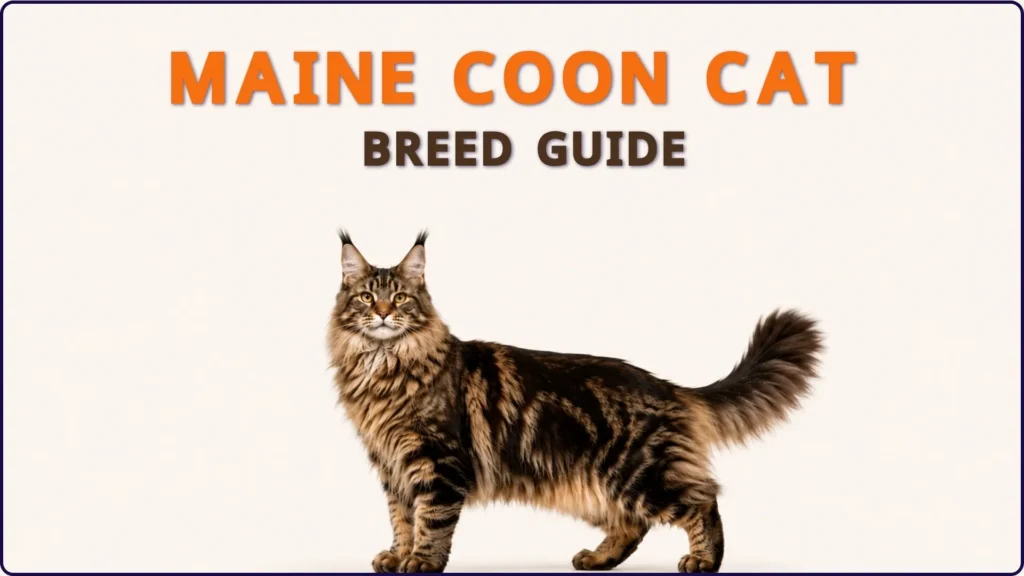
A Maine Coon is a large, long-haired domestic cat breed native to the United States, known for its muscular build, tufted ears, and dog-like sociability.
First recorded at the very first American cat show in 1895, the breed was officially recognized by the Cat Fanciers’ Association (CFA) in 1976, though it had been bred naturally in New England for over a century before that. Maine Coons are famous for their size, often growing up to 40 inches long and weighing between 10 and 25 pounds. They’re intelligent, playful well into adulthood, and unusually fond of water for a cat.
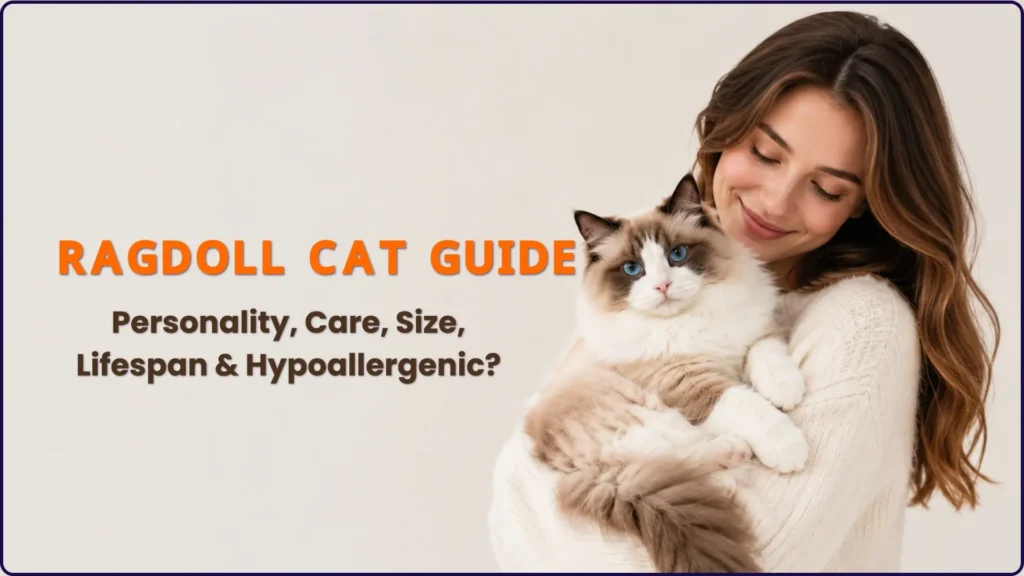
A Ragdoll is a semi-long-haired cat breed known for its docile temperament and tendency to go limp when picked up, giving the breed its name.
The Ragdoll was developed in California in the 1960s by breeder Ann Baker, who bred a calm, affectionate cat named Josephine with Burmese-like cats until she achieved a consistent, gentle type. The CFA recognized the Ragdoll in 1998. Adult females typically weigh around 15 pounds, while males average closer to 20 pounds, and all Ragdolls share striking blue eyes and distinctive color-point markings.
Both breeds have topped the CFA’s annual popularity rankings in recent years, trading the number-one spot back and forth, a sign of just how similar their broad appeal is, even though their day-to-day personalities diverge. For readers just starting their research, our guide to the best cat breeds for first-time owners is a useful companion piece before you commit to either breed.
Why Does Choosing Between a Maine Coon and a Ragdoll Matter?
Choosing the right breed matters because temperament, grooming demands, and health risks directly shape your daily routine and long-term costs as an owner.
First, a mismatch between a cat’s energy level and your lifestyle often leads to frustration on both sides. An under-stimulated Maine Coon can become destructive, while a Ragdoll left alone too often can become anxious.
Second, grooming demands vary enough between the two breeds that picking the wrong one can mean hours of extra brushing every month. Third, both breeds carry elevated genetic health risks, so understanding what you’re signing up for helps you budget for veterinary care and choose a responsible breeder.
At the same time, this decision isn’t just about the cat; it’s about compatibility. A single parent working long hours has very different needs than a family with children constantly home. As such, the comparison below walks through the specific dimensions that matter most: size, temperament, grooming, health, and cost.
Maine Coon vs Ragdoll: Size and Appearance Compared
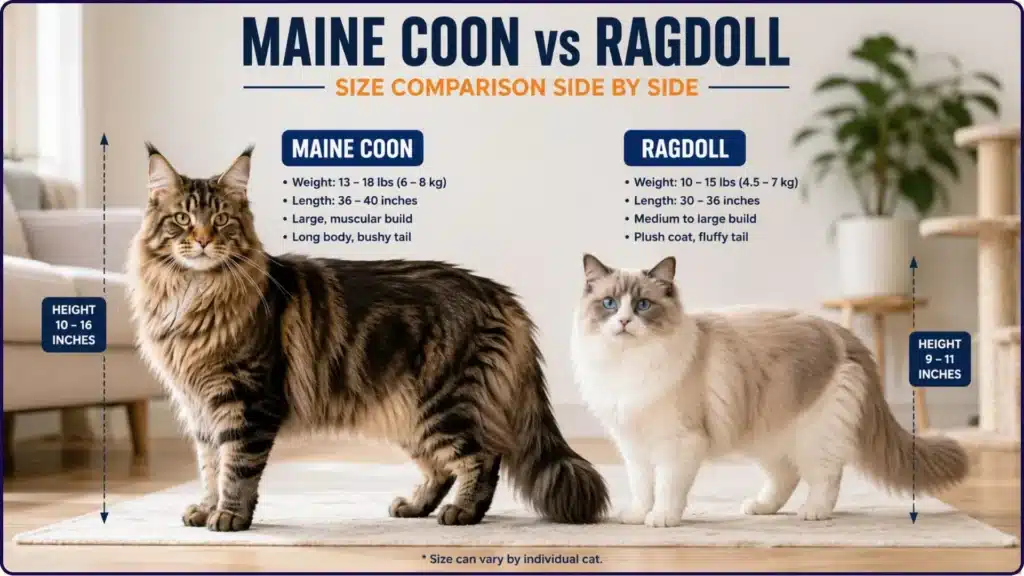
Maine Coons are generally the larger of the two breeds, though both qualify as genuinely big cats. Males typically weigh 15 to 25 pounds and can measure up to 40 inches from nose to tail, making the Maine Coon one of the largest domestic cat breeds in the world. Their coat is thick, shaggy, and water-resistant, with a ruff around the neck reminiscent of a lion’s mane.
Ragdolls, by comparison, run slightly smaller but are still substantial. Adult males average around 20 pounds, while females settle closer to 15 pounds, with sturdy, muscular bodies covered in a silky, medium-long coat. For example, a Ragdoll’s coat lies flatter and mats less than a Maine Coon’s dense double coat, which is a meaningful difference for owners deciding between the two.
If you’d like a deeper look at growth patterns, see our Maine Coon growth and development stages guide for month-by-month size expectations.
| Feature | Maine Coon | Ragdoll |
|---|---|---|
| Average weight (male) | 15–25 lbs | 18–20 lbs |
| Average weight (female) | 10–15 lbs | 10–15 lbs |
| Length | Up to 40 inches | Slightly shorter, sturdy build |
| Coat type | Thick, shaggy, water-resistant double coat | Semi-long, silky, single coat |
| Eye color | Varies by coat color | Almost always blue |
| CFA recognition | 1976 | 1998 |
How Do Maine Coon and Ragdoll Personalities Differ?
Maine Coons and Ragdolls are both famously affectionate, but their energy levels set them apart. Maine Coons are playful, curious, and interactive well into old age, often described as “dog-like” because they’ll fetch toys, follow you room to room, and greet guests at the door. This makes them an excellent fit for households that want an engaged companion rather than a purely decorative pet.
Ragdolls, on the other hand, are calmer and more predictable in temperament. Choosing between a Maine Coon and a Ragdoll typically comes down to activity level, since Maine Coons tend toward higher energy and Ragdolls toward calmer, lap-cat behavior.
For example, a Ragdoll is far more likely to spend an afternoon draped across your lap than chasing a laser pointer across the living room. Moreover, both breeds tend to bond closely with one primary person while remaining friendly toward the rest of the household, including children and other pets.
For more on reading feline body language during the bonding period, our guide on introducing a new cat to your home walks through the first-week adjustment period in detail.
Which Cat Breed Requires More Grooming, Maine Coon or Ragdoll?
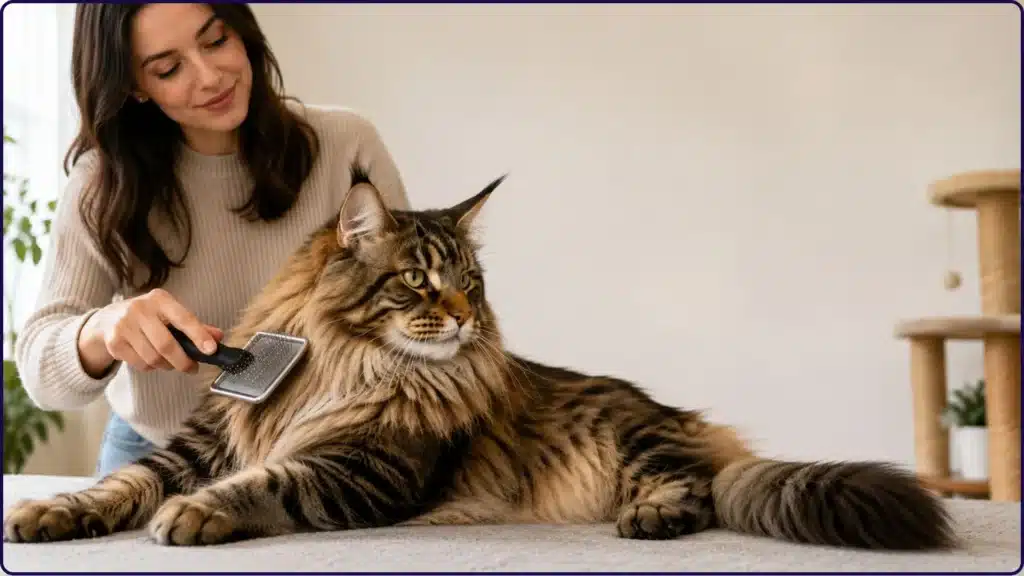
Grooming a Maine Coon involves brushing at least two to three times per week to prevent matting in its dense, water-resistant double coat. This is especially true during seasonal shedding periods in spring and fall, when a slicker brush or metal comb becomes essential rather than optional. Skipping even a week or two of brushing can lead to painful mats, particularly behind the ears, under the arms, and around the belly.
Ragdolls need consistent grooming too, but their single-layer, silky coat is less prone to matting than a Maine Coon’s undercoat. In addition, weekly brushing is usually sufficient to keep a Ragdoll’s coat smooth and reduce loose hair around the home. That being said, neither breed is truly low-maintenance, so anyone considering a hypoallergenic or wash-and-wear cat should look elsewhere. Our Maine Coon grooming routine guide covers brush types, bathing frequency, and de-shedding tools in more depth.
Are Maine Coons or Ragdolls More Prone to Health Issues?
Both Maine Coons and Ragdolls are genetically predisposed to hypertrophic cardiomyopathy (HCM), a heart condition that responsible breeders screen for before breeding.
HCM is the most common heart disease in cats overall, and research specifically on Maine Coons has linked it to a breed-specific mutation in the MYBPC3 gene. About 30% of Maine Coons carry a genetic mutation that raises their risk of developing the condition, according to Science for Animal Welfare (2026).
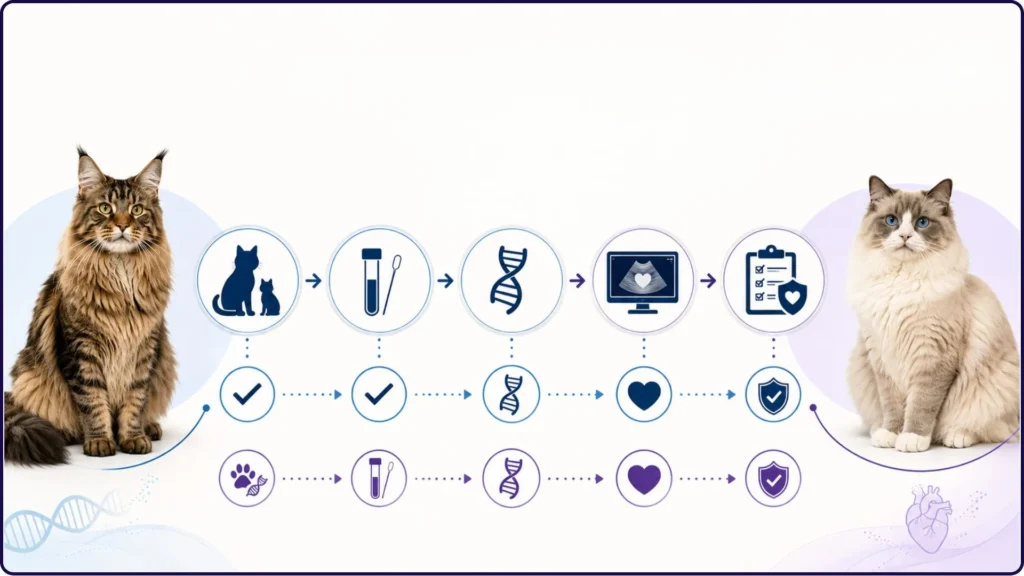
Echocardiogram-based studies of asymptomatic Maine Coons have found HCM prevalence estimates ranging from roughly 9.5% to 26.2% depending on diagnostic criteria used – Source: Gundler et al., Acta Veterinaria Scandinavica, 2008.
Ragdolls carry their own version of the same breed-linked HCM mutation, along with an elevated risk for polycystic kidney disease, so genetic testing matters for this breed as well.
First, ask any breeder for both parents’ echocardiogram results and genetic test reports before placing a deposit. Second, understand that a clean test doesn’t guarantee a kitten will never develop HCM, since the disease can also arise sporadically. For symptom recognition, our article on signs of hypertrophic cardiomyopathy in cats explains the warning signs every owner of either breed should know.
| Health Factor | Maine Coon | Ragdoll |
|---|---|---|
| Primary genetic heart risk | HCM (MYBPC3-linked mutation) | HCM (breed-linked mutation) |
| Other known risks | Hip dysplasia, spinal muscular atrophy | Polycystic kidney disease |
| Typical lifespan | 12–15 years | 12–15 years |
| Recommended screening | Echocardiogram + genetic test | Echocardiogram + genetic test |
How Much Do Maine Coons and Ragdolls Cost to Buy and Own?
Purchase prices for both breeds land in a similar range, though quality and pedigree push the ceiling higher for either cat. A pet-quality Maine Coon kitten from a reputable breeder typically costs between $800 and $2,500, while show-quality or rare-color kittens can climb toward $4,000 or more.
Ragdoll kittens follow a comparable pattern, generally priced between $800 and $2,500, with pedigreed or specially patterned kittens reaching up to $4,000 – Source: Cats.com, 2026.
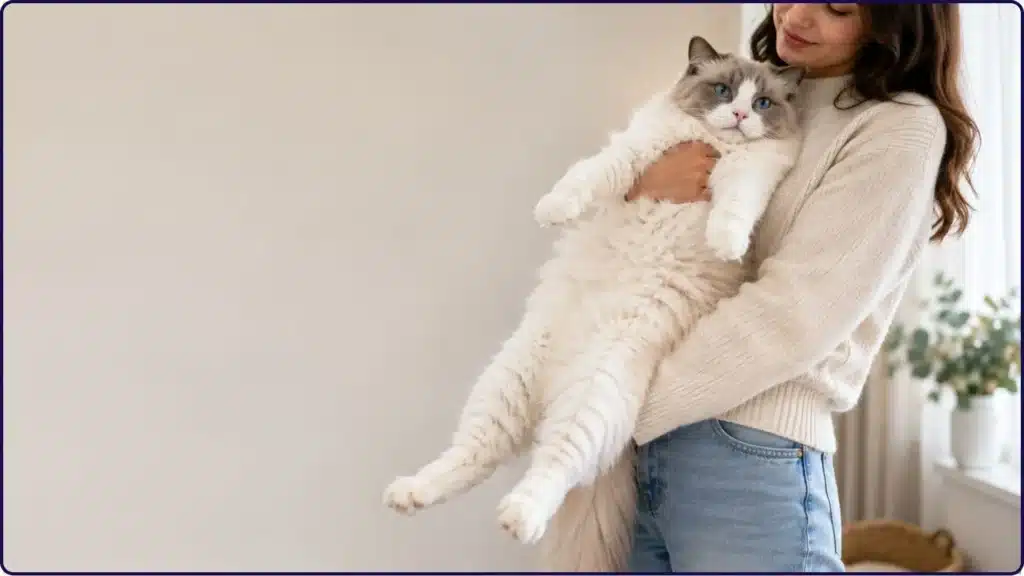
Ongoing costs matter just as much as the sticker price. Maine Coons tend to eat more due to their size, and larger cats also require larger litter boxes, carriers, and scratching posts. As such, many owners of either breed find that pet insurance for purebred cats helps offset the cost of cardiac monitoring or unexpected specialist visits, which can run into the thousands for a single workup.
| Cost Factor | Maine Coon | Ragdoll |
|---|---|---|
| Typical kitten price | $800–$2,500 | $800–$2,500 |
| Show-quality/rare color price | Up to $4,000+ | Up to $4,000+ |
| Estimated annual upkeep | $1,500–$3,000 | $1,200–$2,500 |
| Lifetime cost estimate | $20,000–$40,000+ | Similar range, slightly lower food costs |
Common Myths About Maine Coons and Ragdolls, Debunked
Both breeds attract a fair amount of misinformation, especially online, where dramatic claims get more attention than nuanced facts. The table below sets the record straight on the most common misconceptions.
| Myth | Fact |
|---|---|
| “Maine Coons are basically wild cats or part bobcat.” | Maine Coons are a fully domestic breed. Their rugged look comes from natural adaptation to harsh New England winters, not wild ancestry. |
| “Ragdolls feel no pain when picked up, so you can handle them any way you like.” | The “go limp” trait reflects a relaxed temperament, not a lack of pain sensation. Ragdolls still need to be supported and handled gently like any cat. |
| “Maine Coons don’t need much grooming because their fur looks naturally neat.” | Maine Coons require brushing two to three times weekly. Skipping grooming quickly leads to painful mats in their dense undercoat. |
| “Ragdolls are hypoallergenic.” | No cat breed, including the Ragdoll, is truly hypoallergenic. Ragdolls produce the same Fel d 1 allergen as other cats, sometimes in comparable amounts. |
| “Bigger cats like Maine Coons and Ragdolls are automatically more aggressive.” | Both breeds rank among the most gentle and sociable in CFA rankings. Size has no established link to aggression in either breed. |
| “You can’t tell Maine Coons and Ragdolls apart without a pedigree.” | Coat texture, eye color, and ear tufts reliably distinguish the two. Ragdolls almost always have blue eyes; Maine Coon eye color varies. |
Which Cat Breed Fits Your Lifestyle? Use Cases for Each
Neither breed is objectively “better”; the right choice depends entirely on your household’s rhythm and energy level.
Maine Coons tend to be the stronger fit when:
- You want an interactive, dog-like cat that plays fetch and greets you at the door.
- Your household is active, with kids or other pets that appreciate a playful companion.
- You don’t mind frequent brushing sessions in exchange for a strikingly large, expressive cat.
Ragdolls tend to be the stronger fit when:
- You want a calm, affectionate lap cat that thrives on quiet companionship.
- You live in an apartment or smaller space where a lower-energy cat is easier to accommodate.
- You prefer slightly lighter grooming demands while still enjoying a large, striking breed.
Recommended Tools and Products for Maine Coon and Ragdoll Owners
Both breeds benefit from similar core supplies, though a few choices matter more depending on which cat you bring home. First, invest in a quality slicker brush and a wide-tooth metal comb non-negotiable for Maine Coon owners and highly useful for Ragdoll owners too.
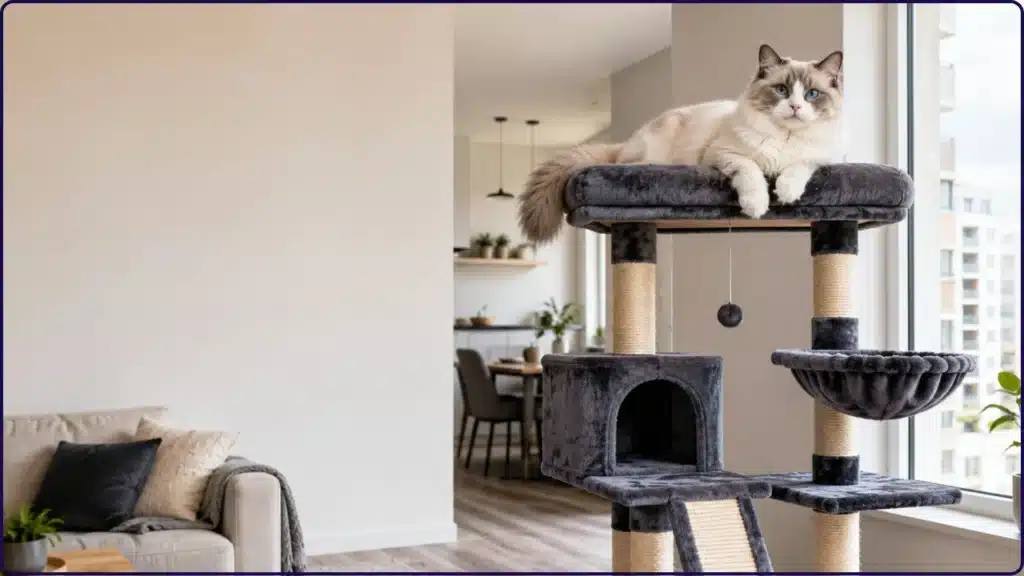
Second, because both breeds are large-bodied, a sturdy, oversized cat tree built for large breeds prevents tipping and gives these bigger cats room to climb and perch comfortably. Many free options exist too; a simple DIY cardboard scratcher or a repurposed bookshelf can supplement a store-bought tree without straining your budget.
Third, given the HCM risk in both breeds, pet insurance is worth comparing early, before any pre-existing condition appears on a cat’s record. Free tools like a basic vet visit checklist app can complement paid insurance by helping you track symptoms between appointments.
What’s Next: How to Decide and Prepare Before Adopting
Once you’ve weighed temperament, grooming, and cost, the next step is finding a reputable source for your kitten. First, start with breeder directories through TICA or the CFA rather than classified ads or social media marketplaces.
Second, ask to see both parents’ HCM echocardiograms and genetic test results before placing a deposit. A breeder who can’t produce these documents should raise concern. Our guide to choosing a reputable cat breeder walks through red flags step by step.
Third, prepare your home before the kitten arrives. Large-breed litter boxes, tall scratching posts, and pet-proofed high shelves matter more for these bigger cats than for an average-sized breed. Finally, budget realistically: set aside funds for the first-year setup costs in addition to the kitten’s purchase price, since supplies, vaccinations, and spay or neuter surgery typically add several hundred dollars on top.
Conclusion
Maine Coons and Ragdolls both earn their “gentle giant” reputation, but they get there in different ways: one through playful, dog-like energy, and the other through calm, devoted affection. Rather than asking which breed is objectively better, the smartest question is which personality and grooming routine actually fits your daily life.
Whichever you choose, both breeds reward attentive owners with years of loyal companionship, so take the time to find a health-tested kitten from a responsible breeder and prepare your home accordingly. Your future gentle giant coon or ragdoll is worth the homework.
FAQ’s About Difference Between Maine Coon and Ragdoll
1. Can Maine Coons and Ragdolls be mixed or crossbred?
A. Yes, Maine Coon and Ragdoll mixes exist, sometimes called “Ragamuffin-adjacent” hybrids informally, though neither major registry recognizes a standardized cross-breed. Mixed kittens can inherit a blend of temperament and coat traits from both parent breeds.
2. Which breed is better for families with children or other pets?
A. Both breeds generally do well with children and other pets due to their tolerant temperaments. Maine Coons may better suit highly active households, while Ragdolls often adapt more easily to quieter family routines.
3. Which cat is better for apartment living, Maine Coon or Ragdoll?
A. Ragdolls typically adapt more easily to apartment life because of their lower energy needs and preference for calm indoor routines. Maine Coons can also thrive in apartments but need more interactive play to stay satisfied.
4. Do Maine Coons or Ragdolls shed more?
A. Maine Coons generally shed more due to their thick double coat, especially during seasonal shedding periods. Ragdolls shed as well, but their single-layer coat tends to produce less loose hair around the home.
5. Are Maine Coons or Ragdolls more vocal?
A. Maine Coons are known for a distinctive, quiet chirping trill rather than loud meowing. Ragdolls are generally soft-spoken as well, though individual personality varies within both breeds.
6. How long do Maine Coons and Ragdolls typically live?
A. Both breeds have an average lifespan of 12 to 15 years with proper care and regular veterinary checkups. Cats that pass genetic HCM screening and receive consistent preventive care often live toward the higher end of that range.

Hi, I’m Jak, the founder of BowBowMeow.com and a passionate pet parent who shares life with both a dog and a cat. I created this website to help fellow pet owners find reliable, easy-to-understand information about pet care, nutrition, behavior, grooming, training, and breed-specific topics.
Drawing from both extensive research and hands-on experience as a pet owner, I aim to provide practical, trustworthy content that helps dogs and cats live happier, healthier lives.
Disclaimer: I am not a veterinarian or certified animal professional. The information shared on BowBowMeow.com is for educational purposes only and should not replace professional veterinary advice, diagnosis, or treatment.