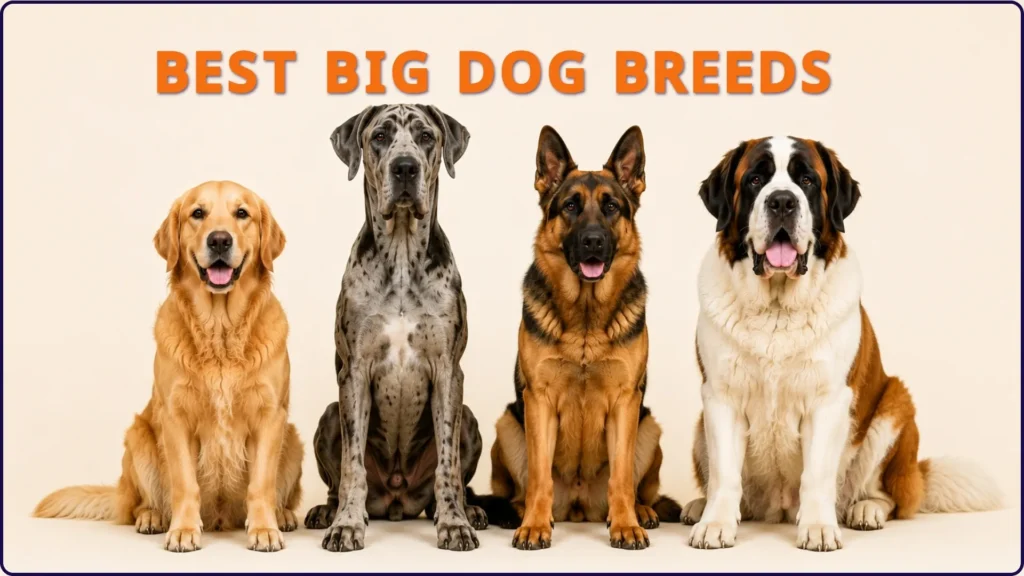
You already know big dogs are loyal, majestic, and impossible to ignore, but with over 30 recognized large breeds ranging from couch-loving giants to relentless working dogs, picking the wrong one can upend your lifestyle entirely.
Most breed guides hand you a list without telling you which big dog actually fits your home, energy level, or family. This guide breaks down the best big dog breeds by category, temperament, and lifestyle fit so that you can make a confident, well-matched choice.
Key Takeaways
- Big dog breeds are generally defined as dogs weighing 50 pounds or more, with “giant breeds” typically exceeding 90 pounds – understanding this distinction helps narrow your search from the very start.
- Large breeds vary dramatically in temperament and energy, ranging from the laid-back Saint Bernard to the high-energy Labrador Retriever, so lifestyle fit matters far more than size alone.
- Many big dog breeds are surprisingly gentle and family-friendly, including the Golden Retriever, Bernese Mountain Dog, and Newfoundland, all excellent choices for households with young children.
- Big dogs don’t necessarily require a large yard – several large breeds, like the Great Dane and Greyhound, are known for being calm indoors and adapt well to apartment living with consistent daily walks.
- Giant breeds have shorter average lifespans of 6–10 years compared to medium breeds, so prospective owners should factor in health care costs and emotional preparation alongside their adoption decision.
- Grooming, feeding, and veterinary costs are significantly higher for large breeds – budgeting approximately 1.5–2x the annual cost of a medium-sized dog is a realistic planning baseline.
- Adopting a large breed from a rescue organization is a viable and rewarding option – breed-specific rescues exist for German Shepherds, Rottweilers, Greyhounds, Labrador Retrievers, and many more.
What Are Big Dog Breeds?
Big dog breeds are dogs that typically weigh 50 pounds or more at full adult size, with a distinct subcategory: giant breeds, which generally exceed 90 pounds and stand over 27 inches tall at the shoulder. The American Kennel Club (AKC) recognizes over 30 breeds in the large and giant size categories, spanning working, herding, sporting, and hound groups. Understanding where these thresholds fall is the first step toward finding the right match.
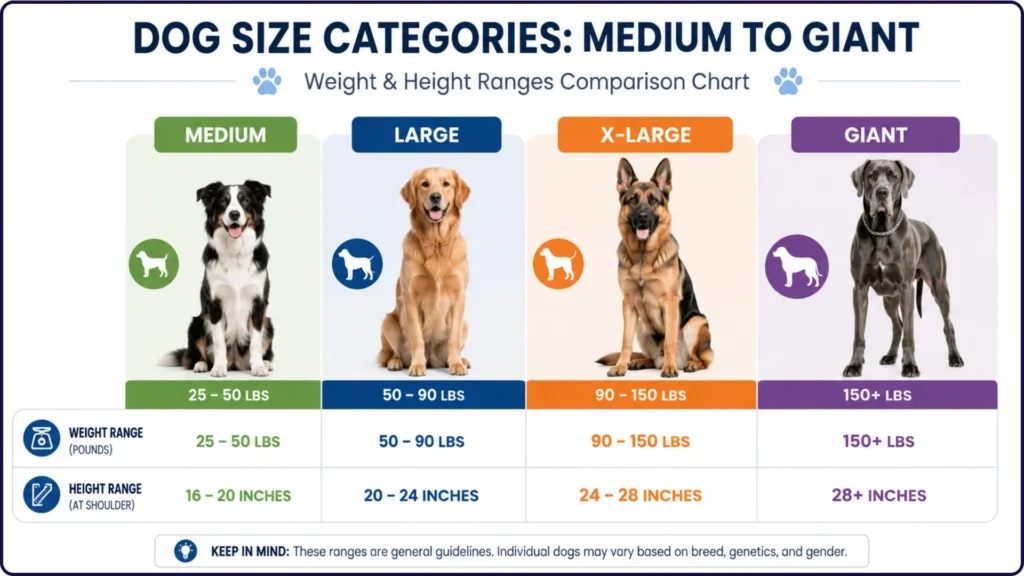
The distinction between “large” and “giant” matters more than most prospective owners realize. Large breeds in the 50–90 lb range, like the Golden Retriever, German Shepherd, and Labrador Retriever, tend to have longer lifespans, broader lifestyle compatibility, and more moderate care requirements.
Giant breeds like the Great Dane, Saint Bernard, and English Mastiff are breathtaking to look at, but they come with specialized health considerations, shorter lifespans, and substantially higher feeding costs.
For example, a German Shepherd weighing 75 lbs will eat roughly 3–4 cups of dry kibble per day. An English Mastiff tipping the scales at 180 lbs may consume 6–10 cups daily. That’s a meaningful difference in your monthly grocery budget, and just one of many factors covered in our breakdown of how much a dog costs per year.
Why Choosing the Right Big Dog Breed Matters
Choosing the right large dog breed matters because a mismatch between breed traits and owner lifestyle is the leading reason large dogs are surrendered to shelters. High-energy breeds placed in low-activity homes become destructive and anxious. Protective breeds in inexperienced hands become difficult to manage safely. The wrong fit isn’t just inconvenient; it causes genuine stress for both dog and owner.
At the same time, the rewards of getting it right are enormous. Big dogs provide unparalleled companionship, deep loyalty, and a sense of presence and security that smaller breeds simply cannot match.
Many large breeds are naturally patient with children, intuitive about their owners’ emotions, and physically capable of joining you on hikes, trail runs, and outdoor adventures. According to the American Pet Products Association (APPA), approximately 65.1 million U.S. households own at least one dog.
Source: APPA National Pet Owners Survey, 2023–2024 – and large breeds consistently rank among the most popular choices year after year.
Moreover, the persistent belief that big dogs need big houses is a myth worth debunking early. Several giant breeds, including the Great Dane and the Greyhound, are famously low-energy indoors and sleep up to 16–18 hours a day.
What matters far more than square footage is daily exercise quality, mental stimulation, and the consistency of your routine. If you’re researching best dog breeds for apartment living, you may be genuinely surprised how many large breeds earn a spot on that list.
Which Big Dog Breeds Are Best for Families with Young Children?
The best big dog breeds for families are those with naturally gentle temperaments, high patience thresholds, and an instinct to bond closely with children. Not all large breeds are created equal for family life; some are boisterous and need careful supervision around toddlers, while others are patient and calm from their very first day home.

Golden Retriever
The Golden Retriever is widely regarded as one of the best family dog breeds in the world, and the reputation is earned. Goldens are patient, playful, and deeply affectionate; they tend to treat every child in the household as their personal best friend.
Males typically weigh 65–75 lbs and stand 23–24 inches tall, making them sturdy enough to handle boisterous play without being physically overwhelming.
Their high intelligence and eagerness to please also make them exceptionally easy to train, which is a genuine bonus for families who are new to large breeds. Explore our full Golden Retriever breed overview for a complete deep-dive into their care needs.
Labrador Retriever
The Labrador Retriever held the title of America’s most popular dog breed for 31 consecutive years before recently being surpassed. Source: AKC Breed Popularity Rankings, 2022. Labs are energetic, enthusiastic, and famously tolerant of the chaos that comes with young children.
They come in three coat colors (yellow, black, and chocolate), weigh 55–80 lbs, and are among the most reliably trainable large breeds in existence.
One honest caveat: Labs need significant daily exercise, at least 60–90 minutes, and without it, they can channel excess energy into destructive chewing.
Bernese Mountain Dog
The Bernese Mountain Dog is a tri-colored gentle giant originally bred for farm work in the Swiss Alps. Berners are known for their calm, affectionate demeanor and are especially patient and kind around young children. They weigh 70–115 lbs and carry an inherently soft temperament that makes family life feel natural.
One important consideration: Berners have a shorter lifespan of 7–10 years and carry an elevated risk for certain cancers, so prospective owners should research health screening and reputable breeders carefully.
Best Big Dog Breeds for Protection and Home Security
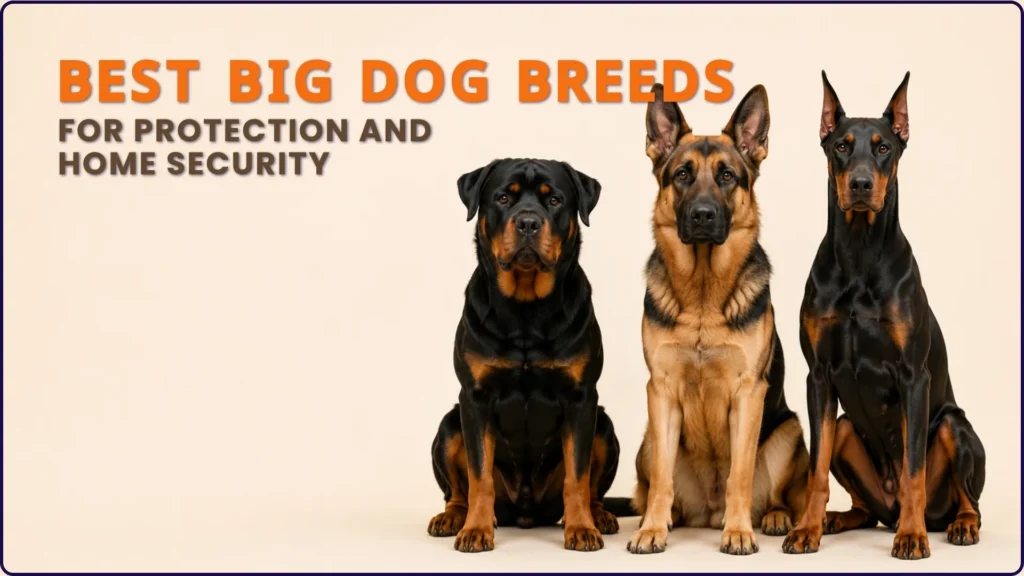
The best large dog breeds for protection combine natural guarding instincts with strong trainability and unwavering loyalty to their immediate family. These are not inherently aggressive breeds; in fact, a properly bred and socialized protection dog is deeply controlled, responsive, and only reactive when there is a genuine threat.
Rottweiler
The Rottweiler is a confident, calm, and powerful breed that has been used in personal protection, police work, and military service for generations. Males can weigh up to 135 lbs and project a natural authority that acts as a deterrent without any provocation.
Rottweilers are affectionate and loyal with their own families, but they require firm, consistent training from a young age and are not recommended for first-time dog owners without professional guidance.
German Shepherd
The German Shepherd is arguably the world’s most versatile working dog actively deployed by military and law enforcement agencies globally, and equally beloved as a dedicated family companion. Males typically weigh 65–90 lbs and stand 24–26 inches tall.
German Shepherds are intensely loyal, highly intelligent, and naturally protective without being reactive or unpredictable. Read our detailed German Shepherd breed profile to understand exactly what this breed needs to thrive.
Doberman Pinscher
The Doberman Pinscher is a sleek, athletic breed recognized for its speed, intelligence, and near-unshakeable loyalty to its owner. Dobermans weigh 60–100 lbs and are among the most trainable large breeds available. They’re often mischaracterized as dangerous, but a properly socialized Doberman is genuinely affectionate with family members and simply reserved, not hostile around strangers.
Gentle Giant Dog Breeds That Are Surprisingly Calm and Loving
Gentle giant dog breeds are extra-large dogs typically over 90 lbs – recognized for their calm, deeply affectionate temperaments despite their physically imposing size. These breeds regularly defy expectations by being among the most placid, easy-going dogs you’ll ever meet. For an expanded look at this category, see our dedicated guide to gentle giant dog breeds.
Great Dane
The Great Dane holds the record as the tallest dog breed in the world, with males averaging 30–32 inches in height and weighing between 140–175 pounds. Despite their towering stature, Great Danes are famously nicknamed “the world’s biggest lap dogs”; they are gentle, affectionate, and surprisingly content in smaller living spaces as long as they receive daily walks. Their average lifespan is 7–10 years, which is typical for giant breeds.
Newfoundland
The Newfoundland was originally bred as a water rescue dog along the coast of Canada and carries a famously sweet, patient nature. Newfies weigh 100–150 lbs and are known for being extraordinarily gentle with children; many owners describe them as having an almost instinctive desire to protect the youngest members of the family. Their thick, water-resistant double coats require regular grooming, and fair warning: they are enthusiastic droolers.
Irish Wolfhound
The Irish Wolfhound is the tallest dog breed by minimum AKC height standard – males must stand at least 32 inches at the shoulder, with many individuals reaching 34–36 inches. Despite being historically bred to hunt wolves, modern Irish Wolfhounds are gentle, dignified, and quietly good-natured. They weigh 105–120 lbs and have an average lifespan of just 6–8 years, among the shortest of any recognized breed.
What Are the Calmest Large Dog Breeds for Apartment Living?
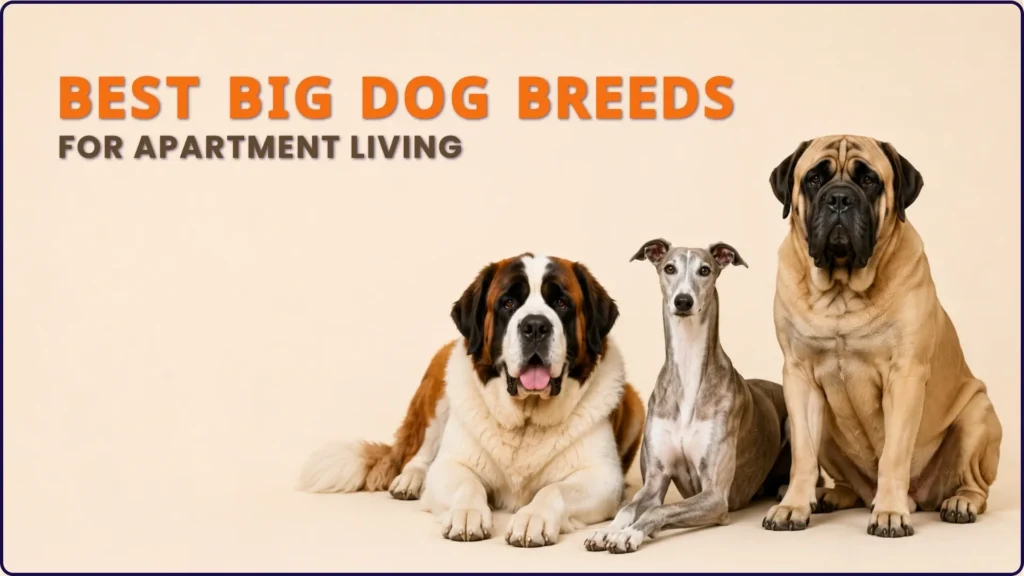
The calmest large dog breeds for apartment living are those with naturally low indoor energy levels, quiet temperaments, and moderate daily exercise requirements. Contrary to persistent assumptions, apartment size is far less important than daily exercise commitment; a calm big dog who gets two 30-minute walks each day will thrive in a city apartment far better than a high-energy breed in a house with a passive owner.
Saint Bernard
The Saint Bernard weighs 120–180 lbs and ranks among the most naturally calm and easygoing large breeds in existence. Originally bred for mountain rescue work in the Swiss Alps, Saint Bernards are patient, gentle, and thoroughly content lounging indoors for much of the day. They need moderate exercise, not intense daily workouts, and are excellent companions for children, seniors, and quieter households alike.
Greyhound
The Greyhound surprises nearly everyone who encounters one at home. Despite being the fastest dog breed on earth, reaching speeds up to 45 mph in a sprint, Greyhounds are notoriously lazy at home, sleeping 16–18 hours a day, rarely barking, and moving through the house with quiet, elegant ease. Retired racing Greyhounds are widely available for adoption through dedicated rescue organizations and consistently make excellent first large dogs for calm, consistent households.
English Mastiff
The English Mastiff is the heaviest dog breed by average adult weight – males regularly reach 160–230 lbs. Mastiffs are dignified, deliberate, and deeply loyal companions who spend most of their time migrating slowly between their favorite napping locations.
They are low-energy indoors but need daily walks to support joint health and maintain a healthy weight. Their sheer size means joint and orthopedic health are ongoing considerations, another reason to research dog health insurance for large breeds early.
Which Large Dog Breeds Are Easiest to Train for First-Time Owners?
The large dog breeds easiest to train for first-time owners are those that combine high intelligence, a strong desire to please, and low levels of stubbornness or working independence. Trainability varies significantly across breeds: sporting and herding dogs tend to be the most responsive, while scenthounds and independent working breeds can require a more patient, experienced approach.
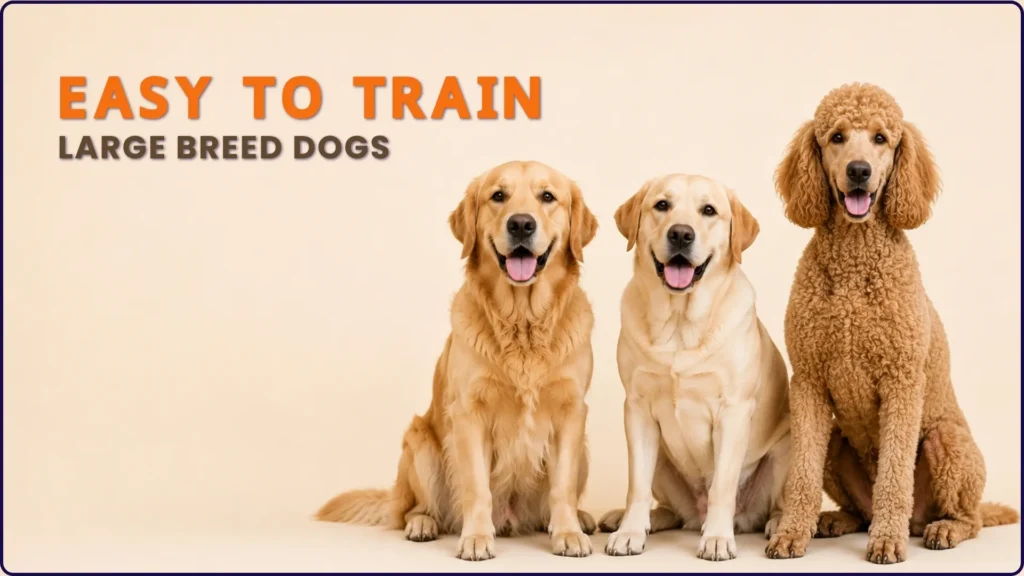
For first-time large dog owners, these three breeds consistently rise to the top:
- Golden Retriever – Eager to please, highly food-motivated, and gentle in their response to redirection. Goldens respond beautifully to positive reinforcement-based training.
- Labrador Retriever – Fast learners with exceptional focus and enthusiasm. Labs are widely used as guide dogs, therapy dogs, and search-and-rescue dogs precisely because of their reliable trainability.
- Standard Poodle – Often underestimated as a large breed (males can weigh up to 70 lbs), Poodles rank #2 in overall canine intelligence behind only the Border Collie. They can learn new commands in as few as 5 repetitions.
For side-by-side breed comparisons across trainability, temperament, and lifestyle compatibility, our dog breed comparison guide is an excellent starting point.
What Big Dog Breeds Shed the Least?
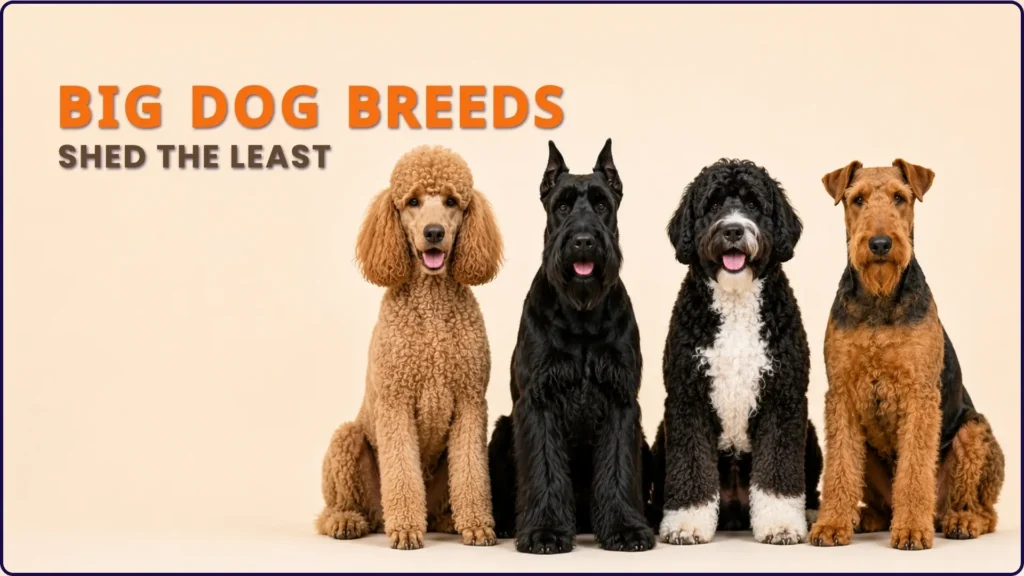
Large dog breeds that shed the least include the Standard Poodle, Giant Schnauzer, Portuguese Water Dog, and Airedale Terrier – all of which have hair-type coats rather than traditional fur, dramatically reducing year-round shedding. Low-shedding does not mean no-maintenance, however.
Most of these breeds require professional grooming appointments every 6–8 weeks to prevent matting and coat damage. For a complete breakdown, see our guide to dog breeds that don’t shed.
The Standard Poodle is the gold standard for low-shedding large dogs. Their dense, curly coats trap loose hair rather than releasing it onto your furniture and clothing. The Giant Schnauzer – weighing 55–85 lbs – has a wiry double coat that sheds minimally with regular professional hand-stripping or clipping.
The Portuguese Water Dog, weighing 35–60 lbs and sitting on the cusp of medium and large, features a curly or wavy low-shedding coat and is widely considered hypoallergenic for allergy-sensitive households.
Big Dog Breeds: Size, Lifespan & Care at a Glance
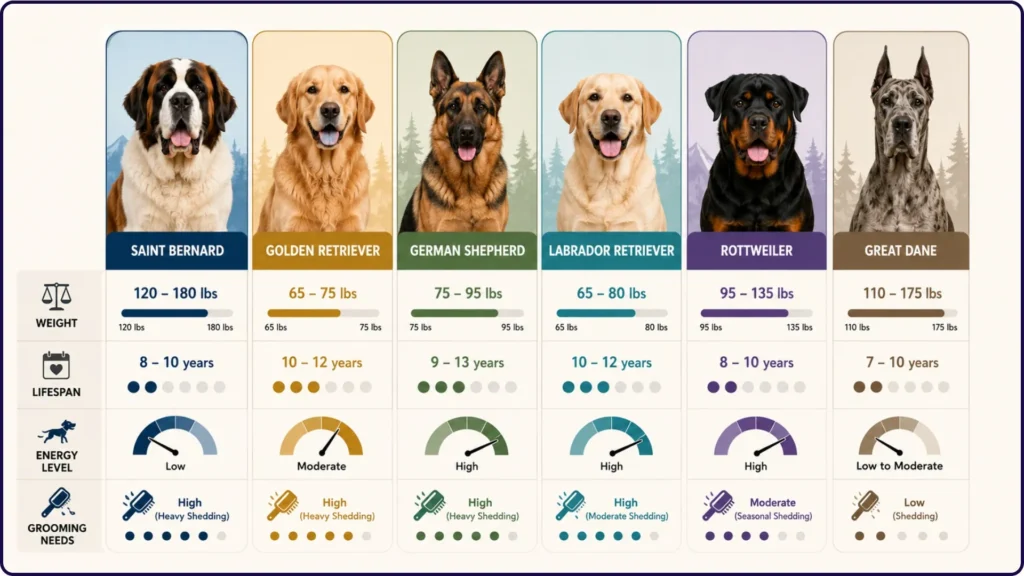
Use this comparison table as a quick reference when evaluating large and giant breeds across the metrics that matter most:
| Breed | Avg. Weight | Avg. Height | Lifespan | Energy Level | Grooming Need | Best For |
|---|---|---|---|---|---|---|
| Golden Retriever | 55–75 lbs | 21–24 in | 10–12 yrs | High | Moderate | Families / First-time owners |
| Labrador Retriever | 55–80 lbs | 21–24 in | 10–12 yrs | High | Low | Families / Active owners |
| German Shepherd | 65–90 lbs | 22–26 in | 9–13 yrs | High | Moderate | Protection / Experienced owners |
| Rottweiler | 85–135 lbs | 22–27 in | 9–10 yrs | Moderate | Low | Protection / Experienced owners |
| Great Dane | 110–175 lbs | 28–32 in | 7–10 yrs | Low–Moderate | Low | Apartments / Families |
| Newfoundland | 100–150 lbs | 26–28 in | 9–10 yrs | Low–Moderate | High | Families / Water-loving owners |
| Saint Bernard | 120–180 lbs | 26–30 in | 8–10 yrs | Low | Moderate | Calm households / Seniors |
| Irish Wolfhound | 105–120 lbs | 30–34 in | 6–8 yrs | Moderate | Moderate | Experienced owners |
| Standard Poodle | 40–70 lbs | 18–24 in | 10–18 yrs | High | High | Allergy-sensitive households |
| Bernese Mountain Dog | 70–115 lbs | 23–27 in | 7–10 yrs | Moderate | High | Families / Cold-climate owners |
| Greyhound | 60–88 lbs | 27–30 in | 10–14 yrs | Low indoors | Low | Apartments / Calm households |
| English Mastiff | 120–230 lbs | 27–30 in | 6–10 yrs | Low | Low | Calm households / Experienced |
How to Choose the Right Big Dog Breed for Your Lifestyle
Choosing the right big dog breed requires honestly matching five key lifestyle factors- living space, activity level, dog ownership experience, household composition, and annual budget – to each breed’s documented needs. There is no universally “best” large breed; there is only the best breed for your specific circumstances.
Factor 1: Your Living Space
First, evaluate your actual square footage and your access to outdoor space. A spacious home with an inactive owner is, counterintuitively, a worse environment for a high-energy breed than a city apartment with a committed daily exercise routine.
A Labrador Retriever confined to a large house with no stimulation will be miserable. A Greyhound in a modest studio apartment with 45 minutes of outdoor running each day will genuinely thrive.
Factor 2: Your Daily Activity Level
Second, match your energy honestly to the breed’s documented exercise requirements. High-energy breeds like the German Shepherd, Labrador, and Belgian Malinois need 60–120 minutes of vigorous physical activity daily, not a casual stroll around the block.
Low-energy breeds like the Saint Bernard, Mastiff, and Basset Hound are well-served by 30–45 minutes of moderate walking. Be realistic with yourself: your future dog’s mental health and behavior depend entirely on whether their energy needs are being met.
Factor 3: Your Experience With Dogs
Third, assess your experience level without self-flattery. Breeds like the Rottweiler, Doberman Pinscher, and Chow Chow are powerful, confident, and wired for independence; they require experienced, consistent handling and do not forgive gaps in training.
If this is your first large dog, starting with a Golden Retriever, Labrador, or Bernese Mountain Dog gives you a much more forgiving foundation. Our dog breed comparison guide lets you filter breeds by owner experience requirement.
Factor 4: Children, Other Pets, and Household Dynamics
Fourth, consider every member of your household, human and animal. Most large family breeds are instinctively gentle with children, but certain protection breeds carry territorial instincts around other dogs or small animals. Always research a breed’s historical prey drive and inter-dog compatibility thoroughly if you already have pets at home.
Factor 5: Your Annual Budget
Fifth, and this one is consistently underestimated: calculate your true annual ownership cost. According to the ASPCA, the average annual cost of owning a large dog ranges from $1,500 to $3,500, accounting for food, veterinary care, grooming, and supplies.
Source: ASPCA Pet Care Cost Guide. Giant breeds skew significantly higher. Plan for dog health insurance for large breeds from day one: orthopedic surgeries and cancer treatments in large breeds regularly cost $5,000–$15,000 or more. Our full breakdown of how much does a dog cost per year walks through every cost category in detail.
Large Dog Breeds: Myths vs. Reality
| Common Myth | Reality |
|---|---|
| Big dogs need a big house to be happy. | Exercise quality matters far more than floor space. Even breeds like Great Danes and Greyhounds can thrive in apartments when they receive daily walks and mental stimulation. |
| Large breeds are naturally aggressive and dangerous. | A dog’s temperament depends on genetics, training, and socialization—not size. Rottweilers, German Shepherds, and Dobermans are protective but can be calm, loyal family companions when properly raised. |
| Big dogs are harder to train than small dogs. | Many large breeds are among the easiest dogs to train. Golden Retrievers, Labrador Retrievers, and Standard Poodles are highly intelligent and eager to please. |
| Big dogs are always hyper and high-energy. | Many giant breeds are surprisingly calm indoors. Saint Bernards, English Mastiffs, and even Greyhounds spend much of the day resting and relaxing. |
| Large dogs are not good with children. | Many large breeds are exceptionally gentle with kids. Golden Retrievers, Bernese Mountain Dogs, and Newfoundlands are known for their patience and affectionate nature. |
| All big dogs shed excessively. | Several large breeds shed very little. Standard Poodles, Giant Schnauzers, Portuguese Water Dogs, and Airedale Terriers have low-shedding coats but require regular grooming. |
| Big dogs are too expensive for the average owner. | While large breeds generally cost more to feed and care for, expenses can be managed through budgeting, preventive healthcare, and pet insurance. |
| Large breed dogs don’t live long enough to be worth adopting. | Most large breeds live 8–12 years, while breeds like the Standard Poodle often live 10–18 years. Lifespan varies by breed, genetics, nutrition, and healthcare—not simply by size. |
What’s Next: How to Prepare Your Home for a Large Dog Breed
Preparing your home for a large dog means making practical space adjustments, purchasing appropriately sized equipment, and establishing veterinary relationships before your dog even arrives. Getting ahead of these steps dramatically reduces stress for both you and your new dog during the critical first few weeks of transition.
Space-proof your home at standing-dog height first. Large dogs at floor level can comfortably reach kitchen counters, pull tablecloths, and clear coffee tables with a casual tail wag. Secure hazardous items, cleaning supplies, and food at a height that accounts for a dog standing 28–32 inches at the shoulder, which is far higher than most first-time large dog owners anticipate.
Invest in size-appropriate equipment before the dog arrives. Standard crates, beds, and harnesses are simply not engineered for dogs weighing 100 lbs or more. Invest in an XXL wire crate, an orthopedic large-breed bed (joint health is a long-term priority for all big dogs), and a no-pull front-clip harness rated for your breed’s weight.
If crate training feels overwhelming, our step-by-step guide on how to crate train a large dog walks you through the process from start to finish.
Find a large-breed-experienced veterinarian before bringing your dog home. Ask specifically about their experience managing hip dysplasia, elbow dysplasia screening, and bloat, formally known as Gastric Dilatation-Volvulus (GDV).
Bloat is a life-threatening emergency that disproportionately affects deep-chested large breeds, including Great Danes, German Shepherds, and Dobermans, and early awareness can save your dog’s life.
Plan large-breed nutrition from day one. Large-breed puppies should never be fed standard puppy food, the high calorie and calcium content drives too-rapid bone growth, significantly increasing the risk of joint disorders like hip dysplasia and osteochondrosis.
Always look for formulas explicitly labeled for large breed puppy food recommendations. For adults, work with your vet to calibrate caloric intake based on your dog’s current weight and activity level.
Source your dog responsibly and patiently. If purchasing from a breeder, our guide on how to find a reputable dog breeder will help you avoid puppy mills and identify breeders who prioritize health testing and ethical practices. If adopting is a wonderful choice, breed-specific rescue organizations exist for nearly every popular large breed, including German Shepherds, Rottweilers, Labrador Retrievers, and Greyhounds.
Conclusion: Finding Your Perfect Big Dog
The right big dog breed exists for virtually every type of owner – the question is simply whether you’ve done the honest work of matching their needs to your actual life, not the life you imagine you lead. A well-matched large dog is one of the most rewarding relationships a person can have: loyal beyond measure, physically present, deeply bonded, and capable of transforming an ordinary home into something that genuinely feels whole.
Start by being honest about your lifestyle. Visit local shelters and breed-specific meetup events to spend real time with different dogs before committing. Talk to owners who live with the breed daily, not just breeders who sell them.
And remember: the single most important factor isn’t finding the most popular breed or the most striking-looking dog. It’s being a committed, informed, and patient owner. That’s what all great big dogs deserve and what the right one will give back to you tenfold.
Frequently Asked Questions About Big Dog Breeds
1. What is the biggest dog breed in the world?
A. The Great Dane is recognized as the tallest dog breed in the world, with males averaging 30–32 inches in height at the shoulder. For sheer bodyweight, the English Mastiff holds the title; adult males regularly reach 160–230 lbs. Both breeds are known for calm, gentle temperaments that contrast sharply with their imposing physical presence.
2. Are big dogs good for apartments?
A. Yes, several large breeds are genuinely well-suited to apartment living, including the Great Dane, Greyhound, Saint Bernard, and English Mastiff. These breeds have naturally low indoor energy levels and adapt well to smaller spaces as long as they receive consistent daily walks and adequate mental stimulation. The determining factor is exercise routine, not apartment square footage.
3. What big dog breeds are best with kids?
A. The Golden Retriever, Labrador Retriever, Bernese Mountain Dog, and Newfoundland are consistently recognized as the best large dog breeds for families with children. All four breeds are patient, gentle, and instinctively protective of children without displaying reactive or unpredictable behavior.
4. How long do large dog breeds live?
A. Large dog breeds typically live between 8–12 years, while giant breeds averaging over 90 lbs generally live just 6–10 years. The Standard Poodle is a notable exception, often reaching 10–18 years. As a general rule, body size and lifespan are inversely correlated: smaller dogs live longer, and this should be an honest factor in any adoption decision.
5. What big dog breeds don’t shed much?
A. The Standard Poodle, Giant Schnauzer, Portuguese Water Dog, and Airedale Terrier are among the large breeds with the lowest shedding profiles. These breeds have hair-type coats rather than traditional fur, which significantly reduces loose hair in your home, though all still require regular professional grooming to prevent matting.
6. What is the calmest large dog breed?
A. The Saint Bernard, Greyhound, Great Dane, and English Mastiff are widely considered the calmest large dog breeds. All four have naturally low indoor energy levels, quiet temperaments, and a strong preference for lounging rather than pacing or barking. The Greyhound is the most counterintuitive entry: despite being the world’s fastest dog, it is exceptionally calm, quiet, and low-energy in a home environment.

Hi, I’m Jak, the founder of BowBowMeow.com and a passionate pet parent who shares life with both a dog and a cat. I created this website to help fellow pet owners find reliable, easy-to-understand information about pet care, nutrition, behavior, grooming, training, and breed-specific topics.
Drawing from both extensive research and hands-on experience as a pet owner, I aim to provide practical, trustworthy content that helps dogs and cats live happier, healthier lives.
Disclaimer: I am not a veterinarian or certified animal professional. The information shared on BowBowMeow.com is for educational purposes only and should not replace professional veterinary advice, diagnosis, or treatment.