You’ve probably heard that Ragdoll cats are gentle, beautiful, and perfect for families, and that reputation is absolutely well-earned. But most breed guides stop at the surface, leaving out the truth about allergens, the real ongoing costs, and whether a Ragdoll actually fits your lifestyle.
In this complete Ragdoll Cat Guide, you’ll get everything: their history, personality, grooming needs, common health problems, what they cost, and exactly how to find a healthy kitten from a reputable breeder.
Key Takeaways
- Ragdoll cats are a large, semi-longhaired breed developed in the 1960s, known for striking blue eyes, color point coats, and their unique tendency to go limp when held, the trait that gave the breed its name.
- Ragdolls are NOT hypoallergenic. Like all cats, they produce the Fel d 1 protein that triggers allergies, though some owners with mild sensitivities find them more tolerable than other breeds.
- Ragdolls rank among the most affectionate domestic cat breeds, making them exceptionally well-suited for families with children, seniors, and multi-pet households.
- Grooming a Ragdoll requires weekly brushing of their semi-long coat to prevent tangles, along with routine dental care and nail trimming less intensive than that of many fully long-haired breeds.
- Ragdolls are prone to Hypertrophic Cardiomyopathy (HCM), a hereditary heart condition, so purchasing from a breeder who conducts documented genetic HCM screening is essential.
- The purchase price of a Ragdoll kitten ranges from $800 to $2,500+ from a reputable breeder, with annual care costs typically running $1,000–$2,000 per year.
- Ragdolls are indoor-only cats who thrive on human companionship. They are not suited to being left alone for long periods and may develop anxiety without regular social interaction.
What Is a Ragdoll Cat and Where Did the Breed Come From?
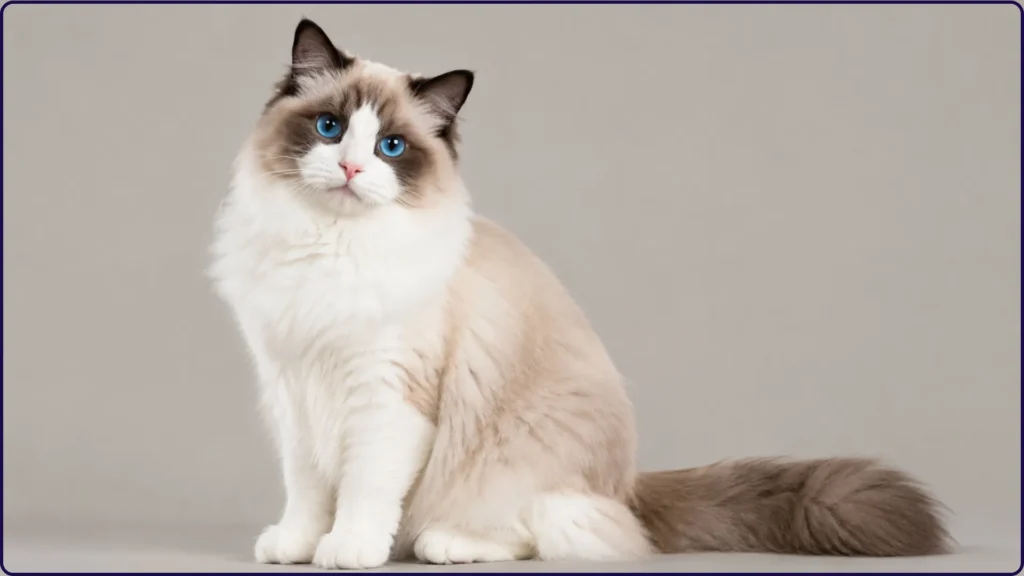
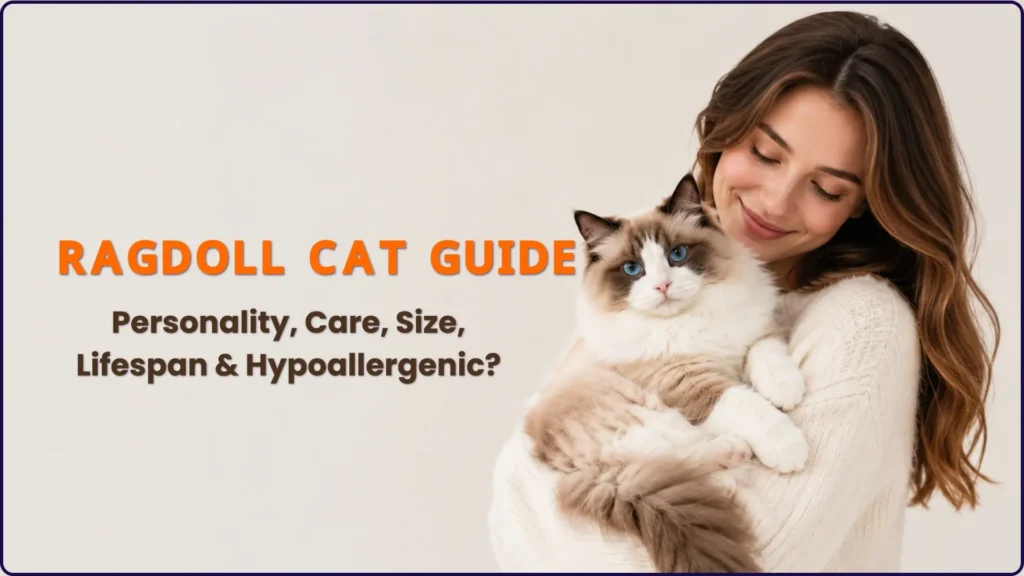
A Ragdoll cat is a large, semi-longhaired domestic breed developed in the 1960s by American breeder Ann Baker, characterized by vivid blue eyes, a color point coat pattern, and a famously docile temperament that causes them to go limp and relaxed when held, the trait that gave the breed its distinctive name.
Ann Baker began developing the Ragdoll breed in Riverside, California, by selectively breeding cats with notably calm and gentle temperaments. The foundation cat, a white domestic longhair named Josephine, produced kittens that displayed an extraordinary tolerance for handling.
Baker trademarked the Ragdoll name and established strict breeding guidelines, and the breed was eventually recognized by the Cat Fanciers’ Association (CFA) and the International Cat Association (TICA).
Today, Ragdolls are one of the most registered cat breeds in the United States. The CFA ranked Ragdolls as the #1 most popular cat breed by registration for multiple consecutive years, including 2022 and 2023.
Source: Cat Fanciers’ Association, 2023. That level of popularity isn’t accidental; it’s a direct reflection of how uniquely well-suited this breed is to family and companion life.
Physically, Ragdolls are built on a grand scale. Males typically weigh 15 to 20 pounds at full maturity, and females range from 10 to 15 pounds. Their bodies are broad and muscular, covered in a silky, semi-long coat that lies flat against the body, which makes it far less prone to matting than fully long-haired breeds like Persians.
Looking for more cat breeds? Read our Complete Cat Breeds Guide: 30 Popular Cat Breeds Compared to compare personalities, sizes, care needs, lifespans, and more.
Ragdoll Cat at a Glance
| Feature | Details |
|---|---|
| Breed Name | Ragdoll |
| Origin | California, United States |
| Breed Group | Large, Semi-Longhaired Domestic Cat |
| Size | Large |
| Height | 9–11 inches (23–28 cm) |
| Length | 17–21 inches (43–53 cm), excluding the tail |
| Weight | Males: 15–20 lbs (6.8–9 kg)Females: 10–15 lbs (4.5–6.8 kg) |
| Lifespan | 12–17 years |
| Coat Type | Semi-longhaired, silky, soft |
| Shedding | Moderate |
| Hypoallergenic | ❌ No |
| Eye Color | Blue |
| Common Coat Colors | Seal, Blue, Chocolate, Lilac, Red, Cream |
| Patterns | Colorpoint, Mitted, Bicolor |
| Temperament | Affectionate, Gentle, Calm, Friendly, Loyal |
| Energy Level | Moderate |
| Intelligence | High |
| Trainability | Easy to train |
| Affection Level | ⭐⭐⭐⭐⭐ (5/5) |
| Kid-Friendly | ⭐⭐⭐⭐⭐ Excellent |
| Dog-Friendly | ⭐⭐⭐⭐⭐ Excellent |
| Apartment Friendly | ⭐⭐⭐⭐⭐ Yes |
| Good for First-Time Owners | ✅ Yes |
| Exercise Needs | 20–30 minutes of interactive play daily |
| Grooming Needs | Brush 2–3 times per week |
| Vocalization | Low to Moderate |
| Health Concerns | Hypertrophic Cardiomyopathy (HCM), Obesity, Urinary Tract Issues |
| Average Price (USA) | $800–$2,500+ from reputable breeders |
| Best For | Families, Seniors, Apartment Dwellers, First-Time Cat Owners |
Are Ragdoll Cats Hypoallergenic? (The Honest Answer)
Ragdoll cats are not hypoallergenic. This is one of the most common misconceptions about the breed, and it’s important to address it directly, especially if cat allergies are a concern for you or someone in your household.
No domestic cat breed is truly hypoallergenic. All cats produce a protein called Fel d 1, which is the primary allergen responsible for triggering reactions in cat-sensitive people. Fel d 1 is produced in a cat’s saliva, skin glands, and urine, and it becomes airborne when cats groom themselves and shed dander.
Approximately 10–20% of the global population is allergic to cats – Source: American College of Allergy, Asthma & Immunology, 2023.
That said, some Ragdoll owners with mild allergies report they tolerate the breed better than others. There are a few possible reasons for this. First, Ragdolls shed less than many fully longhaired cats, which may reduce the total amount of allergen distributed around the home.
Second, some anecdotal evidence suggests that Ragdolls may produce slightly lower levels of Fel d 1 compared to certain other breeds, though this has not been definitively established through controlled scientific studies.
If you have cat allergies, the safest approach is to spend time with a Ragdoll before committing to adoption or purchase. Spend an hour or two with a breeder’s cats or in a foster environment and monitor your reaction. You might also consult an allergist and consider options like HEPA air purifiers, regular vacuuming, and keeping the cat out of your bedroom to reduce exposure.
Bottom line: Ragdolls are a better-tolerated breed for some allergy sufferers, but they are not an allergy-safe breed. Anyone with serious cat allergies should proceed with caution and professional guidance.
Why Are Ragdoll Cats So Popular With Families and First-Time Owners?
Ragdoll cats are popular because they combine the affectionate, companionable nature of a dog with the independence and low-maintenance lifestyle of a cat. A rare combination that makes them ideal for a wide range of households.
Unlike many cat breeds that prefer solitude or set their own social terms, Ragdolls actively seek out human interaction. They follow their owners from room to room, greet people at the door, and willingly climb into laps. This “puppy-like” behavior is a defining characteristic of the breed and a primary reason why families searching for a consistent companion land on the Ragdoll.
Moreover, Ragdolls have a notably low aggression threshold. They rarely scratch or bite, even when startled or overstimulated, a quality that makes them particularly well-suited to homes with young children. Seniors living alone also find Ragdolls to be exceptional companions: calm, gentle, and deeply attached to their people.
For apartment dwellers, the Ragdoll’s indoor-only temperament is another point in their favor. They do not have strong predatory drives or a desire to roam outdoors, making them genuinely content in smaller living spaces as long as they receive enough attention and enrichment.
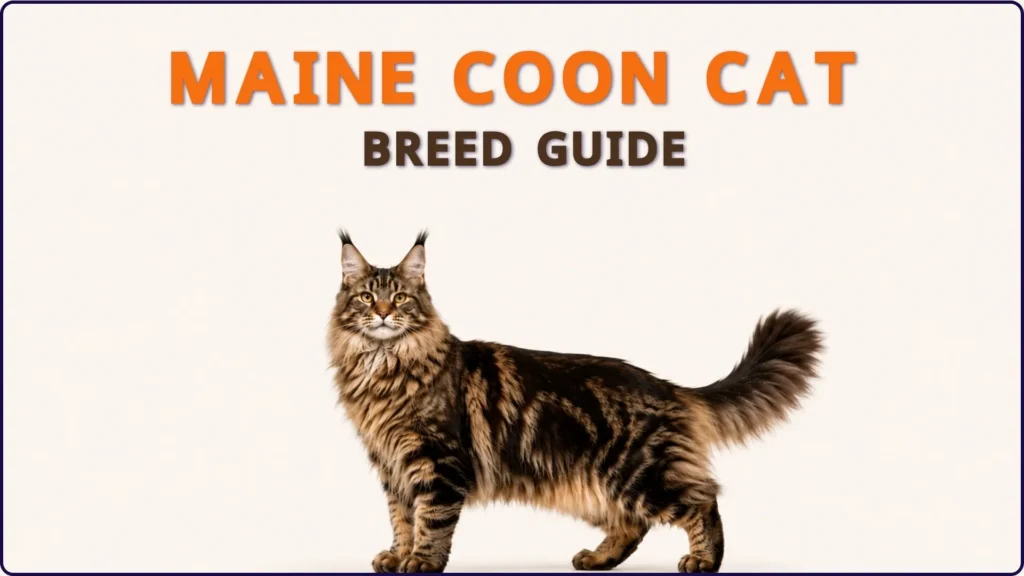
Read Also: Maine Coon Cat Breed Guide: Size, Personality, Care, Lifespan
What Is the Personality of a Ragdoll Cat Really Like?
Ragdoll cats are gentle, calm, and deeply affectionate by nature; they consistently rank among the most tolerant and people-oriented of all domestic cat breeds.
First, Ragdolls are true lap cats. They crave physical closeness and will often follow their owners from room to room throughout the day. Unlike more independent breeds, a Ragdoll left alone too long can develop signs of separation anxiety, including excessive vocalization, destructive behavior, or loss of appetite.
For this reason, Ragdolls thrive best in households where someone is home for a significant portion of the day, or where they have a feline companion.
Second, Ragdolls are highly compatible with children and other pets. Their tolerant, non-aggressive temperament means they rarely escalate conflict with young children who may be learning how to handle cats. They also coexist well with other cats and even calm dogs.
Third, Ragdolls are moderately vocal. They communicate with soft, musical chirps rather than loud meowing, which makes them pleasant to live with even in quiet households or apartments. They enjoy interactive play but are not hyperactive; a short daily play session of 15–20 minutes is typically sufficient to keep them mentally stimulated and physically healthy.
One thing to be realistic about: Ragdolls are emotionally demanding cats. If you want a self-sufficient, low-interaction pet, a Ragdoll is probably not the right match. But if you want a cat that genuinely bonds with you and becomes a constant, loving presence in your home, few breeds compare.
How Big Do Ragdoll Cats Get? Colors, Patterns, and Physical Traits
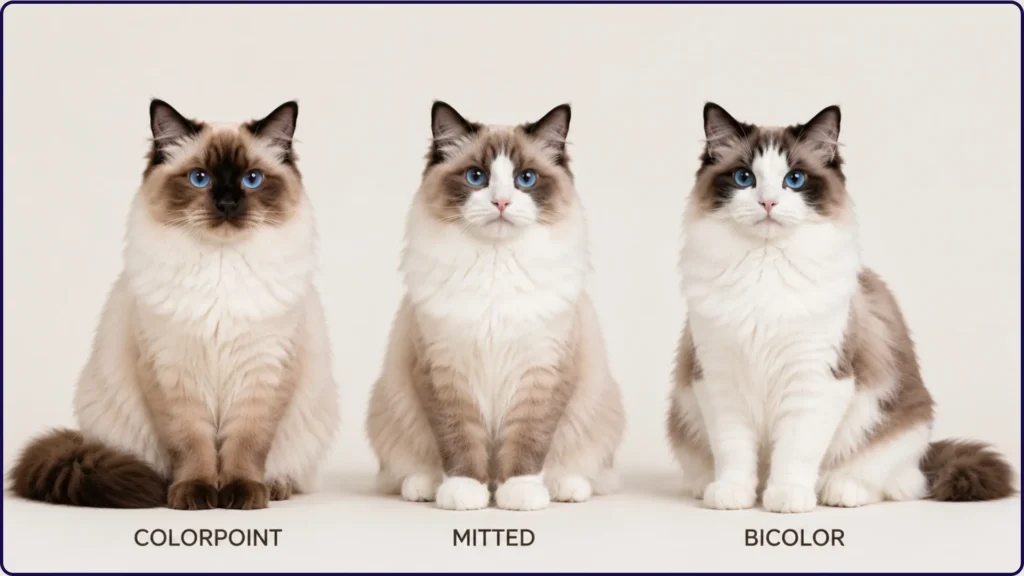
Ragdoll cats are one of the largest domestic cat breeds, with males reaching 15 to 20 pounds and females typically ranging from 10 to 15 pounds at full maturity. This takes longer than most breeds, as Ragdolls don’t fully mature until around 3 to 4 years of age.
Their coat is semi-long, silky, and lies relatively flat – much easier to maintain than a Persian’s thick, dense fur. All Ragdolls carry the color point gene, meaning their extremities (ears, face, paws, and tail) are darker than their body. Their eye color is always blue, a breed standard requirement for both TICA and CFA registration.
Here’s a quick breakdown of recognized Ragdoll colors and patterns:
| Pattern | Description | Common Color Examples |
|---|---|---|
| Colorpoint | Dark extremities, light body, no white | Seal, Blue, Chocolate, Lilac |
| Mitted | Colorpoint + white mittens on paws, white chin | Seal Mitted, Blue Mitted |
| Bicolor | Colorpoint + white inverted V on face, white legs/belly | Seal Bicolor, Chocolate Bicolor |
| Lynx | Any pattern with tabby striping overlay | Seal Lynx Point, Blue Lynx Mitted |
| Tortie | Mottled red/cream mixed with base color | Seal Tortie, Blue Tortie |
The most common and recognizable Ragdoll is the Seal Color point: a creamy white body with dark seal-brown points and those signature sapphire-blue eyes.
How Do You Properly Care for a Ragdoll Cat?
Caring for a Ragdoll cat involves consistent grooming, a high-quality diet, regular veterinary visits, and daily mental and physical enrichment – but the overall maintenance level is moderate compared to other longhaired breeds.
Ragdoll Cat Grooming Tips
Ragdoll cats require brushing two to three times per week to prevent their semi-long coat from matting and to reduce shedding around the home. Use a stainless steel comb or a slicker brush to work through the coat gently, paying special attention to the areas behind the ears, under the arms, and around the collar area where tangles are most common.
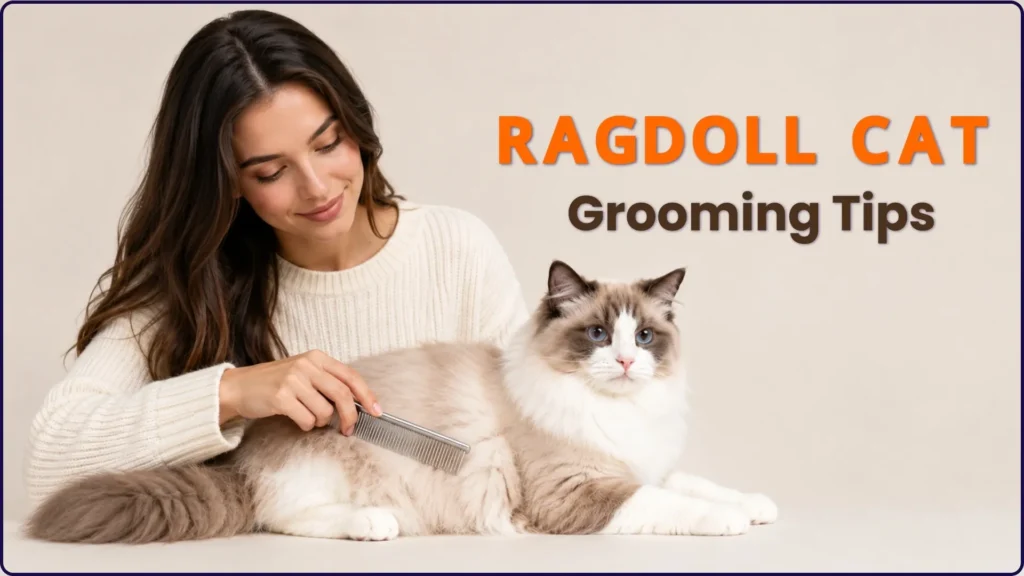
In addition to coat care, Ragdolls need weekly dental brushing to reduce the risk of periodontal disease – a common health issue in cats that is largely preventable with routine care. Nail trimming every two to three weeks and ear cleaning as needed complete the grooming routine.
Ragdoll Cat Diet and Nutrition
Feed your Ragdoll a high-protein diet that prioritizes animal-based proteins (chicken, turkey, fish, or beef) as the primary ingredient. Because Ragdolls are a large breed with a tendency toward weight gain, portion control is essential – free-feeding (leaving food available 24/7) is not recommended for this breed.
Most adult Ragdolls do well on a combination of high-quality wet food and dry kibble, with wet food helping to keep them hydrated, which supports kidney and urinary tract health.
Exercise and Enrichment for an Indoor Ragdoll
Despite their calm demeanor, Ragdolls still need daily physical activity to maintain a healthy weight and prevent boredom. Two 15-minute interactive play sessions per day using wand toys, feather teasers, or puzzle feeders are ideal. Cat trees, window perches, and scratching posts provide passive enrichment between play sessions.
What Health Problems Are Ragdoll Cats Prone To?
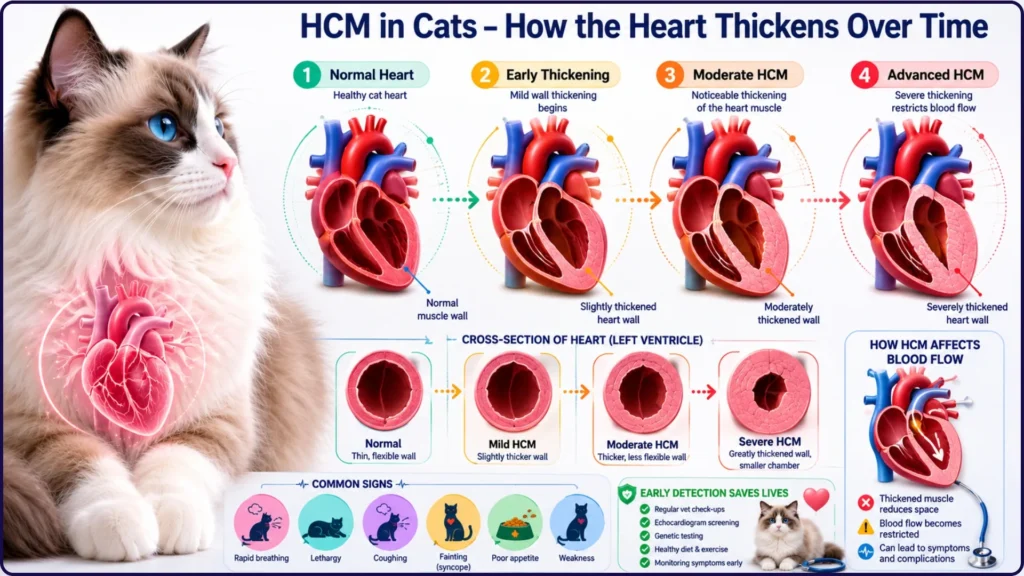
Ragdoll cats are generally healthy, but they are genetically predisposed to several conditions, most notably Hypertrophic Cardiomyopathy (HCM), a potentially serious heart disease that every prospective owner should understand before purchasing a kitten.
Hypertrophic Cardiomyopathy (HCM) is the most common hereditary health concern in Ragdoll cats, a condition in which the heart muscle thickens progressively, reducing the heart’s ability to pump blood efficiently.
A specific genetic mutation (MyBPC3-R820W) has been identified in the Ragdoll breed and can be tested for via DNA screening. Research suggests that up to 30% of Ragdolls may carry this genetic mutation – Source: UC Davis Veterinary Genetics Laboratory, 2022.
Beyond HCM, Ragdolls face elevated risks in these areas:
- Feline Infectious Peritonitis (FIP): Ragdolls appear to have a genetic susceptibility to FIP, a serious viral disease. Always ensure kittens are tested and kept in clean environments.
- Urinary tract issues: Large male cats, including Ragdolls, are prone to urinary blockages and bladder stones. A wet-food-rich diet significantly reduces this risk.
- Obesity: Their calm, indoor nature makes Ragdolls susceptible to weight gain. Obesity compounds the risk of HCM and joint problems.
- Dental disease: Like most cats, Ragdolls are prone to periodontal disease without regular dental hygiene.
How Long Do Ragdoll Cats Live on Average?
Ragdoll cats have an average lifespan of 12 to 17 years, which is in line with or slightly above the average domestic cat lifespan of 12 to 15 years. With attentive veterinary care, a quality diet, and routine HCM monitoring (via echocardiogram every 1–2 years after age 2), many Ragdolls live into their mid-teens in excellent health.
How Much Does It Cost to Own a Ragdoll Cat?
The total cost of owning a Ragdoll cat in a year includes a significant upfront purchase price plus ongoing annual care expenses, and budgeting for both is important before committing to this breed.
Here’s a realistic cost breakdown:
| Expense | Estimated Cost |
|---|---|
| Kitten from reputable breeder | $800 – $2,500+ |
| Adoption from rescue | $75 – $200 |
| Initial vet visit + vaccinations | $150 – $300 |
| Spay/Neuter (if not included) | $200 – $500 |
| Microchipping | $45 – $75 |
| Starter supplies (carrier, litter box, bed, toys) | $200 – $400 |
| Annual ongoing costs | |
| Premium cat food (wet + dry) | $600 – $1,200/year |
| Routine vet visits | $200 – $400/year |
| Pet insurance (highly recommended) | $300 – $600/year |
| Grooming supplies | $50 – $100/year |
| Estimated Annual Total | $1,150 – $2,300/year |
Pet insurance is especially worth considering for Ragdolls given their predisposition to HCM, which can require costly cardiac medications or specialist consultations over time.
The purchase price of a Ragdoll kitten from a reputable, health-tested breeder typically ranges from $800 to $2,500 or more, depending on coat pattern, pedigree, and geographic location – Source: TICA Breeder Registry Data, 2024.
How Do You Find a Reputable Ragdoll Cat Breeder (and Avoid Scams)?
Finding a reputable Ragdoll breeder means looking for documented health testing, registry affiliation, and transparent breeding practices, and knowing exactly which red flags signal a kitten mill or irresponsible breeder.
What a Responsible Ragdoll Breeder Should Provide
A trustworthy Ragdoll breeder will:
- Be registered with TICA or the CFA
- Provide HCM genetic test results for both parents, or documentation of annual cardiac screening via echocardiogram
- Offer a written health guarantee covering genetic conditions for a minimum of 1–2 years
- Allow you to visit their cattery and meet the kitten’s parents in person
- Provide vaccination records, deworming history, and a vet health certificate at the time of purchase
- Never release kittens before 12 weeks of age (most responsible breeders wait until 12–16 weeks)
For a full checklist, see our [Internal link: “how to choose a reputable cat breeder” → ethical breeder selection guide].
Red Flags to Avoid
Be cautious of breeders who won’t allow cattery visits, have no verifiable registration, offer kittens under 8 weeks old, cannot provide health screening documentation, or list kittens across multiple pet sale websites at suspiciously low prices. These are common indicators of kitten mill operations.
Ragdoll Rescues and Adoption
Adoption is a viable and rewarding option. Organizations like Ragdoll Rescue USA and Adopt-A-Pet list Ragdolls and Ragdoll mixes regularly. Adoption fees typically range from $75 to $200 and often include spay/neuter and initial vaccines.
Here are 20 fun facts about Ragdoll cats that are engaging for readers and SEO-friendly. These are perfect for a section titled “Fun Facts About Ragdoll Cats” in your breed guide.
20 Fun Facts About Ragdoll Cats
1. They Go Limp When You Pick Them Up
Ragdoll cats are famous for relaxing completely in your arms, which is how they got their name. While not every Ragdoll goes completely limp, many enjoy being held and cuddled.
2. They Have Striking Blue Eyes
Every purebred Ragdoll cat has beautiful blue eyes. The shade can range from light sky blue to a deep sapphire.
3. They’re One of the Largest Domestic Cat Breeds
Adult male Ragdolls typically weigh 15–20 pounds (6.8–9 kg), while females usually weigh 10–15 pounds (4.5–6.8 kg).
4. They’re Often Called “Puppy Cats”
Ragdolls frequently follow their owners around the house, greet them at the door, and even enjoy playing fetch.
5. They’re Extremely Gentle
Their calm and affectionate nature makes them one of the best cat breeds for families with children.
6. They Mature Slowly
Unlike many cats that reach full size in about a year, Ragdolls often take 3–4 years to reach full physical maturity.
7. Kittens Are Born White
Ragdoll kittens are born completely white. Their coat colors and patterns gradually develop over the first few weeks and months.
8. They Love Human Company
Ragdolls dislike being left alone for long periods and thrive in homes where they receive plenty of attention.
9. They’re Usually Quiet Cats
Instead of loud meows, Ragdolls often communicate with soft chirps and gentle vocalizations.
10. They Enjoy Indoor Living
Because of their trusting personality, Ragdolls are happiest and safest as indoor cats.
11. They Have Silky, Rabbit-Like Fur
Their soft coat feels luxurious but is less prone to matting than many other long-haired breeds because it has less dense undercoat.
12. They’re Highly Social
Most Ragdolls get along well with other cats and cat-friendly dogs.
13. They Love Interactive Play
Feather wands, puzzle toys, and balls keep their intelligent minds stimulated.
14. They Can Learn Tricks
Many Ragdolls can be taught to fetch, sit, come when called, and even walk on a harness with patience and positive reinforcement.
15. They’re Not Truly Hypoallergenic
Although they shed less than some long-haired breeds, Ragdolls still produce the Fel d 1 protein that causes allergies.
16. They Were Developed in California
The breed was first developed in the 1960s by breeder Ann Baker in Riverside, California.
17. They Love Being Near Their Owners
Whether you’re working, cooking, or relaxing, expect your Ragdoll to stay close by.
18. They Have Several Beautiful Color Patterns
Ragdolls come in three main patterns:
- Colorpoint
- Mitted
- Bicolor
They also appear in colors like seal, blue, chocolate, lilac, cream, red, and more.
19. They’re Great Therapy Cats
Their calm temperament and love of human interaction make some Ragdolls excellent therapy or emotional support companions.
20. They Can Live Well Into Their Teens
With proper care, many Ragdolls live 12–17 years, and some enjoy even longer, healthy lives.
Bonus Fact
A happy Ragdoll will often follow you from room to room, not because it’s needy, but because it genuinely enjoys spending time with its favorite person. This loyal, affectionate behavior is one of the reasons the breed is so beloved by cat owners worldwide.
Is a Ragdoll Cat Right for You? (Lifestyle Checklist)

A Ragdoll cat is the right choice for owners who are home frequently, want a deeply bonded companion, and can commit to the emotional and financial needs of a breed that genuinely requires human interaction.
Use this quick checklist to self-assess:
Ragdolls are a great fit if you:
- ✅ Work from home or are home most of the day
- ✅ Have children who handle pets gently
- ✅ Live in an apartment or indoor-only environment
- ✅ Want a cat that bonds closely and follows you around
- ✅ Can budget $1,000–$2,000/year for quality care
- ✅ Are prepared for regular vet checkups including cardiac screening
Ragdolls may not be the right fit if you:
- ❌ Travel frequently or work long hours away from home
- ❌ Want an independent, low-maintenance cat
- ❌ Have severe cat allergies
- ❌ Prefer an outdoor or free-roaming cat lifestyle
What to Expect in Your First 30 Days With a Ragdoll Kitten
The first 30 days with a Ragdoll kitten are about building trust, establishing routines, and setting up your home to support a safe, stimulating environment, and getting off to the right start makes an enormous difference in how quickly your kitten adjusts and bonds.
Week 1 – Settling In: Set up a quiet, kitten-proofed room as your new cat’s safe space before bringing them home. Include a litter box, food and water stations, a cozy bed, and a few toys. Don’t rush interaction; let the kitten come to you on their terms.
Week 2 – First Vet Visit: Book a wellness exam with your veterinarian within the first two weeks. Confirm vaccinations, schedule deworming if needed, and ask your vet about establishing a cardiac screening timeline for your Ragdoll’s long-term health.
Week 3 – Introducing Other Pets: If you have other cats or dogs, introduce them gradually using scent-swapping techniques (exchanging bedding between spaces) before allowing face-to-face contact. Ragdolls are generally easy to integrate, but rushing introductions can cause unnecessary stress.
Week 4 – Establishing Routine: By week four, your Ragdoll should be eating consistently, using the litter box reliably, and beginning to seek out affection. Establish a play routine of two short sessions daily, and begin gentle weekly brushing to normalize grooming.
Conclusion: Is the Ragdoll the Perfect Cat?
For the right owner, the Ragdoll cat comes remarkably close to perfect. They’re gentle without being passive, affectionate without being clingy, beautiful without being high-maintenance. They suit families, seniors, apartment dwellers, and first-time cat owners equally well, provided you’re home enough to give them the companionship they genuinely need.
The key is going in with honest expectations. Ragdolls are not hypoallergenic, they’re not independent, and they’re not cheap to own well. But for owners who can meet those needs, the reward is a cat that will follow you to every room, purr in your lap every evening, and greet you at the door every single day.
If you’re ready to take the next step, start by researching in your region or reach out to a local Ragdoll rescue to find your perfect match. Either way, you’ll be gaining one of the most loving cat breeds in the world, and one that will repay every bit of your investment many times over.
Frequently Asked Questions About Ragdoll Cats
1. Are Ragdoll Cats Good for First-Time Cat Owners?
A. Yes. Ragdolls are widely considered one of the best breeds for first-time cat owners due to their calm temperament, low aggression, and forgiving nature. They are patient, gentle, and easy to handle, which makes the learning curve of new cat ownership much more manageable.
2. Can Ragdoll Cats Be Left Alone During the Day?
A. Ragdolls can tolerate being alone for a few hours, but they are not a breed that thrives in long periods of solitude. If you work full-time outside the home, consider getting a second cat for companionship or arranging for midday check-ins. Prolonged isolation can lead to anxiety, depression, and destructive behavior in Ragdolls.
3. Do Ragdoll Cats Shed a Lot?
A. Ragdolls shed moderately year-round, with heavier shedding in spring and fall. Their semi-long coat sheds less than many fully longhaired breeds, and regular weekly brushing keeps loose hair manageable. Investing in a good lint roller and vacuuming frequently will help keep your home tidy.
4. Are Ragdoll Cats Indoor or Outdoor Cats?
A. Ragdolls are strictly indoor cats. Their docile, trusting temperament makes them poorly equipped to handle the hazards of the outdoor world, including predators, traffic, disease exposure, and aggressive animals. Most breeders include outdoor restriction clauses in their sales contracts.
5. How Do I Know If My Ragdoll Kitten Is Purebred?
A. A purebred Ragdoll from a legitimate source will come with TICA or CFA registration papers that document the kitten’s pedigree. Physical traits alone (blue eyes, color-point coat, large size) are not reliable indicators of purebred status, as many mixed-breed cats can display similar features. Always request registration documentation from your breeder.
6. Do Ragdoll Cats Get Along With Dogs?
A. Yes, in most cases. Ragdolls are one of the cat breeds most compatible with calm, well-socialized dogs. Their non-aggressive, adaptable nature means they tend to accept canine housemates more readily than most other cat breeds. Proper, slow introductions are still essential to ensure a positive long-term relationship.
7. Why do ragdoll cats go limp when picked up
A. Ragdolls go limp when held because of a combination of selective breeding for extreme docility and an unusually relaxed muscle response to being picked up. Ann Baker specifically bred for this trait during the breed’s development in the 1960s. It’s a genuine genetic characteristic, not something all individual Ragdolls display to the same degree, but a defining breed hallmark.

Hi, I’m Jak, the founder of BowBowMeow.com and a passionate pet parent who shares life with both a dog and a cat. I created this website to help fellow pet owners find reliable, easy-to-understand information about pet care, nutrition, behavior, grooming, training, and breed-specific topics.
Drawing from both extensive research and hands-on experience as a pet owner, I aim to provide practical, trustworthy content that helps dogs and cats live happier, healthier lives.
Disclaimer: I am not a veterinarian or certified animal professional. The information shared on BowBowMeow.com is for educational purposes only and should not replace professional veterinary advice, diagnosis, or treatment.