

Bringing a cat into your family is exciting, but not every breed has the same personality, energy level, or patience with children and other pets. Choosing the wrong breed can lead to unnecessary stress for both your family and your new companion.
In this guide, you’ll discover the best cat breeds for families, learn what makes them great companions, and find practical tips to choose the perfect feline for your home.
Key Takeaways
- Family-friendly cat breeds are known for their gentle temperament, patience, adaptability, and affectionate nature around children and adults.
- Temperament matters more than looks. Energy level, grooming needs, and compatibility with kids and other pets should guide your decision more than coat color or breed popularity.
- Ragdolls, Maine Coons, Birmans, and American Shorthairs consistently rank among the best cats for families thanks to their calm, sociable personalities.
- Matching personality to lifestyle reduces behavioral issues and builds a stronger, longer-lasting bond between your cat and your household.
- Home preparation before adoption – supplies, a safe space, and a vet visit make the transition smoother for everyone.
- Consistent care – nutrition, playtime, and socialization keeps family cats healthy and well-adjusted no matter the breed.
- Reputable breeders and shelters improve your odds of finding a healthy, well-socialized cat.
What Are Family-Friendly Cat Breeds?
Family-friendly cat breeds are cats that are known for their gentle temperament, affectionate nature, adaptability, and ability to live comfortably with children and other pets. These cats tend to tolerate noise, handling, and unpredictable movement better than more skittish or independent breeds. They also bond closely with multiple family members rather than attaching to just one person.
First, family-friendly breeds typically show low aggression and high tolerance for physical affection like hugging or carrying. For example, Ragdolls are famous for going limp when picked up, a trait breeders call “flopping,” which makes them especially safe around young kids. Second, these breeds are usually social rather than solitary, meaning they seek out company instead of hiding.
At the same time, “family-friendly” doesn’t mean identical. Some breeds, like the Maine Coon, are large and dog-like in loyalty, while others, like the Birman, are quieter and more reserved but equally devoted. “Complete Cat Breeds Guide” can help you explore the full spectrum of temperaments before narrowing your search.
Why Choosing the Right Family Cat Matters
Choosing the right family cat matters because it directly affects child safety, household stress levels, and the long-term bond between your family and your pet. A mismatched breed – say, a highly independent, noise-sensitive cat placed in a loud toddler household- is more likely to develop anxiety or defensive behaviors like scratching.
Moreover, the right match leads to easier training and fewer behavioral surprises. A cat with a naturally patient disposition adapts faster to a busy household’s schedule, guests, and other pets. Plus, families who research temperament in advance report fewer returns to shelters; behavioral mismatch is a leading cause of cat relinquishment, not health issues.
Studies suggest that around 20% of shelter cat surrenders are linked to behavioral incompatibility with the household – Source: ASPCA, 2024. As such, spending time understanding breed temperament before adoption is one of the most protective steps a family can take.
How We Selected These Cat Breeds
Our breed selections are based on ten core evaluation criteria: temperament, friendliness, intelligence, energy level, grooming needs, trainability, child compatibility, dog compatibility, health, and adaptability. We cross-referenced breed standards from veterinary behaviorists with real-world feedback from multi-cat and multi-pet households.
For example, a breed only made this list if it scored consistently well on both child compatibility and low-to-moderate aggression triggers, such as tolerance for loud noise and sudden movement. In addition, we prioritized breeds with well-documented health profiles, since chronic conditions can add financial and emotional strain to family life.
That being said, no single breed is perfect for every family. Your home’s size, activity level, and existing pets should always be weighed alongside these rankings.
The 20 Best Cat Breeds for Families
1. Ragdoll
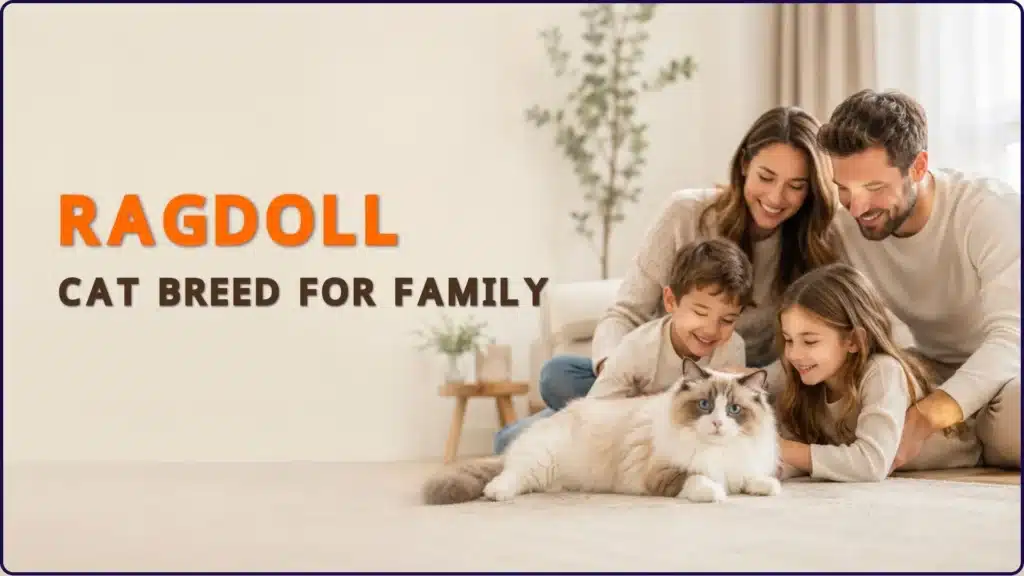
Ragdolls are large, blue-eyed cats known for their docile, affectionate nature. Are Ragdoll cats good family pets? Yes, Ragdolls are widely considered one of the best breeds for households with children because they tolerate handling exceptionally well. For a deeper dive, see our “Ragdoll Cat Guide” for complete information about Ragdoll cats.
2. Maine Coon
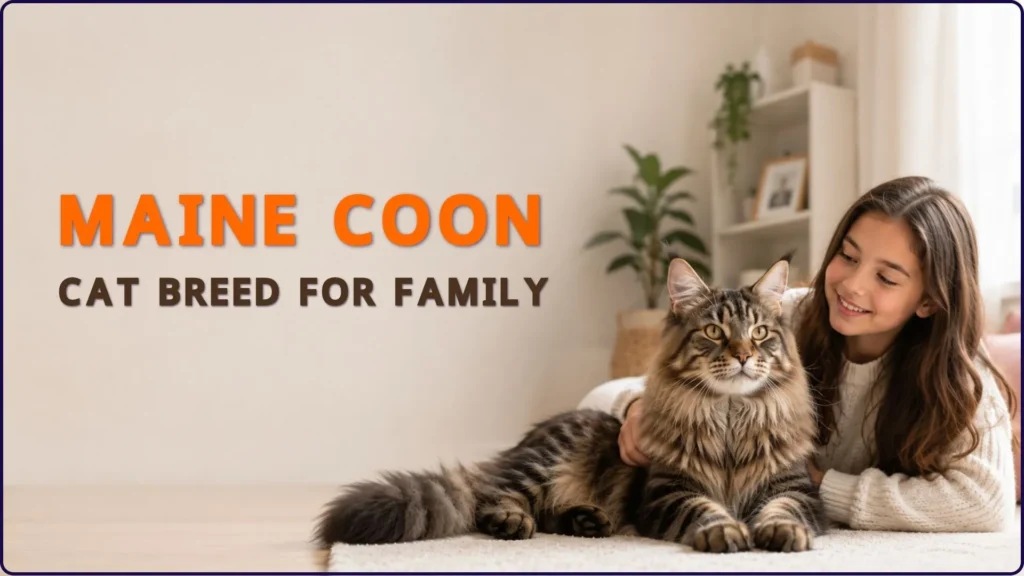
Maine Coons are gentle giants, often called “the dogs of the cat world” for their loyalty and playfulness. “Maine Coon Cat Breed Guide” covers their size, grooming, and health needs in detail.
3. Birman
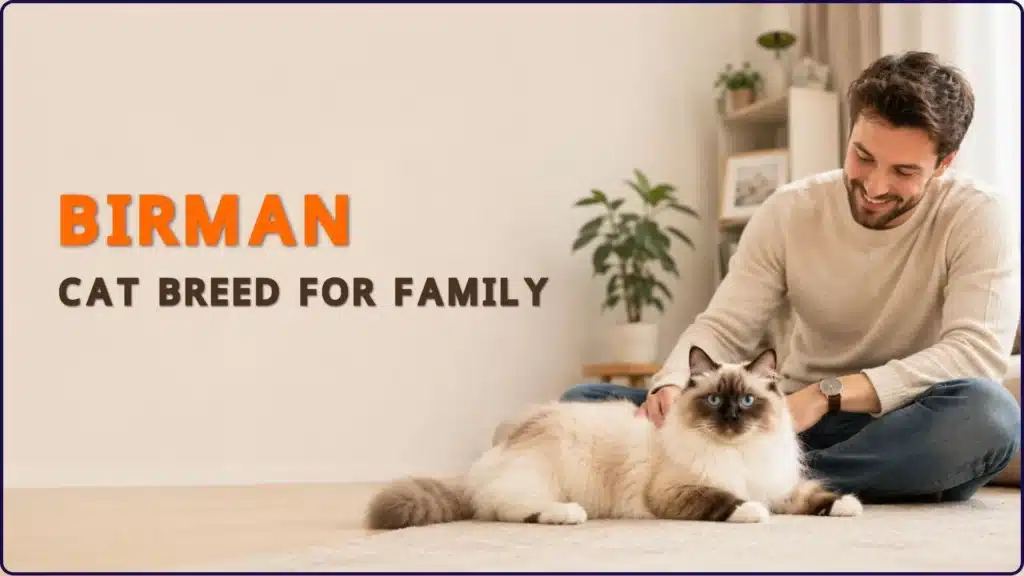
Birmans are calm, silky-coated cats with a quiet, devoted temperament. First, they bond deeply but gently, making them ideal for families with older children or a calmer household pace.
4. American Shorthair
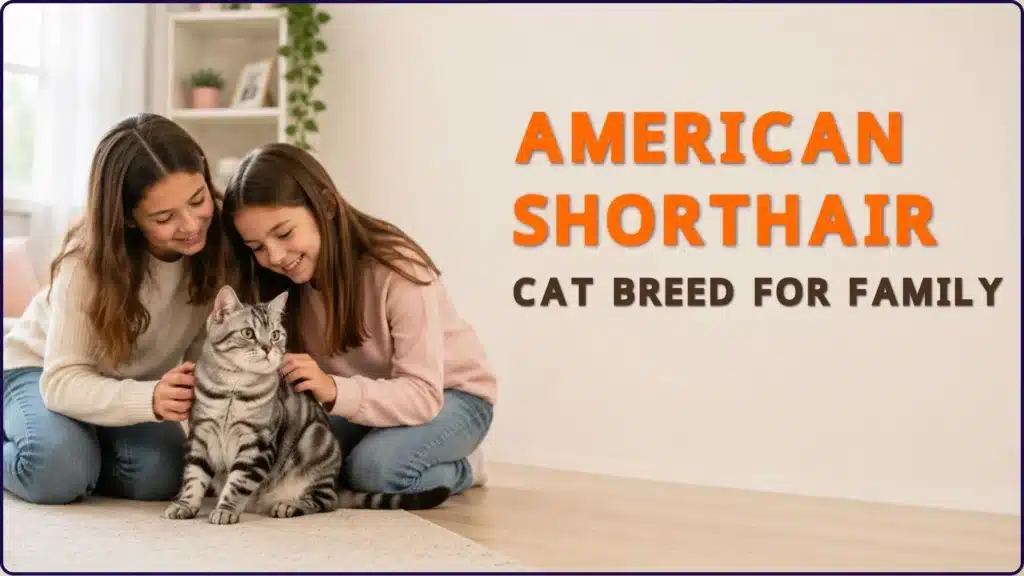
American Shorthairs are hardy, easygoing, and low-maintenance – a strong pick for first-time cat owners. Their independent-but-affectionate balance suits busy households well.
5. Abyssinian
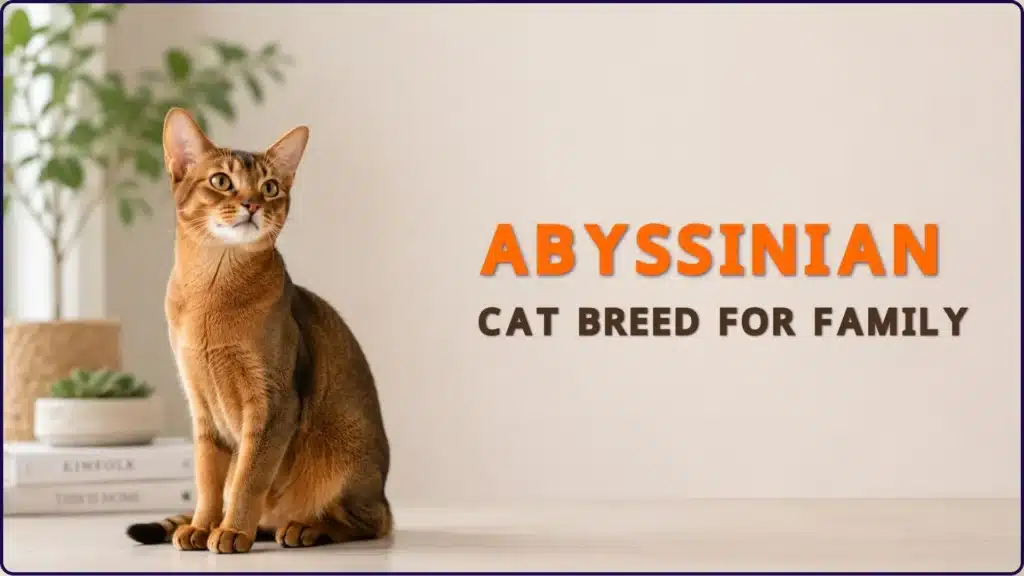
Abyssinians are curious, athletic, and highly interactive, best suited to active families who enjoy engaging playtime. For example, they enjoy puzzle feeders and climbing structures more than lap time.
6. Burmese

Burmese cats are extroverted, people-oriented, and thrive on attention, often following family members from room to room. Moreover, they adapt well to homes with multiple children since they enjoy constant social interaction.
7. Persian
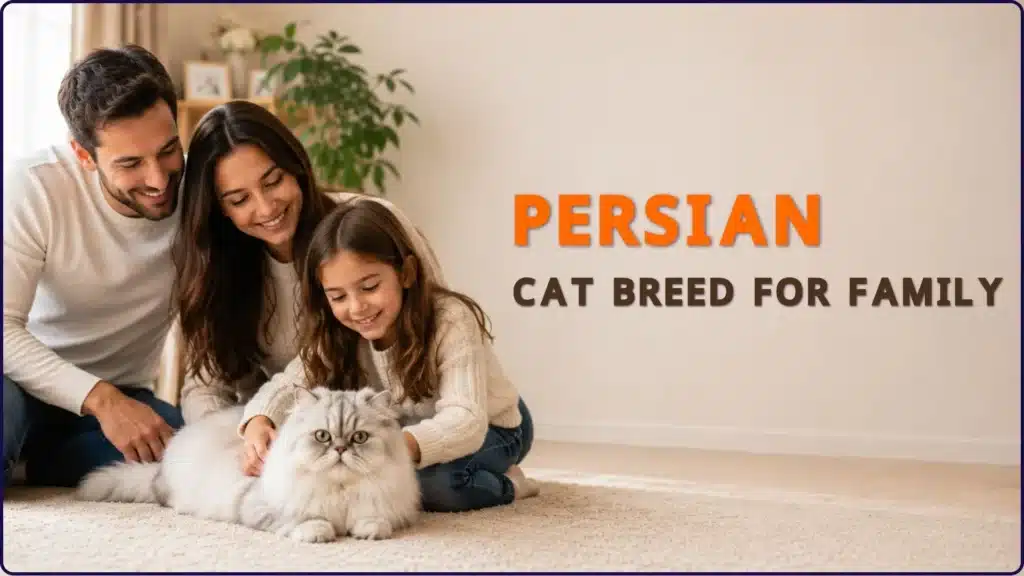
Persians are calm, quiet lap cats well-suited to gentler households, though their long coats require daily grooming. As such, they fit best with families willing to commit to regular brushing.
8. British Shorthair
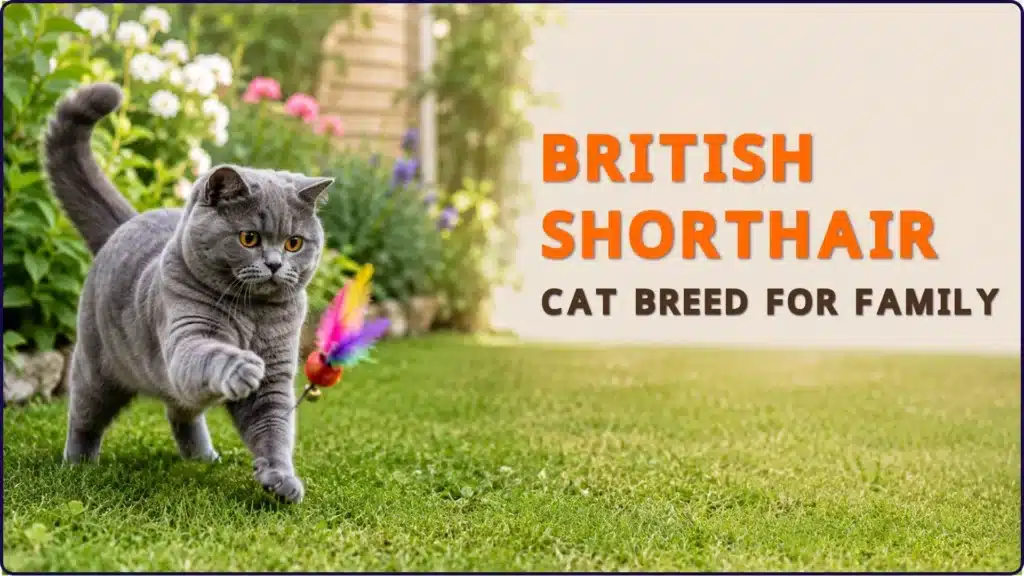
British Shorthairs are easygoing, tolerant, and famously low-drama, making them a favorite for families with young kids. Plus, their sturdy build handles rough play better than more delicate breeds.
9. Siberian
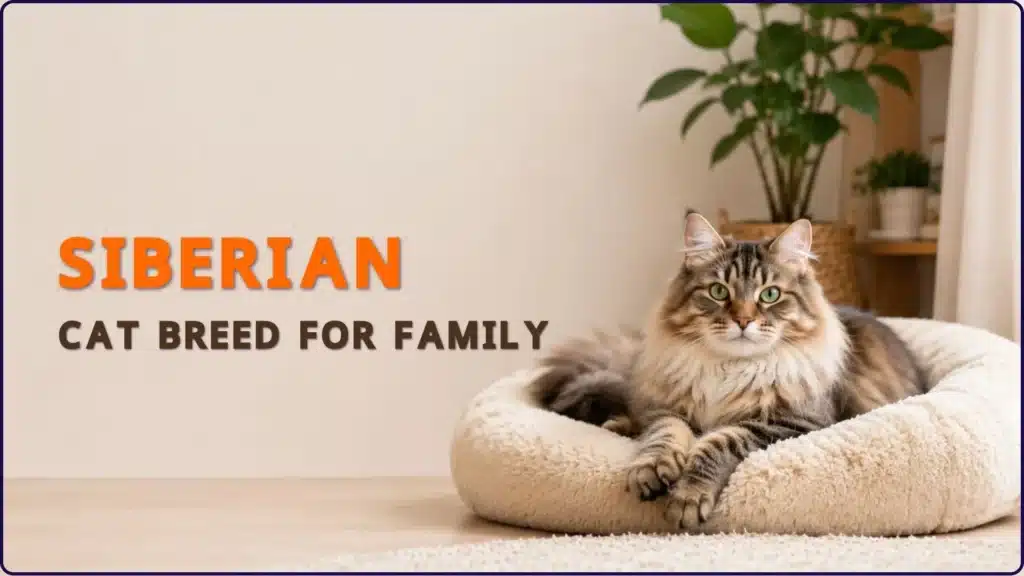
Siberians are playful, dog-like, and known for strong loyalty to the whole family rather than a single person. In addition, many Siberians produce less of the allergen protein Fel d1, making them a popular option for allergy-sensitive households.
10. Scottish Fold
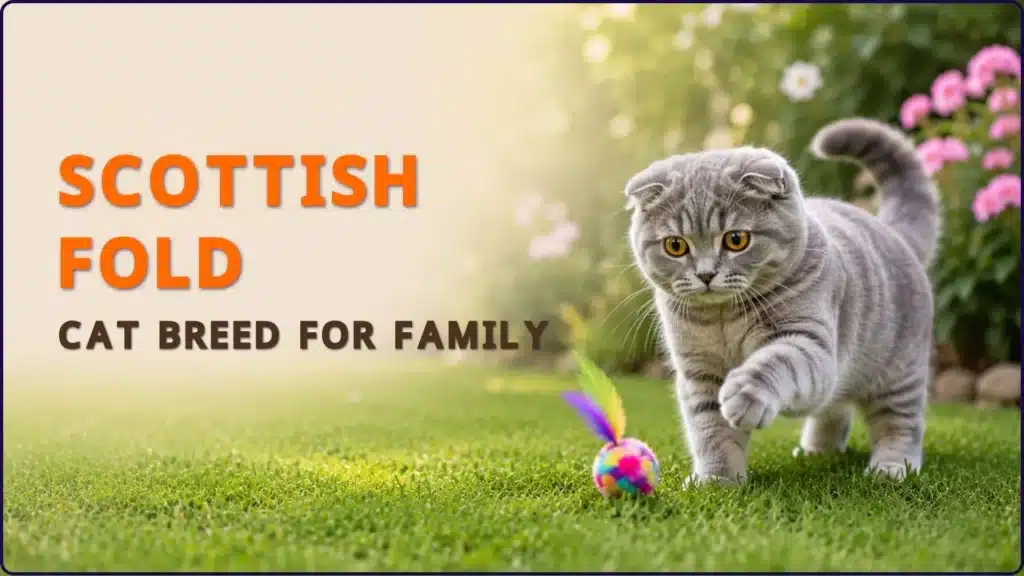
Scottish Folds are known for their folded ears and sweet, adaptable temperament, though prospective owners should research the breed’s joint health considerations.
11. Tonkinese
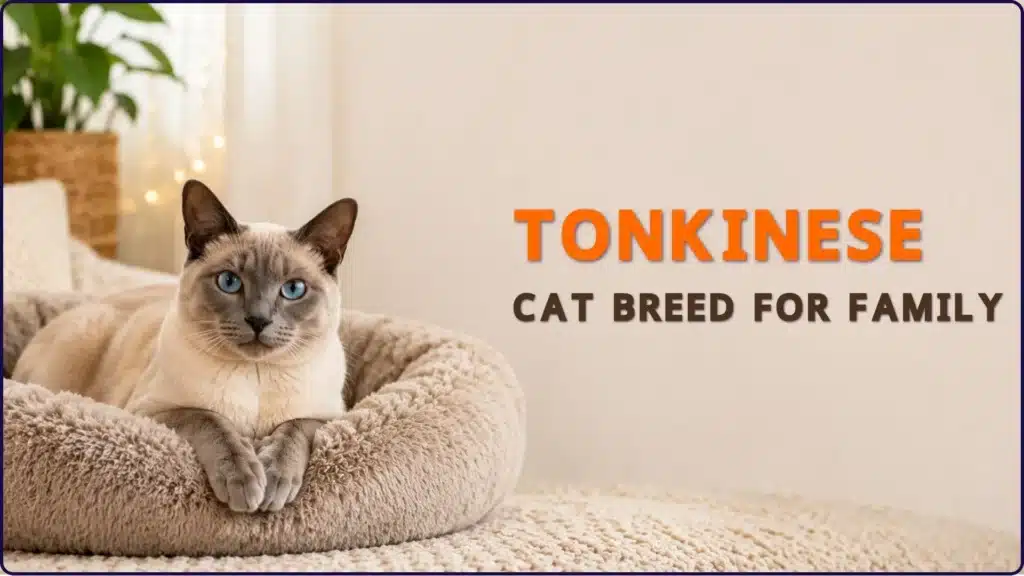
Tonkinese cats are affectionate, vocal, and social, a cross between the Siamese and Burmese temperaments. For example, they’ll often “talk” to family members throughout the day, which kids tend to find delightful.
12. Bombay
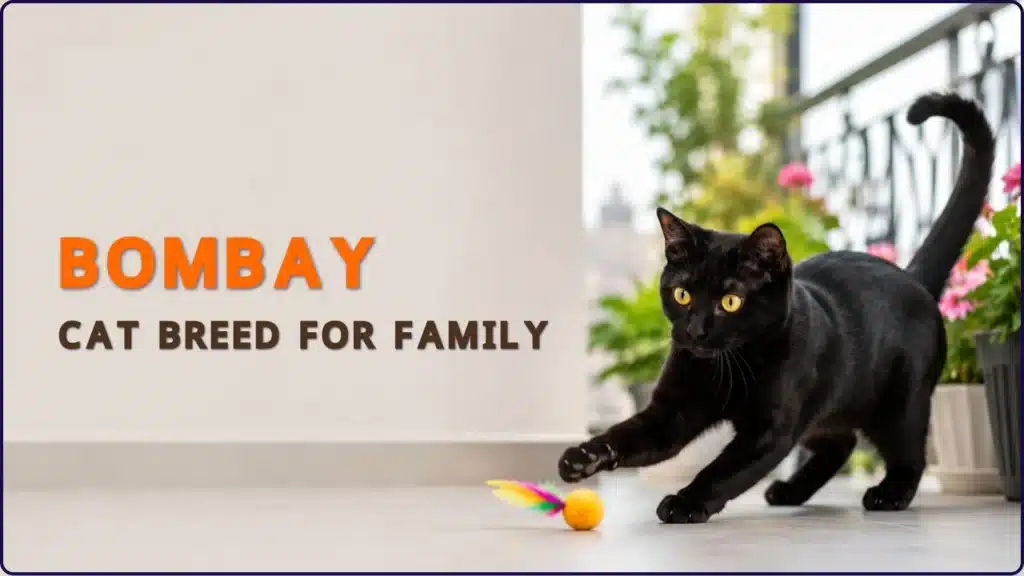
Bombay cats are sleek, black-coated cats with a playful and people-loving disposition, often compared to small panthers in looks but lapcats in personality.
13. Devon Rex
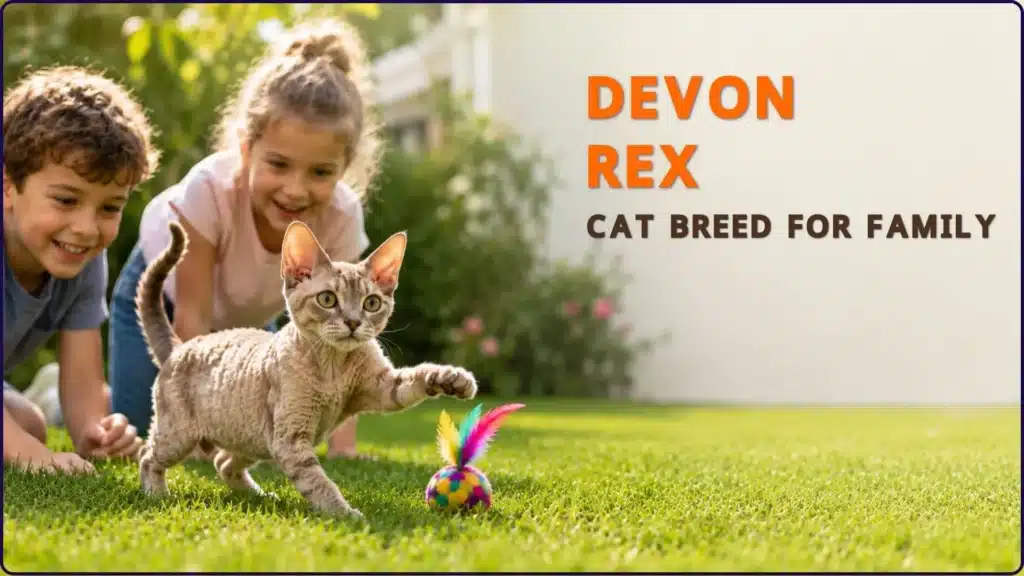
Devon Rexes are mischievous, high-energy cats with a curly coat and a dog-like desire to be involved in everything. That being said, their thin coat makes them sensitive to cold, so indoor living is essential.
14. Cornish Rex
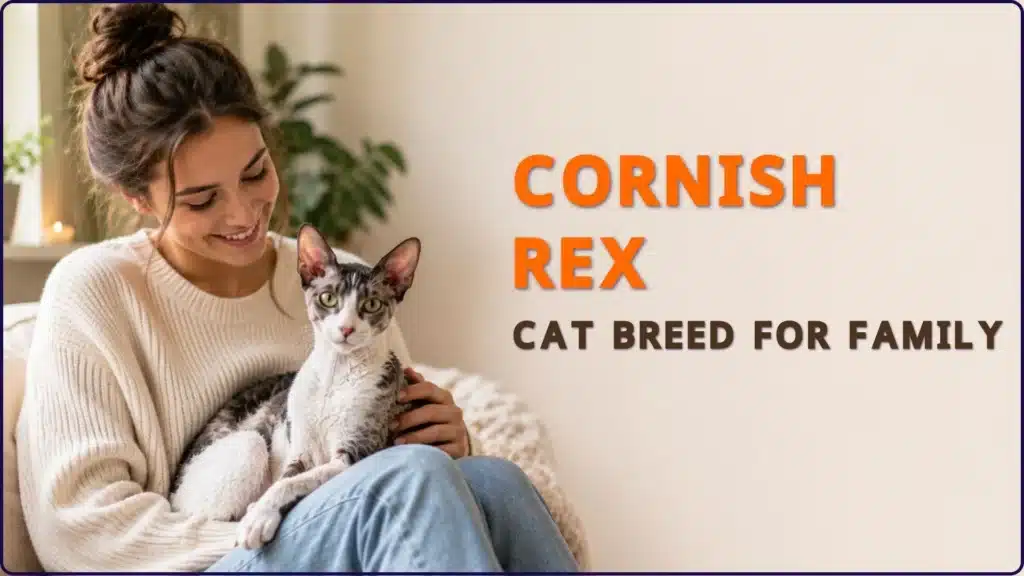
Cornish Rexes are energetic and affectionate, often described as “Velcro cats” for how closely they follow their families around the house.
15. Exotic Shorthair

Exotic Shorthairs share the Persian’s calm temperament but with a low-maintenance short coat, making them a popular compromise for families who want a lap cat without daily brushing.
16. Norwegian Forest Cat
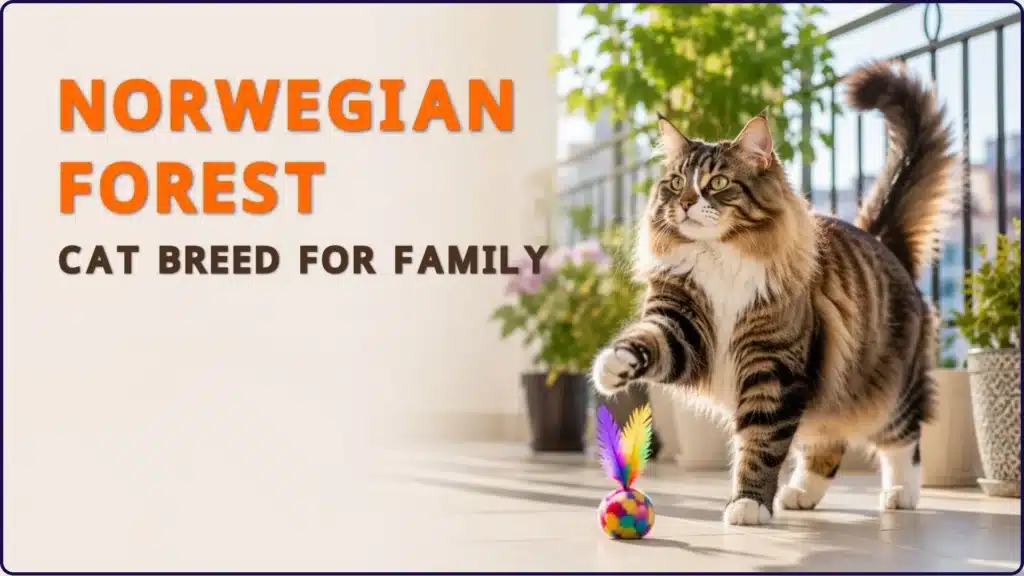
Norwegian Forest Cats are large, hardy, and independent-yet-affectionate, thriving in homes with space to climb and explore. “Cat Breeds for Apartment Living” can help you decide if this larger breed fits your space.
17. Oriental Shorthair
Oriental Shorthairs are vocal, intelligent, and highly attached to their families, similar in temperament to Siamese cats.

18. Turkish Angora
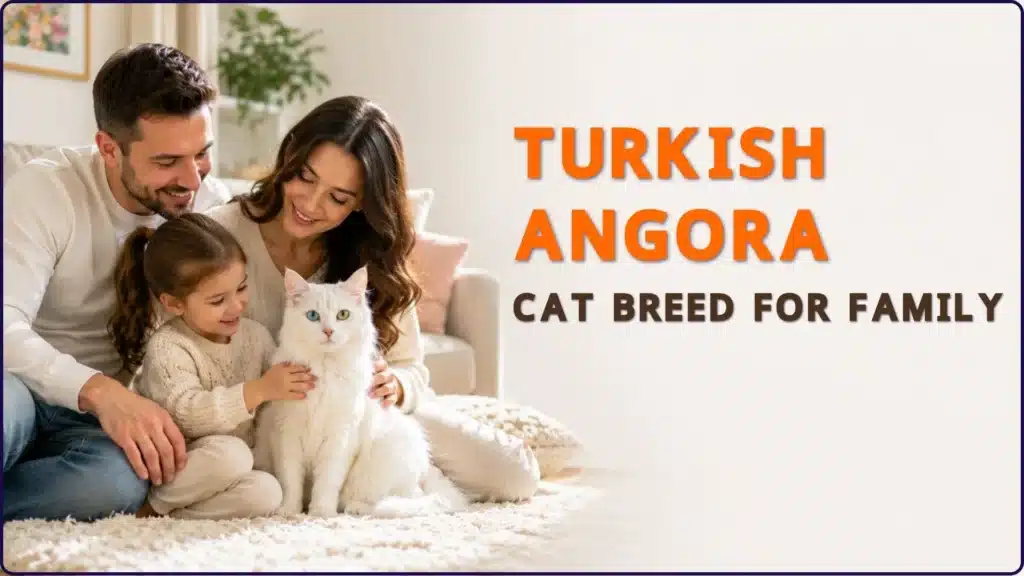
Turkish Angoras are elegant, intelligent, and playful, often bonding strongly with one or two family members while remaining friendly to all.
19. Manx
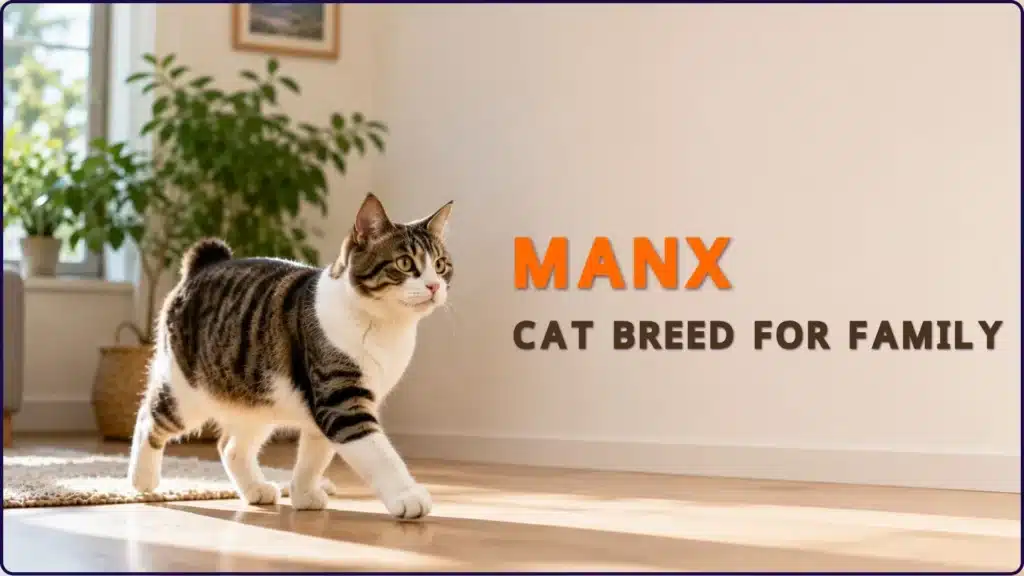
Manx cats are known for their short or absent tail and dog-like loyalty, often following owners and even learning to fetch.
20. Ragamuffin
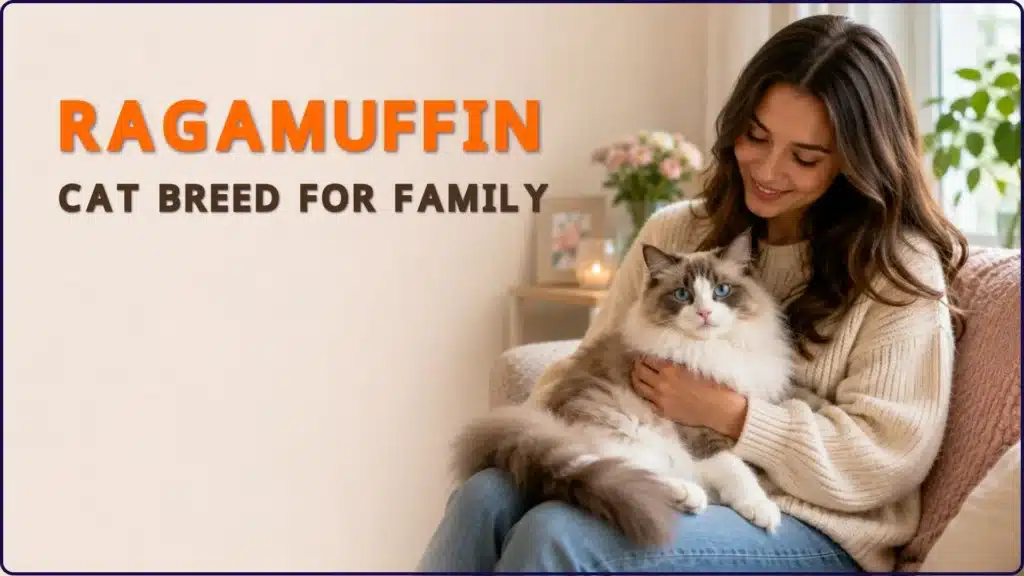
Ragamuffins are close cousins to the Ragdoll, sharing the same relaxed, affectionate temperament with slightly more coat variety.
[Insert image: A collage of the top five family-friendly cat breeds sitting together | Alt text: “Compare best family cat breeds side by side”]
Family Cat Breed Comparison Table
| Breed | Affection | Child Friendly | Dog Friendly | Grooming | Energy | Apartment Friendly | Avg. Lifespan | Beginner Friendly |
|---|---|---|---|---|---|---|---|---|
| Ragdoll | ⭐⭐⭐⭐⭐ | ⭐⭐⭐⭐⭐ | ⭐⭐⭐⭐⭐ | Moderate | Low-Mod | Yes | 12–17 yrs | Yes |
| Maine Coon | ⭐⭐⭐⭐⭐ | ⭐⭐⭐⭐⭐ | ⭐⭐⭐⭐⭐ | High | Moderate | Somewhat | 12–15 yrs | Yes |
| Birman | ⭐⭐⭐⭐ | ⭐⭐⭐⭐ | ⭐⭐⭐⭐ | Moderate | Low | Yes | 12–16 yrs | Yes |
| American Shorthair | ⭐⭐⭐⭐ | ⭐⭐⭐⭐ | ⭐⭐⭐⭐ | Low | Moderate | Yes | 15–20 yrs | Yes |
| British Shorthair | ⭐⭐⭐⭐ | ⭐⭐⭐⭐⭐ | ⭐⭐⭐⭐ | Low | Low | Yes | 14–20 yrs | Yes |
| Siberian | ⭐⭐⭐⭐ | ⭐⭐⭐⭐ | ⭐⭐⭐⭐ | Moderate | Mod-High | Somewhat | 12–15 yrs | Moderate |
| Persian | ⭐⭐⭐⭐ | ⭐⭐⭐ | ⭐⭐⭐ | Very High | Low | Yes | 10–17 yrs | No |
| Norwegian Forest Cat | ⭐⭐⭐⭐ | ⭐⭐⭐⭐ | ⭐⭐⭐⭐ | High | Moderate | No | 14–16 yrs | Moderate |
According to the Cat Fanciers’ Association, the Ragdoll has ranked among the top three most popular cat breeds in the U.S. for several consecutive years – Source: Cat Fanciers’ Association, 2025.
Which Cat Breeds Are Best for Different Family Lifestyles?
Best Cat Breeds for Families With Toddlers
Ragdolls, British Shorthairs, and Burmese cats top this list because of their high tolerance for handling and noise. Which cat breeds are best for families with young children? Breeds with low startle reflexes and a strong desire for physical closeness, such as Ragdolls and British Shorthairs, are the safest match.
Best Cat Breeds for Apartment Living
American Shorthairs, Birmans, and British Shorthairs adapt well to smaller spaces since they don’t require extensive vertical territory or outdoor access. Apartment-friendly cat breeds are broken down by space requirements.Space requirements break down apartment-friendly cat breeds
Best Cat Breeds for Busy or Working Families
Independent-but-affectionate breeds like the American Shorthair and Bombay handle longer alone-time better than needier breeds like the Devon Rex or Oriental Shorthair.
Best Cat Breeds for Multi-Pet Homes
Which cat breeds get along well with dogs? Maine Coons, Ragdolls, and Siberians consistently rank as the most dog-tolerant breeds due to their sociable, non-territorial nature.
Best Cat Breeds for First-Time Owners
What is the easiest cat breed for first-time owners? The American Shorthair and British Shorthair are frequently recommended because of their low grooming needs and stable temperament.
Best Low-Grooming Family Cat Breeds
Which family cat breeds require the least grooming? American Shorthairs, British Shorthairs, Burmese, and Bombays all have short, low-maintenance coats that need only weekly brushing.
Tools and Practical Applications for New Cat Owners

Once you’ve narrowed down a breed, a few practical tools make the transition smoother. First, a family cat breed comparison chart – like the table above – helps you weigh options side by side before visiting shelters or breeders.
Second, a grooming checklist tailored to your chosen breed prevents matting and skin issues, especially for long-haired breeds like Persians and Maine Coons. Third, a monthly care cost estimate factoring food, litter, vet visits, and insurance helps set realistic budget expectations; average U.S. cat ownership costs range from $50 to $100 per month depending on breed and health needs – Source: American Pet Products Association, 2025.
In addition, a vaccination and wellness schedule from your vet keeps your new cat protected during the critical first year. Free tools like the ASPCA’s pet care checklists or your vet clinic’s app can supplement any paid tracking tools you choose to use. For enrichment, “Indoor Cat Enrichment Ideas” offers low-cost ways to keep indoor cats active and mentally stimulated.
What’s Next: Steps to Bring Your Family Cat Home
- Assess your family’s lifestyle – activity level, space, and existing pets.
- Decide between adoption and a breeder based on budget, timeline, and breed availability.
- Meet the cat before bringing it home, especially around children, to gauge temperament firsthand.
- Prepare your home with a litter box, scratching post, and a quiet retreat space.
- Schedule a veterinary visit within the first week for a health check and vaccination plan.
- Buy essential supplies using our “Essential Cat Supplies Checklist”.
- Introduce the cat gradually to children and other pets over several days, not hours.
For ongoing care guidance, see our New cat care guide and “Best Cat Food Guide” for nutrition basics.
Conclusion
Every family is different, and the “best” cat breed is really the one that matches your household’s pace, space, and personality. Temperament matters more than appearance when it comes to long-term happiness for both your family and your new cat. Proper preparation, consistent care, and early socialization go a long way toward building a lasting bond, regardless of which breed you choose.
Whether you’re drawn to the gentle Ragdoll, the loyal Maine Coon, or the sociable Burmese, the right match is out there. Take your time, do your research, and choose the cat that truly fits your family’s life.
FAQ’s About Cat Breeds for Families
1. What makes a cat breed good for families?
A. A family-friendly cat breed typically shows low aggression, high tolerance for handling and noise, and a strong desire for social interaction with multiple household members.
2. Are Ragdoll cats good family pets?
A. Yes, Ragdolls are considered one of the best family cat breeds due to their docile temperament and tolerance for handling, even by young children.
3. Which cat breeds get along well with dogs?
A. Maine Coons, Ragdolls, and Siberians are among the most dog-friendly cat breeds because of their sociable, non-territorial personalities.
4. What is the easiest cat breed for first-time owners?
A. American Shorthairs and British Shorthairs are frequently recommended for first-time owners due to their low grooming needs and stable temperaments.
5. Which family cat breeds require the least grooming?
A. Short-haired breeds like the American Shorthair, British Shorthair, Burmese, and Bombay require minimal grooming compared to long-haired breeds.
6. Are indoor cats better for families than outdoor cats?
A. Yes, indoor cats generally face fewer risks from traffic, predators, and disease, making them a safer long-term choice for most families.

Hi, I’m Jak, the founder of BowBowMeow.com and a passionate pet parent who shares life with both a dog and a cat. I created this website to help fellow pet owners find reliable, easy-to-understand information about pet care, nutrition, behavior, grooming, training, and breed-specific topics.
Drawing from both extensive research and hands-on experience as a pet owner, I aim to provide practical, trustworthy content that helps dogs and cats live happier, healthier lives.
Disclaimer: I am not a veterinarian or certified animal professional. The information shared on BowBowMeow.com is for educational purposes only and should not replace professional veterinary advice, diagnosis, or treatment.