You already know Maine Coons are big, beautiful cats, the kind that stop people mid-scroll and make dog lovers reconsider everything they thought they knew about cats. But most breed guides stop at the surface, leaving you without the honest details that actually matter before you bring one home.
The health risks, the real grooming commitment, and whether this cat truly fits your life. In this complete Maine Coon cat breed guide, you’ll get everything: the breed’s full history, a realistic care breakdown, health considerations, cost estimates, and a clear-eyed answer to the question every prospective owner eventually asks – “Is a Maine Coon actually right for me?”
Key Takeaways
- Maine Coon cats are one of the largest domestic cat breeds in the world, with males regularly reaching 15–18 pounds and taking up to 5 years to reach full size – far longer than most domestic cat breeds.
- Maine Coons display distinctly dog-like loyalty – they follow owners from room to room, respond to their names, enjoy interactive play, and rarely display the aloofness associated with other breeds.
- Weekly grooming is non-negotiable: their thick, semi-long coat needs brushing 2–3 times per week to prevent matting, though it is more self-maintaining than fully long-haired breeds like Persians.
- Maine Coons are predisposed to heritable health conditions, including hypertrophic cardiomyopathy (HCM) and hip dysplasia; sourcing from a genetically screened breeder significantly reduces these risks.
- A purebred Maine Coon from a reputable breeder typically costs $800–$2,500, but Maine Coon-specific rescues offer a more affordable and equally rewarding path to ownership.
- Maine Coons thrive in active, social households and get along exceptionally well with children, other cats, and cat-friendly dogs, making them one of the most versatile family breeds available.
- Always verify breeder credentials through CFA or TICA registration and request health testing documentation before committing to a purchase.
What Is a Maine Coon Cat?
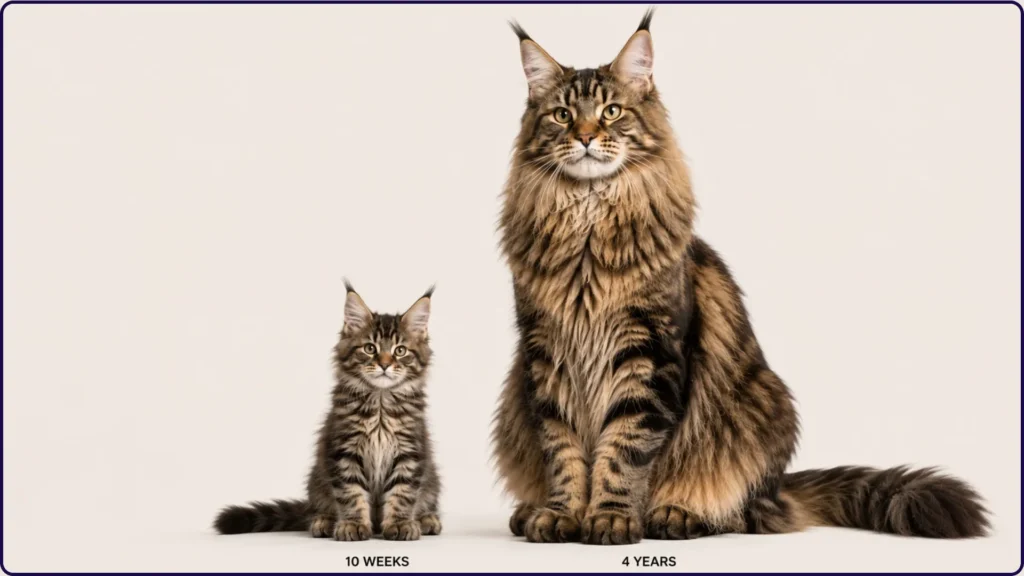
The Maine Coon is a large, semi-long-haired domestic cat breed native to North America, recognized by the Cat Fanciers’ Association (CFA) as one of the oldest natural breeds in the United States and the official state cat of Maine.
Distinguished by its impressive size, tufted ears, flowing bushy tail, and strikingly sociable personality, the Maine Coon occupies a unique position among domestic cats; it is simultaneously a rugged, naturally evolved breed and one of the most affectionate companions you can bring into a home.
Often called “the gentle giant of the cat world,” the Maine Coon combines the physical presence of a wild cat with the temperament of a loyal, playful family pet. This is not a cat that disappears under the bed when guests arrive; it is far more likely to be the center of attention, trilling a greeting at anyone who walks through the door.
For context, Maine Coons are classified as a “natural breed,” meaning they were not created through deliberate crossing of existing breeds but evolved over generations through natural selection in the harsh climate of the northeastern United States. That origin story is written into every physical trait they carry, from their water-resistant coat to their wide, snow-adapted paws.
| Trait | Details |
|---|---|
| Size | Large |
| Weight | 10–25 lbs (4.5–11.3 kg) |
| Coat | Long, shaggy, water-resistant |
| Shedding | Moderate to High |
| Maine Coon Lifespan | 12–15 years |
| Energy Level | Moderate |
| Affection Level | High |
| Grooming Needs | Moderate |
| Family Friendly | Excellent |
| Beginner Friendly | Excellent |
| Apartment Friendly | Good |
👉 Read Also: 30 Complete Cat Breeds Guide: Popular Cat Breeds Compared
Why the Maine Coon Is One of the Most Popular Cat Breeds
Maine Coon cats rank consistently among the top three most registered cat breeds with the Cat Fanciers’ Association, a position they have held for over two decades. Source: CFA Breed Registration Statistics, 2023. That level of sustained popularity is not accidental.
It reflects something genuine about what this breed offers: a rare combination of striking appearance, warm temperament, and adaptability to lifestyle.
For broader context, the American Pet Products Association estimates that approximately 45.3 million U.S. households own at least one cat.
Source: APPA National Pet Owners Survey, 2023–2024. Within that enormous population of cat owners, Maine Coon enthusiasts consistently rank among the most devoted. The breed’s widely used nickname, “the Golden Retriever of the cat world” – captures the appeal perfectly: you get the self-sufficiency of a cat paired with the loyalty and playfulness of a dog.
Moreover, the Maine Coon is an exceptionally versatile family companion. It tolerates children well, integrates smoothly with other pets, and adapts to a range of living environments from spacious homes to city apartments, provided it receives adequate mental stimulation.
Maine Coon History and Origin: From Maine Forests to Living Rooms
The Maine Coon’s origin story is one of the most colorful and contested narratives in the entire cat fancy world. No single confirmed account exists, leaving the door wide open for some wonderfully dramatic legends, and at least two that refuse to die despite being biologically impossible.
The Origin Myths Worth Knowing
The most famous legend claims the breed descended from semi-wild domestic cats that bred with raccoons, hence the name “Maine Coon” and the distinctive bushy, ringed tail. Genetically impossible, of course, since cats and raccoons cannot interbreed. Yet the story persists with a charm that even seasoned breeders find difficult to dismiss fully.
A second popular myth ties the breed’s origins to six Angora cats belonging to Marie Antoinette, allegedly shipped to Maine ahead of the French queen’s planned escape from Revolutionary France. Neither tale holds up under scrutiny, but both capture how deeply embedded this breed is in American folklore.
The Real Story: A Naturally Evolved American Working Cat
The most credible and widely accepted theory among geneticists and breed historians is that Maine Coons descended from long-haired cats brought to North America by early European settlers or seafarers, which then interbred naturally with local short-haired cats over several generations.
The harsh Maine winters exerted powerful selective pressure on these cats, rewarding those with the thickest coats, largest frames, and most robust constitutions. These were working farm and barn cats first, prized for their exceptional mousing skills long before anyone thought of calling them a “breed.”
The Cat Fanciers’ Association formally recognized the Maine Coon in 1976, and the state of Maine designated it the official state cat in 1985. Today, the breed is recognized by every major cat fancier organization worldwide, including TICA, FIFe, and the GCCF in the United Kingdom.
Physical Characteristics: What Does a Maine Coon Look Like?
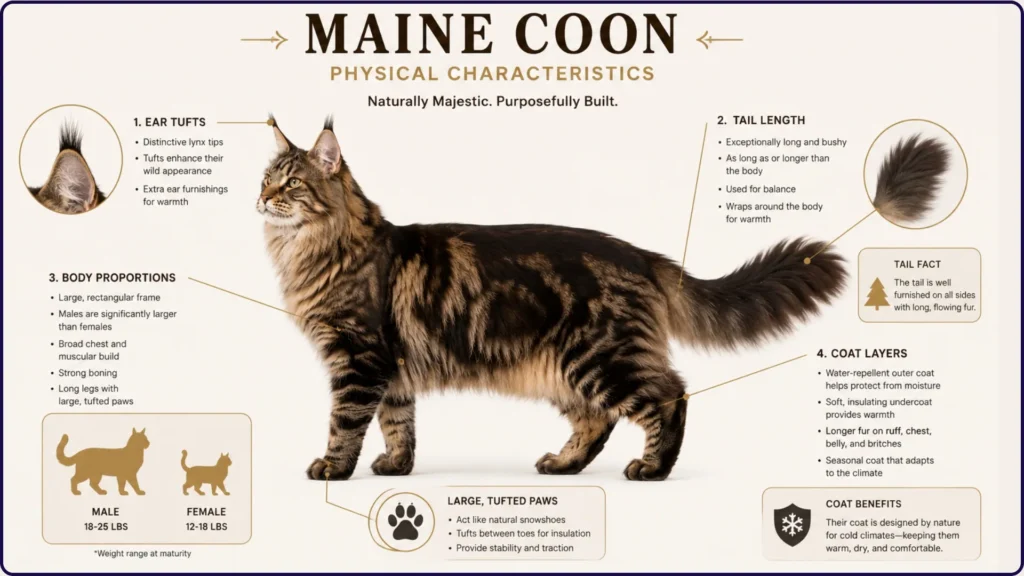
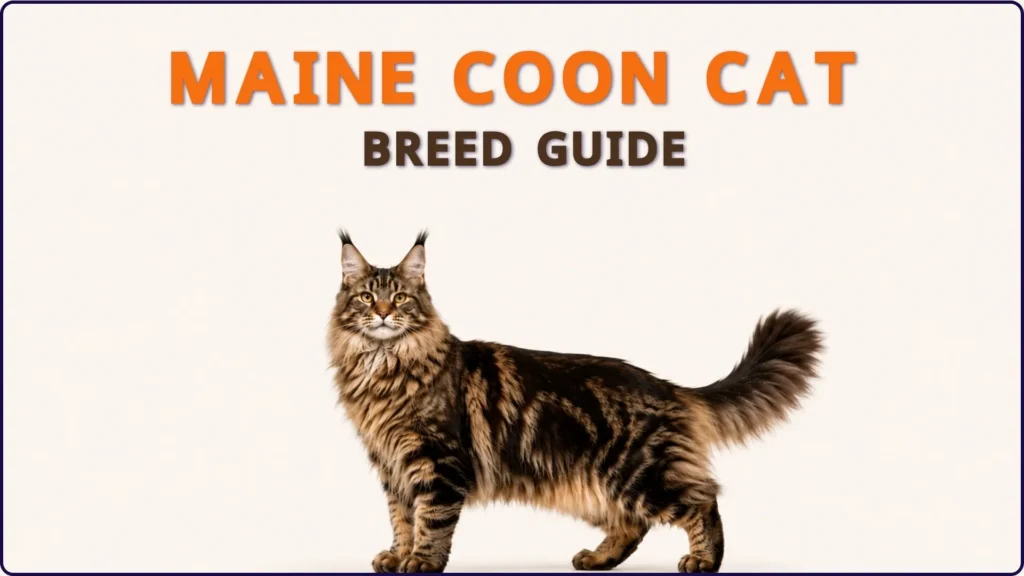
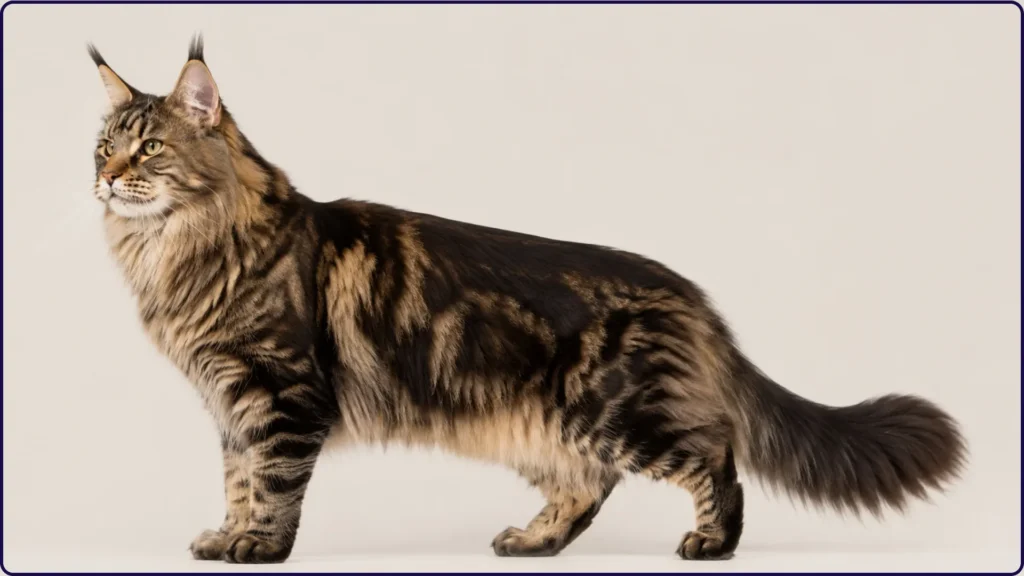
The Maine Coon is a strikingly distinctive cat with several physical features that immediately set it apart. Its most recognizable traits include a large, rectangular body shape, tufted “lynx tip” ears, a long plumed tail, and a thick double-layered semi-long coat that appears shaggy rather than silky.
How Big Do Maine Coon Cats Get, and How Long Does It Take Them to Fully Grow?
Maine Coon cats are one of the slowest-maturing domestic cat breeds, typically taking between three and five years to reach their full adult size and weight, with males averaging 13 to 18 pounds and females averaging 8 to 12 pounds.
Source: CFA Maine Coon Breed Standard. Some exceptionally large males reach 20–25 pounds without being overweight, which regularly surprises first-time owners who underestimate the breed’s eventual size. In length, a fully grown Maine Coon can measure 19 to 40 inches from nose to tail tip, making it one of the longest domestic cat breeds recorded.
This slow maturation timeline has a practical implication for new owners: do not judge a Maine Coon kitten by its size at 6 months. What looks like a standard medium-sized cat at that age may double in frame over the next two to three years.
Maine Coon Coat Colors, Ear Tufts, and Distinctive Physical Features
The Maine Coon is recognized in over 75 coat color and pattern combinations, including the iconic brown classic tabby, solid black, smoke, silver, cream, tortoiseshell, and calico. The CFA recognizes virtually every color except chocolate, lavender, and colorpointed patterns (which indicate Siamese ancestry and fall outside the breed standard).
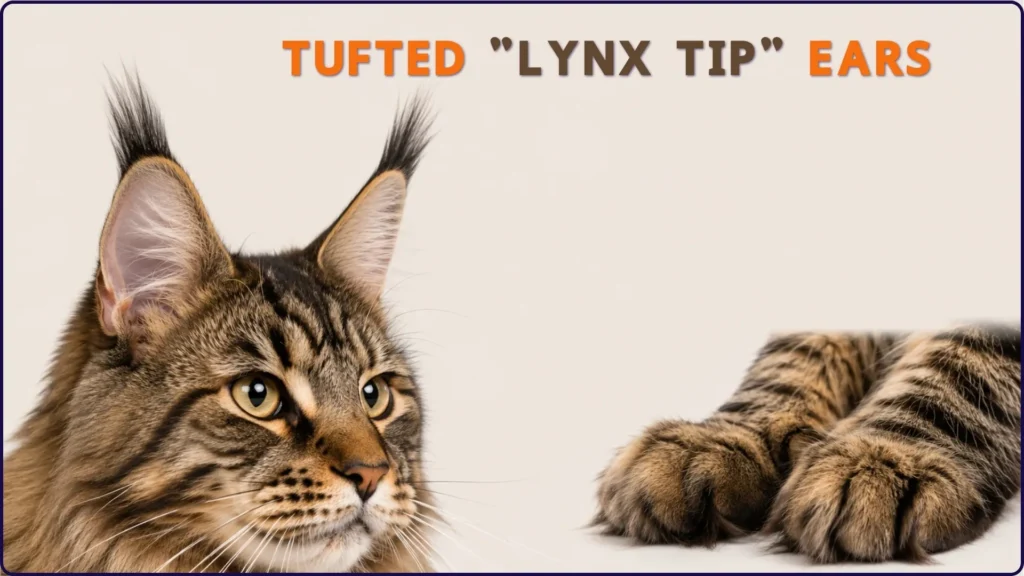
Other hallmark physical traits include:
- Tufted “lynx tip” ears – long tufts at the ear tips that give the breed a distinctly wild, regal silhouette
- Polydactyly – a historically common trait in Maine Coons, some individuals are born with extra toes on one or more paws (see our full guide on [polydactyl cats: what causes extra toes in cats]) [Internal link: “polydactyl cats: what causes extra toes in cats” → polydactyly article]
- Ear furnishings – dense tufts of fur growing inside the ear canal as well as at the tips
- Ruff and mane – a lion-like ruff of longer fur around the neck and chest
- Plumed, bushy tail – proportionally long and wide, often held aloft while walking
Maine Coon Personality and Temperament: What to Really Expect
Maine Coon cats are widely described as “dog-like” in temperament because they bond closely with their owners, respond to their names, enjoy being trained to walk on a leash, and often follow their human companions throughout the home rather than seeking solitary spaces.
This is one of the most socially engaged domestic cat breeds you will find, and it shows in daily life in ways that consistently surprise new owners.
What Makes Maine Coons So Unusually Social?
First, Maine Coons are intensely people-oriented without being clingy or demanding. They want to be near you, not necessarily on you, but in the same room, observing, occasionally reaching out a large paw or pressing their weight comfortably against your leg.
Second, they are vocally distinctive in a way that is charming rather than disruptive: Maine Coons communicate through chirping, trilling, and musical chattering rather than the loud, persistent meowing of some breeds. This unique vocalization is one of the traits owners most frequently describe as endearing.
Additionally, Maine Coons maintain their playful, kitten-like energy well into adulthood; even at five or six years old, a Maine Coon will enthusiastically engage with a wand toy or puzzle feeder with the enthusiasm of a kitten. This long behavioral play window is one of the primary reasons the breed integrates so well into active households.
Are Maine Coons Good With Kids and Other Pets?
Maine Coons rank among the most family-compatible cat breeds available. Their tolerant, patient temperament means they handle the unpredictability and noise of young children far better than more sensitive or high-strung breeds.
They are also highly adaptable to multi-pet environments; introductions with other cats and cat-friendly dogs tend to go smoothly, particularly when handled gradually.
How to Care for a Maine Coon Cat: Grooming, Diet, and Exercise
Maine Coon care requires moderate but consistent commitment across three pillars: regular coat maintenance, a high-protein diet, and adequate physical and mental stimulation. Neglecting any one of these areas leads to predictable problems: matted fur, obesity, or destructive boredom behavior.
How Much Grooming Does a Maine Coon Actually Need?
Maine Coon grooming is more manageable than many people expect, but it is not optional. Their semi-long coat is designed to be weather-resistant and relatively self-maintaining, which means it mats less easily than the coat of a Persian or Himalayan.
That said, you should plan to brush your Maine Coon 2–3 times per week using a wide-toothed metal comb and a slicker brush, paying particular attention to the areas most prone to tangles: behind the ears, in the armpits, on the belly, and where the collar sits.
Beyond coat care, complete grooming for a Maine Coon also includes:
- Nail trimming every 2–3 weeks
- Monthly ear cleaning to prevent wax buildup (especially relevant given their tufted ear canals)
- Weekly dental hygiene – Maine Coons are predisposed to periodontal disease, and brushing their teeth significantly reduces long-term dental costs
What Should You Feed a Maine Coon for Optimal Health?
A Maine Coon’s diet should center on high-quality animal protein as the dominant ingredient. Given their large frame and muscular build, these cats need more caloric density than average-sized breeds, but that does not mean unrestricted portions.
Overfeeding is one of the most common mistakes Maine Coon owners make, and obesity places additional strain on their joints and cardiovascular system, particularly given their genetic predisposition to HCM.
Veterinary nutritionists generally recommend:
- High-protein, low-carbohydrate wet food as the dietary foundation (aim for 70–80% animal-based protein)
- Quality dry kibble as a supplement, not a sole diet
- Portion control based on the cat’s lean body weight, not total weight
Exercise and Enrichment for Maine Coons
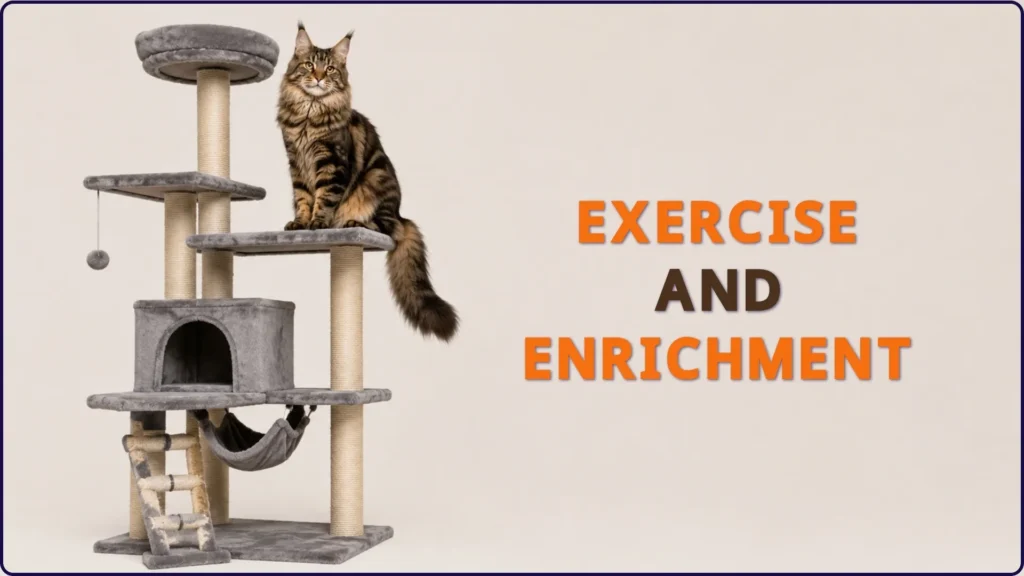
Maine Coons need daily interactive play of at least 15–20 minutes to stay mentally and physically balanced. These are intelligent, high-energy cats that will find their own entertainment if their needs go unmet, usually at the expense of your furniture, bookshelves, or houseplants.
Proven enrichment strategies include:
- Tall cat trees and climbing structures (minimum five feet; must support 15–20 lbs safely)
- Puzzle feeders and food-dispensing toys to engage problem-solving instincts at mealtime
- Wand toys and laser pointer play for aerobic exercise
- Window perches positioned near bird or squirrel activity for passive enrichment
Maine Coon Health: Common Conditions and Lifespan
Maine Coons are generally a robust and long-lived breed, but they carry several well-documented heritable health risks that every prospective owner should understand before purchasing or adopting. Awareness of these conditions and sourcing from health-tested breeders meaningfully reduces long-term veterinary costs and heartbreak.
How Long Do Maine Coon Cats Live on Average?
The average Maine Coon lifespan is 12 to 15 years, with well-cared-for indoor individuals frequently reaching 15 years or beyond.
Source: Cornell Feline Health Center. Indoor-only Maine Coons consistently outlive cats with outdoor access, primarily because they avoid trauma, infectious disease exposure, and predation. Regular veterinary check-ups, cardiac monitoring, and a high-quality diet are the most reliable predictors of a long life in this breed.
What Health Problems Are Maine Coon Cats Most Prone To?
Hypertrophic cardiomyopathy (HCM) is the most common hereditary health condition in Maine Coon cats, caused by a genetic mutation that produces abnormal thickening of the heart muscle, and responsible breeders screen breeding cats using echocardiograms and genetic DNA testing before any breeding occurs.
Source: NC State University College of Veterinary Medicine. Research estimates that the HCM1 gene mutation is present in approximately 30% of the Maine Coon population, making cardiac screening a non-negotiable standard when evaluating breeders.
Beyond HCM, here is a summary of the most clinically relevant health conditions in Maine Coons:
| Health Condition | Description | Recommended Screening |
|---|---|---|
| Hypertrophic Cardiomyopathy (HCM) | Abnormal thickening of the heart muscle; most common hereditary condition | Annual echocardiogram + DNA test (HCM1/HCM2) |
| Hip Dysplasia | Malformation of the hip joint causing pain and reduced mobility | OFA (Orthopedic Foundation for Animals) certification |
| Spinal Muscular Atrophy (SMA) | Progressive muscle weakness in the hind limbs; non-painful but degenerative | DNA testing |
| Polydactyly | Extra toes; typically benign but requires careful nail trimming | Visual examination at each vet visit |
| Periodontal Disease | Plaque-driven dental deterioration; often underdiagnosed | Annual professional dental cleaning |
How Much Does a Maine Coon Cost? (Purchase, Adoption, and Ongoing Expenses)
A purebred Maine Coon kitten from a reputable, health-tested breeder in the United States typically costs between $800 and $2,500, depending on lineage, coat color, geographic location, and whether the kitten is pet-quality or show-quality. Source: CFA Breeder Directory Survey, 2023.
Breeder Prices vs. Rescue Adoption
Show-quality Maine Coons from champion bloodlines regularly exceed $2,500–$3,500. At the other end of the spectrum, adopting through a Maine Coon-specific rescue typically costs $75–$300 and includes spay/neuter surgery, core vaccinations, and microchipping. The trade-off is availability: purebred cats in rescue situations are less common and may involve a waiting period of several months.
Monthly Ownership Costs for a Maine Coon
Beyond the initial purchase price, prospective owners should budget realistically for ongoing expenses:
| Expense Category | Estimated Monthly Cost |
|---|---|
| High-quality wet + dry cat food | $50–$90 |
| Grooming supplies / professional grooming | $15–$40 |
| Routine veterinary care (annualized monthly) | $40–$80 |
| Pet insurance (highly recommended for this breed) | $30–$70 |
| Enrichment toys and replacement supplies | $10–$25 |
| Total Estimated Monthly Cost | $145–$305 |
Pet insurance deserves special emphasis for Maine Coon owners. Given the breed’s predisposition to HCM and hip dysplasia, cardiac treatment and orthopedic intervention can become high costs. Enrolling before the first vet visit, before any conditions are diagnosed and classified as pre-existing, is critical.
How to Find a Reputable Maine Coon Breeder or Rescue
Finding a trustworthy Maine Coon breeder requires structured due diligence. A reputable breeder will always provide documentation of genetic health testing, CFA or TICA registration papers, and a written health guarantee – without exception.
Start your search through the CFA Breeder Directory (cfa.org) or TICA’s breeder listings (tica.org), both platforms apply ethical breeding standards to their membership. When contacting breeders, ask specifically for:
- DNA test results for the HCM1 and HCM2 mutations, plus SMA
- OFA hip certification for both the sire and dam
- Evidence of active CFA or TICA registration
- References from at least two or three previous kitten buyers
- A written health guarantee (minimum 1–2 years)
Red flags that should immediately end your consideration of a breeder include: no verifiable health testing records, kittens available year-round with no waiting period, prices significantly below market rate, refusal to allow a video call tour of the cattery, and no references from previous buyers. These patterns are consistent with kitten mill operations and should be treated as absolute disqualifiers.
Is a Maine Coon the Right Cat for You? (Honest Assessment)
A Maine Coon is an exceptional companion, but it is not the right choice for every household. Maine Coons thrive in active, socially engaged environments; they struggle when left alone for extended periods with insufficient stimulation or companionship. This honest assessment will help you avoid the most common source of post-adoption regret.
Maine Coon Pros and Cons: A Clear Framework
| ✅ A Maine Coon Is a Strong Fit If You… | ❌ May Not Be Right If You… |
|---|---|
| Want a social, interactive daily companion | Prefer an independent, self-sufficient cat |
| Have children or other pets at home | Have limited time for daily play and interaction |
| Have space for a cat tree and enrichment setup | Live in a very small space without climbing options |
| Can commit to brushing 2–3 times per week | Dislike regular grooming or managing shedding |
| Can budget $145–$305 per month for care | Are looking for a minimal-cost pet |
| Want a dog-like personality in a cat | Want a quiet, non-vocal, aloof companion |
For first-time cat owners, the Maine Coon can actually be an excellent entry point; its tolerance, patience, and communicative nature make it forgiving of beginner mistakes. That said, it is not a low-effort breed. Commit to the grooming, the enrichment, and the veterinary relationship this cat requires, and you will have one of the most rewarding companions in the domestic cat world.
What’s Next: Your Maine Coon Checklist Before Bringing One Home
Before your Maine Coon arrives, work through this structured pre-adoption checklist to make sure your home and your routine are genuinely prepared.
Supplies to purchase before arrival:
- Extra-large litter box (at minimum 1.5x the adult cat’s length – standard boxes are too small)
- Tall, sturdy cat tree rated for large cats (minimum 5 feet; verify weight rating before purchasing)
- Wide-tooth metal grooming comb and slicker brush
- Stainless steel or ceramic food and water bowls (avoid plastic – can cause chin acne)
- High-protein wet food and age-appropriate dry kibble
- Interactive wand toys and at least one puzzle feeder
- Large, properly ventilated carrier for vet visits
Veterinary and administrative preparation:
- Book a new kitten wellness exam within 48–72 hours of arrival
- Request HCM, HCM2, and SMA genetic test records from the breeder before pickup
- Research and enroll in cat pet insurance before the first vet visit (pre-existing conditions will not be covered otherwise)
- Confirm microchip registration is complete; if not, schedule it at the first vet visit
Home preparation before the cat arrives:
- Cat-proof high shelves and fragile décor (Maine Coons will reach surfaces that seem impossibly high)
- Designate a quiet “decompression room” with litter box, food, water, and a hiding spot for the first 48–72 hours
- Pre-scent the space with a worn shirt to begin familiarization before the cat enters the home
Conclusion
The Maine Coon is not merely a beautiful cat; it is a genuinely life-changing companion for the owner whose lifestyle matches what this breed needs. Its combination of impressive size, dog-like loyalty, playful intelligence, and calm, tolerant temperament makes it one of the most rewarding domestic cat breeds in existence.
At the same time, ownership carries real commitments: consistent grooming, a quality high-protein diet, proactive health screening, and genuine daily engagement.
Get those fundamentals right, and what you receive in return is extraordinary. A Maine Coon will follow you from room to room, greet you at the door, chirp softly at the birds outside your window, and become, in its quiet, unhurried way, one of the most meaningful relationships in your daily life.
Take the next step with confidence. Whether you are actively evaluating breeders, researching rescue organizations, or still deciding whether the breed fits your life, the fact that you’re doing this level of research already puts you miles ahead of most prospective owners. Your Maine Coon is out there.
FAQ’s About Maine Coon Cats
1. How big do Maine Coon cats actually get?
A. Adult male Maine Coons typically weigh 13–18 pounds, with some individuals exceeding 20 pounds. Females average 8–12 pounds. The breed takes 3–5 years to reach full adult size — significantly longer than most domestic cat breeds.
2. Are Maine Coons good cats for apartments?
A. Yes, with the right setup. Maine Coons adapt to apartment living provided they receive daily interactive play, have access to a tall cat tree, and are not left alone for excessive periods. A second cat as a companion is often recommended for apartment-dwelling Maine Coons.
3. Do Maine Coons shed a lot?
A. Maine Coons shed moderately year-round, with heavier seasonal shedding in spring and fall. Regular brushing 2–3 times per week substantially reduces loose fur accumulation on furniture and clothing.
4. Are Maine Coons hypoallergenic?
A. No. Maine Coons are not hypoallergenic. They produce the Fel d 1 allergen like all domestic cats, and their heavy coat can concentrate more dander than short-haired breeds. Allergy sufferers should spend time with the breed before committing to ownership.
5. Can Maine Coons be left alone during the day?
A. Maine Coons can manage during standard work hours, but they are social cats that do notably better with a feline companion or significant environmental enrichment. If you are regularly away 8–10 hours daily, adopting a pair is a commonly recommended strategy.
6. What makes the Maine Coon different from other large cat breeds?
A. The Maine Coon’s combination of large frame, semi-long self-maintaining coat, dog-like temperament, and North American origin sets it apart from the Norwegian Forest Cat (more independent, triangular face profile) and the Ragdoll (more docile, pointed coloring).
7. Is a Maine Coon a good choice for first-time cat owners?
A. Yes, in most cases. The Maine Coon’s tolerant temperament, communicative nature, and sociability make it a forgiving breed for first-time owners. The main considerations are grooming commitment and the higher-than-average cost of health screening and potential veterinary care.

Hi, I’m Jak, the founder of BowBowMeow.com and a passionate pet parent who shares life with both a dog and a cat. I created this website to help fellow pet owners find reliable, easy-to-understand information about pet care, nutrition, behavior, grooming, training, and breed-specific topics.
Drawing from both extensive research and hands-on experience as a pet owner, I aim to provide practical, trustworthy content that helps dogs and cats live happier, healthier lives.
Disclaimer: I am not a veterinarian or certified animal professional. The information shared on BowBowMeow.com is for educational purposes only and should not replace professional veterinary advice, diagnosis, or treatment.